How is the horse hair in a toothbrush sourced?
From routine grooming. The hair in our brush is collected in China when manes and tails are brushed and trimmed — care horses need anyway — and would otherwise be discarded. No animal is farmed or harmed for it. Our supplier can’t name the individual farms, and we’d rather tell you that than invent one.
Written by Reuben S., who runs BARE and packs every order. Published 18 August 2026 · Last fact-checked 19 August 2026
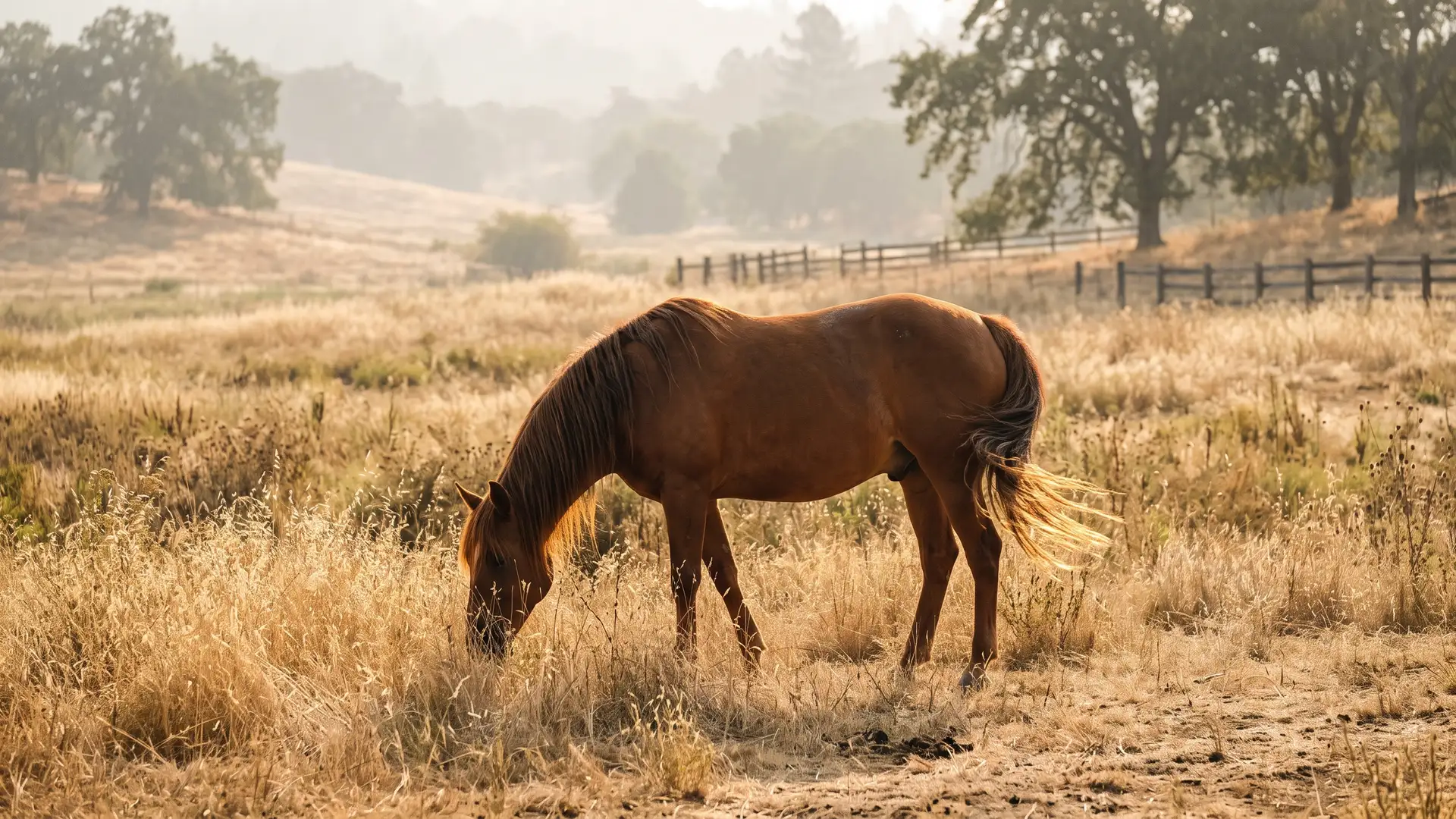
How the hair is actually collected
Grooming isn’t optional for a horse. Manes and tails tangle, mat and catch; brushing and trimming them is basic care, done for the horse’s comfort whether or not anyone wants the hair. The trimmed and combed-out hair is the by-product — it grows back, the way hair does, and historically it has either been thrown away or put to use in brushes, upholstery and bows for string instruments.
That’s the supply our bristles come from: hair that already exists because horses are cared for, not hair produced because a toothbrush wanted it. No animal is farmed for it, and no animal is harmed for it.
What we know about our supply chain — and what we don’t
Here’s the honest shape of it. Our supplier has confirmed to us that the hair is sourced in China — the country where most of the world’s natural bristle is processed — and that it is collected through routine grooming. What they can’t tell us, and so what we won’t tell you, is a specific region, stable or farm: grooming hair is aggregated from many holdings before it reaches the bristle works, and a farm name on this page would be decoration, not information.
Most brands writing about natural bristles stop at “ethically sourced” and hope you don’t ask the next question. We’d rather answer it imperfectly: this is what we know, this is where our knowledge ends, and if our supplier can ever tell us more, this page will say so.
What happens between horse and brush
Before the hair reaches your bathroom it is cleaned and sterilised with high heat — our supplier’s words: high temperatures — then woven into the bamboo head without glue. It arrives dry, clean and odourless — the practical hygiene questions have their own page, and the short answer is that the care habits are the same as for any brush: rinse, and dry upright in open air.
If you’d rather avoid animal products entirely
That’s a position we respect, stated without a “but”. Horse hair is an animal product, so our brush is not vegan, and nothing about grooming by-products changes that. If veganism is your line, the gentle option is a fine-filament soft nylon brush on a bamboo handle — most bamboo brushes are exactly that, and we’ve mapped the vegan question honestly here, including the trade-off that nylon is a plastic.
Everyone gets to choose which line matters most to them — animal products or plastic. Our job is to draw both lines clearly enough that your choice is actually informed.
The short version
- The hair comes from routine grooming — mane and tail care horses need anyway — and would otherwise be discarded.
- No animal is farmed for it and no animal is harmed for it — the hair comes from care, and it grows back.
- Our supplier can’t name the individual farms, so neither will we — what they could tell us is all above.
- We don’t say “cruelty-free” — that reads like a certification nobody has issued.
- It is not vegan. If that’s your line, a soft nylon brush is the gentle option, and nylon’s trade-off is that it’s plastic.
Common questions
01Where does the horse hair in a toothbrush come from?
From routine grooming. The hair in our brush is collected when horses' manes and tails are brushed and trimmed — care that horses need for their own comfort and health regardless of what happens to the hair. The trimmed hair would otherwise be discarded; bristle-making gives it a gentle second life.
02Are horses harmed or farmed for toothbrush bristles?
No — the hair comes from care, not from harm. Mane and tail hair is cut or combed out in the normal course of looking after horses, the way a haircut is part of caring for people, and it grows back. No horse is farmed for it and no horse is harmed for it; the bristles simply use hair that already exists as a by-product of that care.
03Is horse hair cruelty-free?
We deliberately don't use that phrase, because it reads like a certification and no certifier has audited our supply chain. What we can say plainly is what our supplier has confirmed to us: the hair is collected during routine grooming, and no animal is harmed for it. If a recognised standard for bristle sourcing ever exists, we'd welcome the audit.
04Why can't you name the farm the hair comes from?
Because we don't know it, and neither does our supplier with certainty — the hair is aggregated from grooming across many stables and holdings before it reaches the bristle works. We'd rather tell you the honest shape of that supply chain than print a farm name we can't stand behind.
05Is a horse hair toothbrush vegan?
No. Horse hair is an animal product, so no horse hair brush is vegan, ours included. If avoiding animal products matters to you, the gentle option is a fine-filament soft nylon brush — and the honest trade-off is that nylon is a plastic. Both are reasonable choices; they just draw the line in different places.
Sourcing statements on this page reflect what our supplier has confirmed to us, last checked August 2026. If their answers change, this page changes.