Horse hair toothbrushes
6 reasons Australians are quietly switching to horse hair toothbrushes
By Reuben S., founder of BARE. Updated .
Most of us replace a toothbrush every few months without once asking what the bristles are made of. Here are six things worth knowing before you buy your next one. They’re what changed my mind.
Skip to the brush →They found out their toothbrush sheds plastic as it wears
Nylon toothbrush bristles arrived in 1938.1 As a toothbrush wears, small pieces of plastic come off it, and a 2023 study used Raman imaging to confirm it.2 A 2025 study of toothbrushes used by residents in China estimated an average of at least 2.3 million microplastic particles a year per person, released from toothbrushes during brushing.3 It was a lab simulation, and the figure is an estimate.
Nobody’s calling a toothbrush an emergency. It’s just plastic you put in your mouth twice a day, and one of the easier ones to drop.
They found out their “eco” bamboo brush still has nylon bristles
An example pack label
- Handle:
- bamboo
- Bristles:
- nylon 6
- Verdict:
- plastic where it counts
Most bamboo toothbrushes change the handle and keep nylon bristles. The handle was never the part in your mouth.
Flip the packet over and read the bristle line. Nylon or PBT means the bristles are plastic. If it just says “soft bristles” and names no material, that’s worth asking about before you buy. A bamboo handle is a good start. It just isn’t the whole brush.
They found out “castor oil” bristles can still be nylon
- Castor bean
- Castor oil
- Several chemical steps
- Nylon 11 bristle
“Plant-based” bristles made from castor oil sound like the fix. Castor oil is a starting material for nylon 11, and it takes several chemical steps to get from one to the other.4 Nylon 11 is still a polyamide, the same family as every other nylon.
A plant feedstock is a genuine change. It’s still plastic in your mouth.
Bristles that were never plastic.
Horse hair, woven into bamboo. No nylon, no glue. From $12.99 shipped free in Australia.
Make the switchThey found out horse hair is properly soft
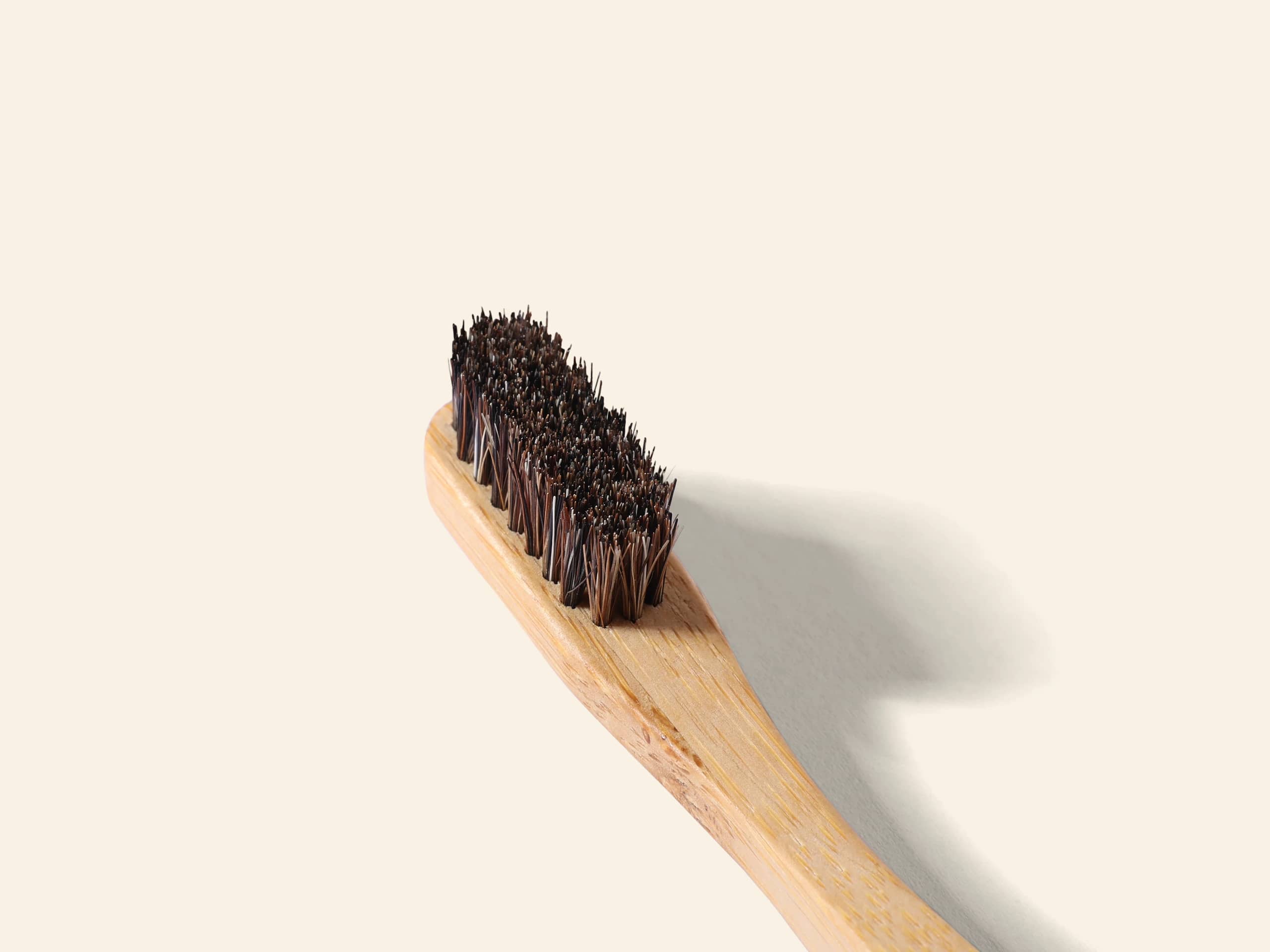
Horse hair is about as soft as a natural bristle gets: finer and more flexible than boar, closer to silk than to a scrubbing brush. It feels different from nylon at first. Run the head under warm water for your first few brushes and it softens quickly.
A new brush can also drop a hair or two early on while the weave settles. That’s normal, and it usually stops quickly.
They found out there’s no glue, no battery and nothing to charge
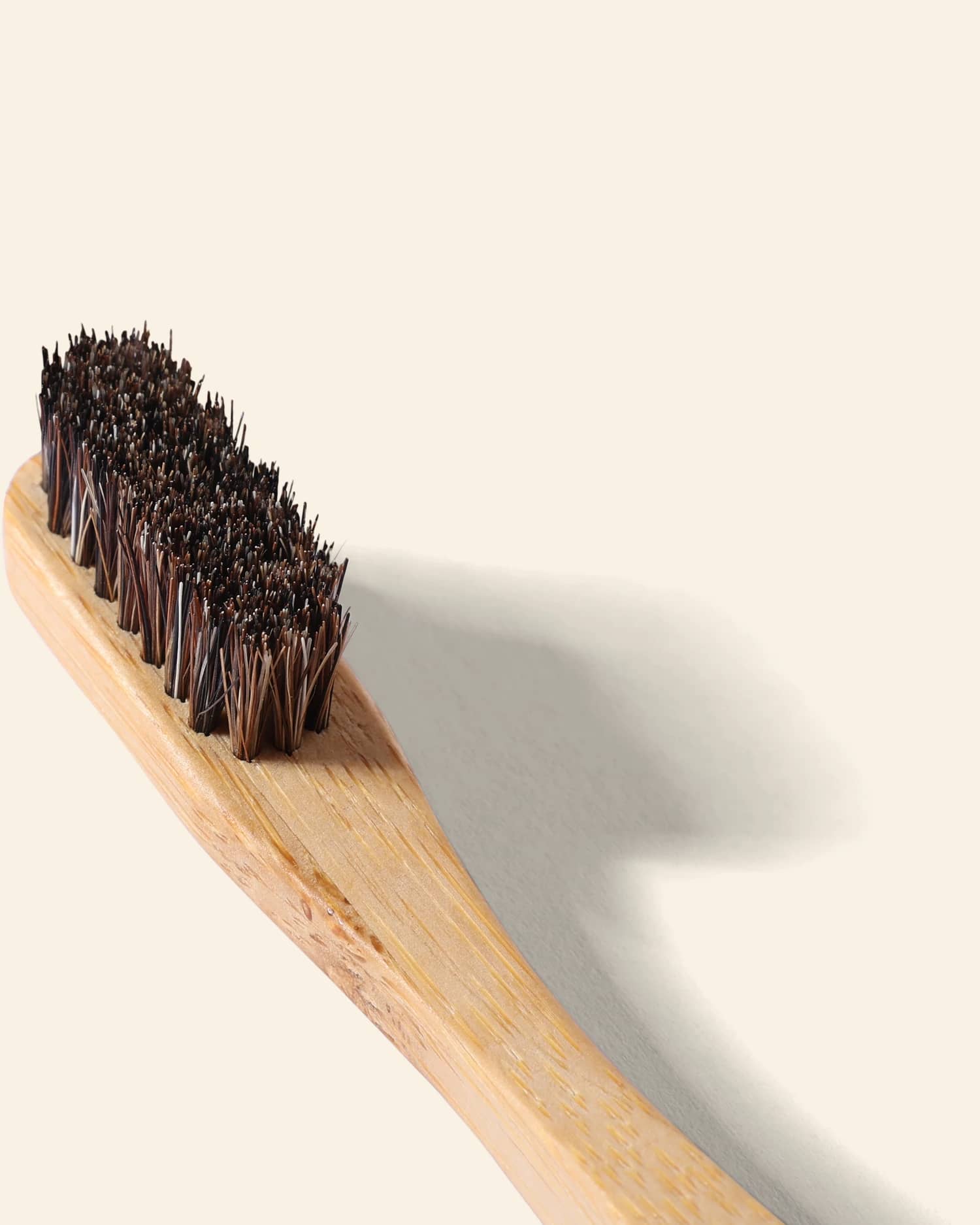
The horse hair is woven into the bamboo head, and one small aluminium staple holds the weave. There’s no glue, no motor and no replacement-head subscription.
When the brush is worn out, the handle and bristles can go in a home compost. The staple won’t break down, so fish it out once the rest has and put it in the bin.
They found out switching starts at $12.99, shipped free
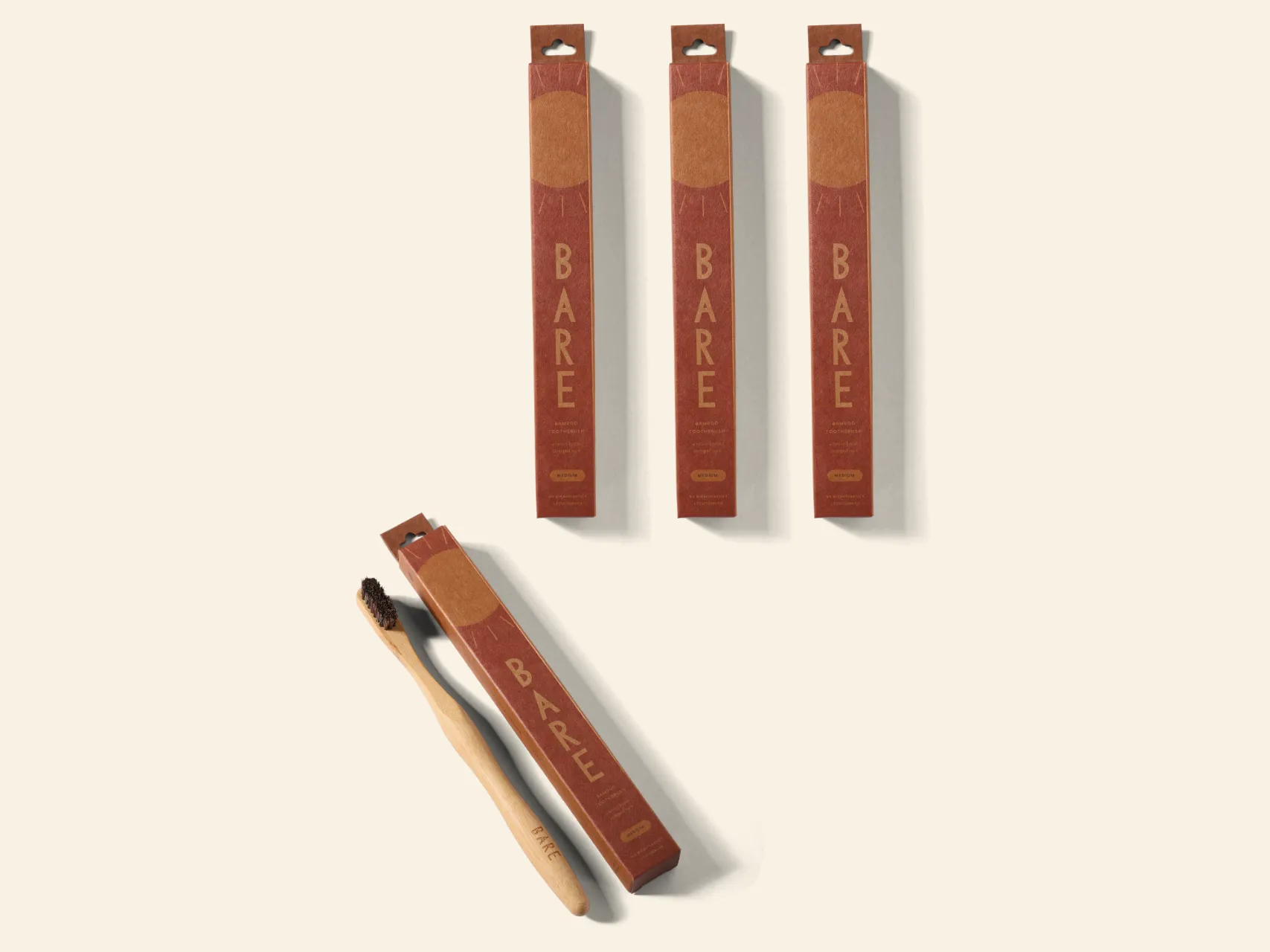
A single BARE brush is $12.99, and shipping is free anywhere in Australia, with no minimum. Every order is packed and posted by hand from South Australia.
The Australian Dental Association’s advice is to replace your toothbrush every 3 months.5 One BARE brush lasts 8 to 12 weeks, and a pack of four, at $44.99, is about a year of brushing.
The 30‑Day Soft Switch
Switch to BARE for thirty days. If you'd honestly go back to nylon, tell us and we refund the lot. You keep the brush, so there's nothing to post back and no forms. First order · the details
Who it’s not for
- It isn’t vegan. The bristles are horse hair, an animal product.
- There’s no child-size head yet.
- One small aluminium staple in the head won’t compost, so it has to be fished out and binned.
- If you love your electric brush, keep it. This is for people who brush by hand.
Side by side
Scroll sideways to see BARE →
| Feature | Plastic brush | “Eco” bamboo brush | Castor-oil nylon bristles | Electric brush | BARE |
|---|---|---|---|---|---|
| Bristle material | Nylon | Nylon | Castor-oil nylon | Nylon | Horse hair |
| Plastic in your mouth | Yes | Yes | Yes | Yes | No |
| Handle | Plastic | Bamboo | Varies | Plastic | Bamboo |
| Needs charging | No | No | No | Yes | No |
Asked and answered
Is animal hair actually hygienic?
Yes. Every bristle is cleaned and sterilised before assembly. Brushes arrive dry, clean and odourless. Rinse well and air-dry upright between uses and they stay that way.
Are horse hair toothbrushes hygienic? The full answerWhy do a few bristles shed at first?
Because there's no glue. Bristles are woven directly into the bamboo head, and a few loose ones may work free over the first few brushes as it settles in. Early shedding is the proof it's glue-free, and it usually stops quickly.
Do horse hair toothbrushes shed? The full answerHow long does one brush last?
8 to 12 weeks, then it's time for a fresh one. A pack of four is about a year of brushing; the pack of eight, about two.
How long a bamboo toothbrush lastsHow do I get rid of it when it's worn out?
There's no nylon to pull out and no glue in the head, so the handle and the bristles both break down in a home compost, unlike a standard bamboo brush, where the nylon tufts have to be removed with pliers first. One honest exception: a fingernail-sized aluminium staple secures the weave inside the head. It won't compost, so fish it out once the rest has broken down and put it in the bin.
How to dispose of a bamboo toothbrush in AustraliaMake the switch.
Pack of 4 for $44.99, shipped free. Your first order is covered by the 30‑Day Soft Switch.
Make the switchSources
- Safety and Design Aspects of Powered Toothbrush: A Narrative Review. Dentistry Journal, 2020. doi:10.3390/dj8010015. Accessed 3 October 2026.
- Raman imaging to identify microplastics released from toothbrushes: algorithms and particle analysis. Environmental Pollution, 2023. doi:10.1016/j.envpol.2023.122510. Accessed 3 October 2026.
- Patterns and risks of microplastic release during primary oral care in Chinese residents. Ecotoxicology and Environmental Safety, 2025. doi:10.1016/j.ecoenv.2025.118694. Accessed 3 October 2026.
- Plant-based toothbrush? Really? McGill University Office for Science and Society, 2017. www.mcgill.ca/oss/article/general-science/plant-based-toothbrush-really. Accessed 3 October 2026.
- Brushing teeth. Australian Dental Association (teeth.org.au). teeth.org.au/brushing-teeth. Accessed 3 October 2026.