Are horse hair toothbrushes hygienic? And are they ethical?
Hygienic: yes, kept the way any brush should be kept — rinsed after use, dried upright in open air. The bristles are cleaned and sterilised before assembly, and the habits that matter are the same ones that apply to nylon. Ethical: the hair in our brush is collected as a by-product of grooming, and no animal is harmed for it — but it is still an animal product, so it is not vegan, and we’d rather say that plainly than let “natural” do the implying.
Written by Reuben S., who runs BARE and packs every order. Published 12 August 2026 · Last fact-checked 19 August 2026
The hygiene question, honestly
It’s a fair thing to wonder. Hair sounds organic in the squeamish sense, and nylon sounds clinical. But the starting fact for every toothbrush — nylon, boar, horse, electric head — is the same: after use, the head hosts microbes. That is why dental guidance for all brushes is identical: rinse the head well, stand it upright somewhere it can dry in open air, and don’t seal a wet brush under a cover or in a cabinet.
Do that, and a horse hair brush is hygienic to use. Skip it, and no bristle material will save you — a covered, permanently damp nylon brush is a worse proposition than a well-dried natural one.
What’s actually different about natural hair
One thing, mainly: keratin holds moisture a little longer than nylon, so a natural-bristle brush rewards airflow more. In practice that means the habits you should have anyway matter slightly more — upright in a cup with the head clear of other brushes, not lying flat in a drawer, not in a sealed travel case while damp. Give it that and it dries clean between uses.
Before any of that reaches your bathroom, the bristles in our brush are cleaned and sterilised with high heat during assembly and arrive dry, clean and odourless. Woven into the head with no glue, they also don’t harbour the adhesive pockets that can trap moisture in some glued heads.
And the replacement rule doesn’t change: natural or nylon, three months or when the bristles splay, whichever comes first.
The ethics question, honestly
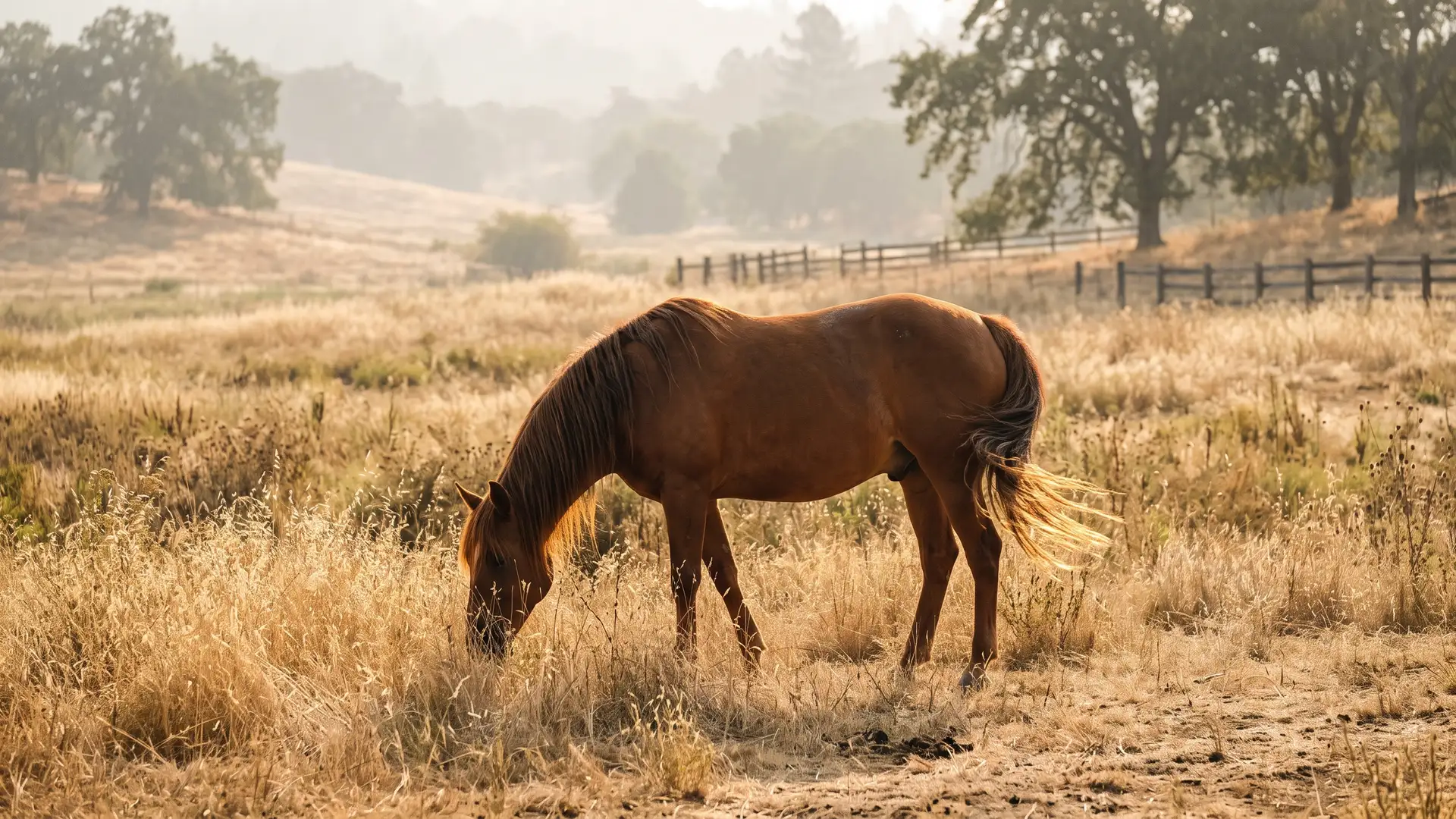
The hair in our brush is collected overseas as a by-product of routine grooming — hair that is cut or combed out in the normal course of caring for horses, and that grows back. No animal is farmed for it and no animal is harmed for it. We’ve written up the full sourcing story, including what our supplier couldn’t tell us. That’s our supply chain; we can’t vouch for every natural-bristle brush on the market, and if you’re weighing up another brand, “where does the hair come from” is exactly the right question to ask them.
Worth knowing when you compare: most natural-bristle brushes sold today use boar bristle, not horse. Boar is a stiffer fibre — horse hair is the softest natural bristle in common use — and the sourcing story varies by maker there too.
The line we won’t blur
None of the above makes horse hair vegan. It is an animal product, full stop, and a toothbrush that leads with the word “natural” shouldn’t bury that. We put it on the product page, and we’ll put it here: if avoiding animal products matters to you, our brush is not your brush.
The gentle vegan option is a fine-filament soft nylon brush — and the honest trade-off, which we’ve written up elsewhere, is that nylon is a plastic, sheds included. Everyone gets to pick which line matters most to them; our job is to draw both lines clearly.
The short version
- Hygiene rules are the same as any brush: rinse, dry upright in open air, never store damp under a cover.
- Natural hair rewards airflow slightly more than nylon — that’s the whole practical difference.
- Bristles are cleaned and sterilised before assembly; they arrive dry and odourless.
- The hair is a by-product of grooming; no animal is harmed for it.
- It is not vegan, and we won’t pretend otherwise.
Common questions
01Are horse hair toothbrush bristles hygienic?
Kept the way any toothbrush should be kept — rinsed after use and left to dry upright in open air — a horse hair brush is hygienic to use. The bristles are cleaned and sterilised before assembly and arrive dry and odourless. The habits that matter are the same ones dental guidance gives for every brush; the one difference is that natural hair rewards good airflow a little more than nylon does.
02Do horse hair bristles hold more bacteria than nylon?
Every toothbrush head hosts microbes after use — nylon included — which is why the standard advice for all brushes is to rinse well, let the head dry in open air, and never store it wet under a cover. Natural hair holds moisture slightly longer than nylon, so drying position matters a little more, but with ordinary care the practical difference is small. If you want guidance for your own situation, ask your dentist.
03Is a horse harmed for toothbrush bristles?
No animal is harmed for the bristles in our brush. The hair is collected overseas as a by-product of routine grooming — mane and tail hair that is cut or combed out in the normal course of caring for horses, and grows back the way hair does. We can speak for our own supply chain; if you are looking at another brand's natural-bristle brush, that is a fair question to put to them directly.
04Are horse hair toothbrushes vegan?
No. Horse hair is an animal product, so no horse hair brush is vegan, ours included — and a brand should say that plainly rather than let 'natural' imply otherwise. If vegan matters to you, the gentle option is a fine-filament soft nylon brush, and the honest trade-off is that nylon is a plastic.
05Does a horse hair toothbrush smell?
It shouldn't. The bristles are cleaned and sterilised before assembly and arrive dry, clean and odourless. If any brush — natural or nylon — picks up a smell in use, that is a drying problem: move it somewhere with real airflow and let it dry fully between uses.
Nothing here is dental advice. For anything about your own teeth or gums, ask your dentist or oral health therapist.