How to clean a toothbrush (and what's a waste of time)
Rinse the head well under running water, shake it hard, and stand it upright where air moves so it dries completely between uses — that’s the entire routine dental guidance supports. The rituals beyond it (boiling, dishwasher runs, mouthwash soaks, UV pods) either damage the brush or lack evidence of benefit. Cleaning has two honest limits, and they’re both reached by replacement, not scrubbing.
Written by Reuben S., who runs BARE and packs every order. Published 15 August 2026
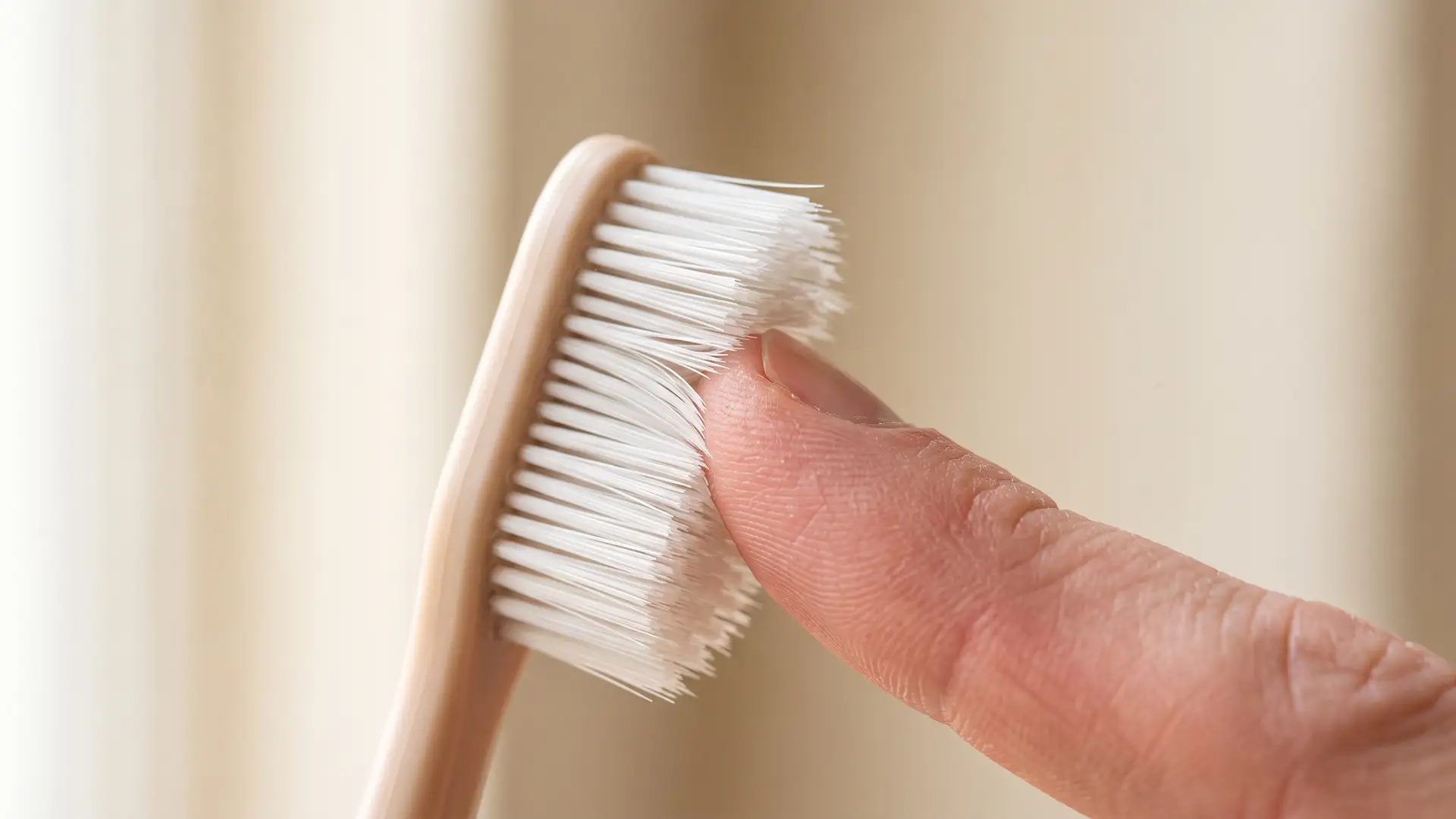
The routine that’s actually supported
- Rinse thoroughly after every brush. Running water through the bristle bed clears toothpaste and debris — the stuff microbes would otherwise sit in. A few seconds, done properly, beats any weekly ritual.
- Shake it hard. Water that leaves the brush over the sink isn’t drying slowly in the bristle bed or wicking into a handle.
- Dry upright, in open air. Bristles up, somewhere air actually circulates — not sealed in a cabinet or a travel case. Full drying between uses is the quiet workhorse of toothbrush hygiene, and it’s free.
- Keep heads apart in shared cups, and never share the brush itself.
That’s it. The honest summary of dental-authority guidance on toothbrush care fits in four bullet points, and everything else this page does is explain why the longer versions you’ve read don’t add anything.
The rituals, examined
| The ritual | What it actually does | Verdict |
|---|---|---|
| Boiling water | Deforms nylon, splits and warps wooden handles; no guidance recommends it | Don’t |
| Dishwasher / microwave | Same damage, appliance edition | Don’t |
| Mouthwash or vinegar soaks | Little evidence of benefit; routine soaking degrades bristles and is the fast route to a mouldy wooden handle | Skip |
| UV sanitiser pods | Reduce microbes in lab tests; no demonstrated health benefit for ordinary home use, which is why guidance doesn’t call for them | Optional gadget, not hygiene |
| Rinse well + dry fully | Clears debris and denies moisture — the two things that matter, per actual guidance | The whole job |
A useful rule hiding in that table: when a brush seems to need sterilising, it actually needs replacing. A toothbrush is a few-dollar consumable on a three-month schedule; heroic rescue procedures spend effort protecting the one part of the system that’s designed to be swapped.
Natural materials: same routine, higher stakes on drying
A bamboo handle and natural bristles don’t need special products — they need the drying half of the routine taken seriously. Bamboo is porous, natural bristle dries slower than nylon, and a base left standing in pooled cup water is how a handle ends up mouldy. Rinse, shake harder than you think, stand it in moving air, keep the cup dry. Our own brush lives by exactly this routine and no more.
The two limits of cleaning
First: wear. No amount of rinsing restores splayed bristles — a worn brush is finished regardless of how clean it is. Second: doubt after illness, where the honest evidence is weaker than the folklore and we’ve given it its own guide. In both cases the answer is the bin, not the boiling pot.
The short version
- Rinse well, shake hard, dry upright in open air. That is the evidence-supported routine, complete.
- Boiling and dishwashers damage brushes; soaks and UV pods lack evidence of added benefit.
- Wooden handles: same routine, drying non-negotiable, never leave standing in liquid.
- A brush that seems to need sterilising needs replacing.
Common questions
01What is the best way to clean a toothbrush?
Rinse the head thoroughly under running water after brushing to clear paste and debris, shake it hard, and stand it upright somewhere air circulates so it dries fully between uses. That's the routine dental guidance actually supports. Drying is the underrated half: a brush that dries completely between uses is doing most of what any sanitising ritual promises.
02Should you boil a toothbrush to sanitise it?
No. Boiling water deforms nylon bristles and can split or warp a wooden handle, and dental guidance doesn't recommend it — you damage the brush without an established benefit. The same goes for the dishwasher and the microwave. If a brush feels like it needs sterilising, it usually just needs replacing, which costs about the same as the electricity.
03Do UV toothbrush sanitisers work?
They reduce microorganisms in lab settings, but there's no good evidence the reduction changes any health outcome for an ordinary household brusher — which is why mainstream dental guidance doesn't call for them. Rinsing well and drying fully is free and does the day-to-day job. If gadget peace of mind is worth the money to you, that's a fair purchase; it just isn't a necessity.
04Should you soak a toothbrush in mouthwash or vinegar?
Occasional soaks are a common ritual with little evidence behind them, and routine soaking can degrade bristles faster. Guidance-backed practice is simpler: rinse, dry upright, replace on time. One caveat for natural materials: never leave a wooden-handled brush standing in liquid — soaking is exactly what invites mould into the handle.
05How do you clean a bamboo or natural-bristle toothbrush?
Same routine, with drying promoted from good habit to non-negotiable: rinse well, shake hard, stand it upright in moving air, and keep the base out of pooled water. Bamboo is porous and natural bristle dries slower than nylon, so a wet cup bottom is the main thing to avoid. No special products are needed — air does the work.
06Can toothbrushes make you sick if you don't clean them?
A toothbrush carries microbes the way everything in your bathroom does, and everyday rinse-and-dry practice is what dental guidance considers adequate for a healthy person. We're not aware of evidence that ordinary brush-keeping makes people sick. Don't share brushes, don't let heads touch in a shared cup, and if yours has been wet for days or smells musty, replace it rather than treating it.
This page describes everyday brush-keeping, not medical care, and makes no claim that any method kills germs or prevents illness. If you’re immunocompromised or have been given specific hygiene instructions, follow your clinician’s advice over anything here.