Why do bamboo toothbrushes go mouldy?
Because bamboo is a porous natural material, and bathrooms are humid. A handle standing in a cup with water pooled at the bottom stays damp around the clock, and damp wood grows mould — usually first as black speckling at the base. It’s preventable with one habit: shake the brush hard after use and stand it upright where air circulates, out of pooled water.
Written by Reuben S., who runs BARE and packs every order. Published 14 August 2026
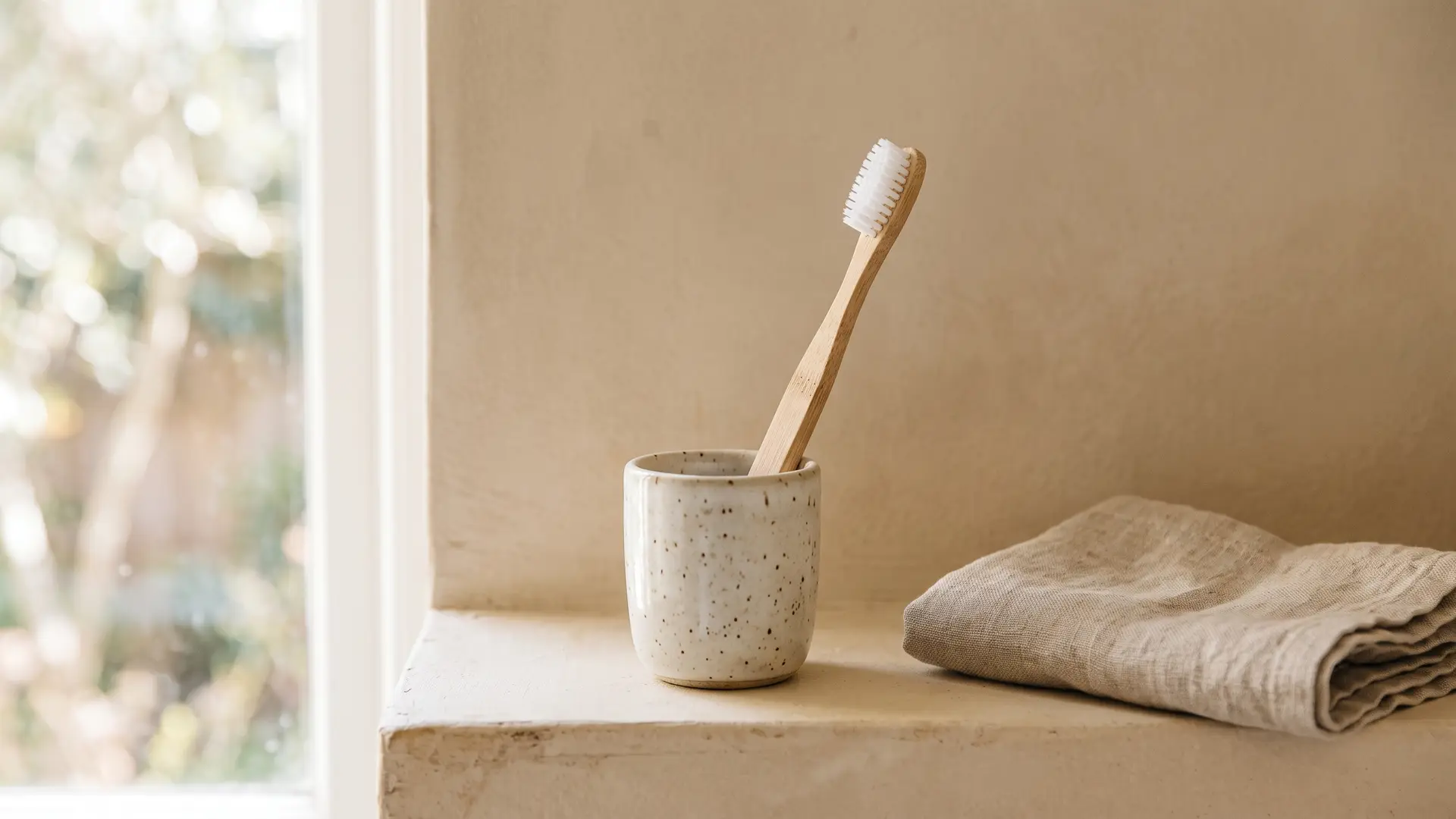
Why it happens
Mould needs three things: moisture, still air, and something to grow on. A bathroom supplies the first two for free — showers push humidity up several times a day, and toothbrush cups sit in the stillest corner of the room. The third is the handle itself.
Bamboo is a grass, and a milled bamboo handle is full of the fine capillaries that once carried water up the plant. When the base of the handle sits in even a few millimetres of pooled cup water, those capillaries wick it up and hold it, and the handle never fully dries between brushes. Give damp wood a warm room and a few weeks and mould arrives — almost always at the base first, because that’s the end that stands in the water.
This is the part most bamboo brands don’t put on the box, so here it is plainly: a bamboo handle needs a drying habit that a plastic one mostly doesn’t. Plastic is non-porous — water sits on its surface and evaporates quickly. Bamboo drinks it. The fix costs about four seconds a day, but it is a real difference between the materials, and you should know it before you switch, not after.
Is it mould, or just a water stain?
Not every dark base is mould. Bamboo also darkens harmlessly where water sits, as moisture and the wood’s own tannins grey the surface. Telling them apart takes one close look:
| What you see | What it is | What to do |
|---|---|---|
| Fuzzy, speckled or spotty patches — black, dark green or grey, often slightly raised | Mould | Bin the brush and change the storage habit before the next one goes in the same cup |
| Smooth, even grey-brown darkening soaked into the wood, flat to the touch | Water stain | Cosmetic — keep brushing, but treat it as a nudge that the handle is staying wetter than it should |
| A musty or sour smell with nothing visible yet | Early warning | Dry storage from today; if the smell persists after the handle has dried fully, replace it |
If you genuinely can’t tell, replace it. A toothbrush is a few dollars and goes in your mouth twice a day — “when in doubt, bin it” is the right rule here.
How to prevent it
Prevention is the whole game, because you can’t reach mould once it’s inside a porous handle. The habit:
- Rinse, then shake hard. After brushing, rinse the head and give the whole brush a few sharp flicks over the sink. Most of the water that would have spent the night in the handle ends up down the drain instead.
- Stand it upright, in moving air. Bristles up, somewhere air actually circulates — an open holder or rack beats the back corner of a cabinet. Never lying flat on the sink edge, where the handle sits in its own puddle.
- Keep the cup dry. If you use a cup, the pool at the bottom is the single biggest cause of a mouldy base. Empty and dry it regularly — pairing it with taking the bins out works. A holder that drains is better than a cup that collects.
- Never seal it away damp. A closed travel case with a damp brush inside is a mould incubator. Air the brush dry before it goes in the case, and take it out as soon as you’re home.
- Wipe the handle now and then. An occasional wipe of the handle with a cloth dampened with white vinegar, followed by a proper dry, is a reasonable bit of housekeeping for the wood. It is care for the handle, not a rescue for a brush that’s already mouldy — that one’s finished.
None of this is precious once it’s habit. Shake, stand it up, keep the cup dry — four seconds.
Our brush is bamboo too, so yes, this applies to it
The handle on our brush is the same material as every other bamboo handle, and it will grow mould in exactly the same conditions. We’d rather tell you that and hand you the four-second fix than have the first dark speck arrive as a surprise. The care above is the care our own brushes get.
And when any bamboo brush does reach the end — worn bristles or a base you don’t like the look of — the handle doesn’t have to go to landfill. We’ve covered what actually composts and what to pull out first in how to dispose of a bamboo toothbrush in Australia.
The short version
- Bamboo is porous; a handle standing in pooled water stays damp, and damp wood in a humid room grows mould.
- Fuzzy speckling is mould — bin the brush. Smooth, even darkening is a harmless water stain.
- Prevention: rinse, shake hard, stand upright in moving air, keep the cup dry, never case it damp.
- This is a real difference from plastic, and the trade-off costs about four seconds a day.
Common questions
01Why is my bamboo toothbrush going black at the bottom?
Usually one of two things: mould, or a harmless water stain. Bamboo is porous, so a handle that stands in a cup with pooled water stays damp, and damp wood in a humid bathroom grows mould. Fuzzy or spotty black-green patches are mould; smooth, even grey-brown darkening soaked into the wood is staining from water and tannins. Stains are cosmetic. Mould means the brush has been staying wet, and the storage habit needs to change.
02Is it safe to use a toothbrush with a mouldy handle?
Bin it. Mould on the handle means the brush has been sitting damp for a while, and you cannot clean the inside of porous bamboo. A toothbrush costs a few dollars and goes in your mouth twice a day — this is not the place to push through. Fix the drying habit before the replacement goes in the same wet cup.
03How do you stop a bamboo toothbrush going mouldy?
Keep the handle dry between uses. Rinse the head, shake the brush hard, and stand it upright somewhere air actually moves — not in a cup with water pooled at the bottom, not lying flat on the sink edge, and never sealed in a travel case while damp. If your cup collects water, empty and dry it when you empty the bin. Done consistently, this prevents the problem rather than treating it.
04Do plastic toothbrushes get mouldy too?
Yes — mould needs moisture, not wood, and grows happily in the bristle bed or the base of any brush left wet. Plastic has an easier time of it because the handle is non-porous: water sits on the surface and dries faster, and staining wipes off. Bamboo asks for a little more care in exchange for not being plastic. That trade-off is real and worth knowing before you switch.
05Do bamboo toothbrushes splinter?
A properly made one shouldn't. Handles are cut with the grain, milled smooth and usually finished with a thin coat of plant-based wax or oil, so there is no raw edge to lift. Splintering shows up when a handle has been left soaking wet repeatedly — the same abuse that causes mould — or on cheaply finished brushes. If a handle ever feels rough or lifts a fibre, replace it.
06Why does my bamboo toothbrush taste or smell odd?
A faint woody taste in the first few days is the bamboo itself and fades with use. A musty or sour smell that develops later is different — that's the sign of a brush staying damp, and it often arrives before any visible mould. Treat it as an early warning: dry storage from then on, or a new brush if the smell has set in.
Nothing here is health advice — it’s care advice for a wooden object that lives in a wet room. For anything about your own teeth or gums, ask your dentist or oral health therapist.