Plastic-free toothbrush for sensitive gums: soft without nylon
Soft brush, light pressure: that is still the everyday advice for tender gums. Most soft brushes are still nylon in the head, including bamboo ones. A nylon-free soft option is horse hair, the softest natural bristle in common use. If the feel is wrong, first orders are covered by the 30-Day Soft Switch. Technique detail lives on our soft toothbrush for sensitive gums guide; this page is the plastic-free half of the same question.
Written by Reuben S., who runs BARE and packs every order. Published 15 September 2026
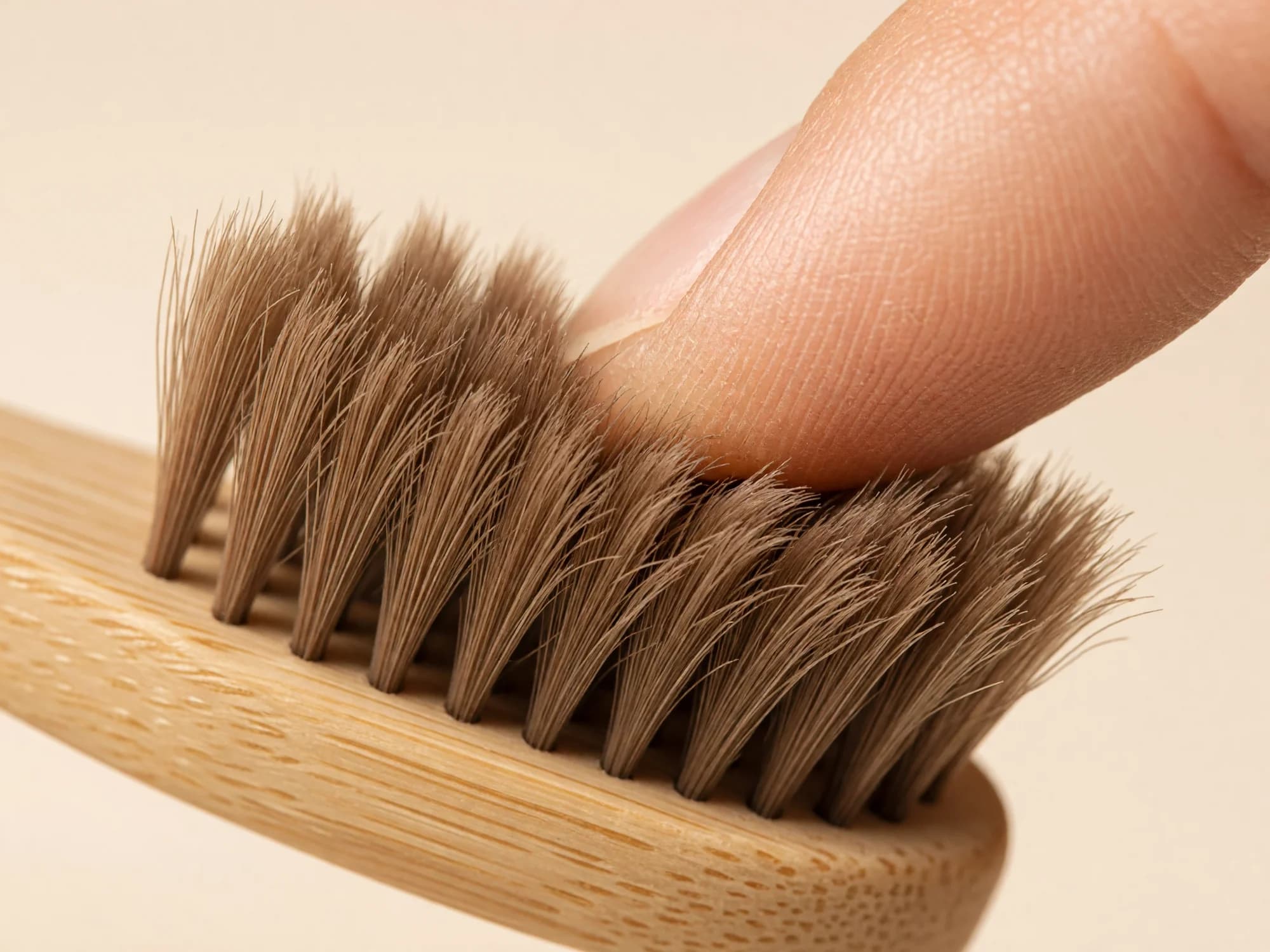
Soft for gums, and what the bristles are made of
People with sensitive gums usually start in the right place: a softer head and a lighter hand. Dental associations keep pairing those two because stiff bristles and hard scrubbing are harder on the gumline. Softness alone is not enough. A soft brush pressed hard behaves like a hard one.
The part that often gets missed is the fibre. Soft on the pack is a rough sort of how the filaments feel. It is not a promise that the head is plastic-free. Nylon is the most widely used bristle material. That includes the soft grade on ordinary plastic brushes, and it is the most common choice on bamboo brushes too. If you want both gentleness and less nylon in the mouth, you need to read the bristle line, not only the word soft. Full technique and when sore gums are a dentist problem: a soft toothbrush for sensitive gums.
What to check on the label
Plastic-free in the mouth means the bristles, not only the handle. An ordinary toothbrush is polypropylene, often a soft grip, and nylon bristles. A bamboo handle only changes the part you hold. On nearly every bamboo brush, the bristles are still nylon. That is why “are the bristles plastic?” is the useful question even when the pack says soft.
Look for a named fibre: horse hair or boar. Skip labels that only say bio-based, biodegradable nylon, charcoal, or BPA-free. Those are still nylon families. Soft on the box is still useful as a rough feel cue; it just does not answer the material question. We map the full list in nylon-free toothbrushes.
Why soft nylon still sheds
Brushing wears bristles. Soft nylon bends more easily, but it is still a plastic filament. When those bristles are nylon or PBT, some of the worn material leaves as tiny fragments. A 2025 study in Microchemical Journal, titled as preliminary results by its own authors, simulated brushing on a dental arch and measured an average release of up to roughly 39 microplastic particles a day from commercial brushes. Softness was not a get-out. Full caveats and methods live on Do toothbrushes shed microplastics?.
Wider research keeps finding microplastics in the body. The field is young. You do not need a finished risk number to decide that a daily nylon head is worth swapping if that is already on your mind. Adjacent reading for the same label check in other life stages: plastic-free toothbrush in pregnancy and plastic-free for kids and family.
The soft nylon-free option
Most natural-bristle brushes use boar, which runs firmer. Horse hair is the exception: the softest natural bristle in common use, fine and flexible, closer to silk than to stiff filament. Softness here is a property of the hair, not a marketing grade on the box.
Two honest caveats. Horse hair is an animal product, so a horse-hair brush is not vegan. If vegan is your line, a fine-filament nylon soft brush is the honest route, plastic bristles and all. And natural bristle feels different from nylon in the first week: softer at the gum, a little less springy against the tooth. More on feel and care: horse hair bristles, explained.
A simple swap
- Keep the habit: soft brush, light pressure. Watch that the bristles do not splay flat against the tooth.
- Read the bristle line on the pack. Soft does not mean nylon-free.
- Prefer horse hair if you want a soft natural fibre without nylon in the head. Boar is nylon-free too, usually firmer.
- Replace every 8 to 12 weeks, or sooner if the bristles splay. Worn tips stop being gentle.
- Rinse well and dry upright in open air between uses.
Ours is sterilised horse hair woven into bamboo with no nylon and no glue. Horse hair is an animal product, so it is not vegan. First orders are covered by the 30-Day Soft Switch if the feel is wrong.
If gums bleed most times you brush, stay sore for weeks, or are visibly receding, that is a dentist or oral health therapist conversation. Nothing on a shelf, ours included, is the fix for persistent clinical symptoms.
The short version
- Soft brush plus light pressure is still the everyday advice for tender gums.
- Most soft brushes are still nylon. Check the bristle material, not only the word soft.
- Horse hair is the softest natural bristle in common use and a nylon-free soft option. It is not vegan.
- Soft Switch covers a first order if the feel is not for you. Persistent sore or bleeding gums need a clinician, not a different pack.
Common questions
01Can I get a soft toothbrush that is also plastic-free?
Yes, if the bristles are a named natural fibre. Soft on the pack usually still means nylon. A nylon-free soft option in common use is horse hair: the softest natural bristle in everyday brushes, finer than the boar used in most natural heads. Horse hair is an animal product, so those brushes are not vegan. Soft brush plus light pressure still matters either way.
02Are soft toothbrushes usually nylon?
Most are. Soft describes how the filaments feel, not what they are made of. Nylon is the most widely used bristle material, including the soft grade on ordinary plastic brushes, and it is the most common choice on bamboo brushes too. Check the bristle line on the label, not only the word soft.
03Do soft nylon bristles still shed microplastics?
Yes, when the fibre is nylon or PBT. Softness does not stop abrasion. A 2025 Microchemical Journal study, labelled preliminary by its own authors, simulated brushing and measured on the order of dozens of nylon and PBT particles a day from commercial brushes (around 39 on average in that work). Full caveats sit on our microplastics guide.
04Is horse hair soft enough for sensitive gums?
Horse hair is the softest natural bristle in common use, fine and flexible, closer to silk than to stiff nylon filament. Many people with tender gums find that feel gentle. Soft bristles still need a light hand: a soft brush pressed hard behaves like a hard one. Persistent bleeding, pain, or anything clinical about your gums is a dentist or oral health therapist conversation, not a shopping decision. Technique detail lives on our soft toothbrush for sensitive gums guide.
05What should I check on the label if my gums are tender?
Two things. Softness and pressure: dental associations advise a soft brush with light pressure for everyday brushing. Material: look for horse hair or boar if you want nylon out of the head. Words like bio-based, biodegradable nylon, charcoal, or BPA-free still mean nylon. Bamboo alone only names the handle.
06What is different about The Bare Brush for sensitive gums?
The bristles. BARE uses sterilised horse hair woven into a bamboo handle, with no nylon and no glue. Horse hair is an animal product, so it is not vegan. Softness is a property of the hair, not a marketing grade on the box. First orders are covered by the 30-Day Soft Switch if the feel is not for you.
Nothing here is dental advice. The research cited is current as at September 2026. For anything about your own teeth or gums, ask your dentist or oral health therapist.