A soft toothbrush for sensitive gums: what actually helps
The advice dentists actually give is two words longer than “buy a soft brush”: soft brush, light pressure. The brush matters — stiff bristles are harder on gums — but grip does half the work, because a soft brush pressed hard behaves like a hard one. And if your gums are persistently sore or bleed most times you brush, that’s a dentist conversation, not a shopping decision.
Written by Reuben S., who runs BARE and packs every order. Published 12 August 2026
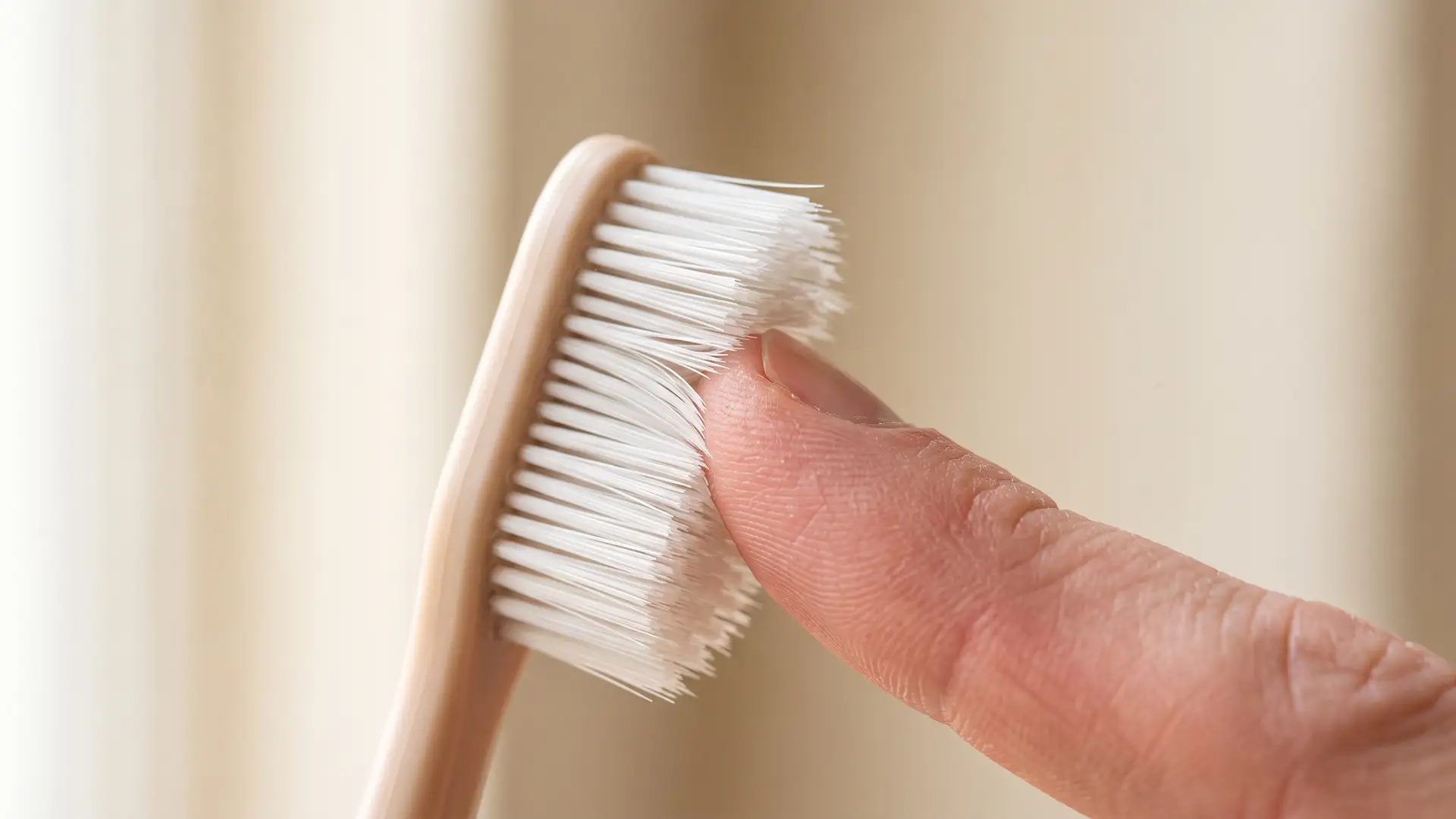
What “soft” means on a label — and what it doesn’t
There is an international standard for measuring the stiffness of a toothbrush head — ISO 8627, which classifies heads from soft to hard based on how the tufted area resists bending. What there isn’t is any rule obliging a brand to grade its packaging against it. “Soft” on a label is a marketing sort, not a measurement, and one brand’s soft can be firmer than another’s medium.
What actually determines how a brush feels is the filaments: finer, longer, more flexible strands bend earlier and spread the load, so they sweep along the gumline instead of jabbing it. That’s true whether the filament is nylon or natural hair. If you can’t feel-test a brush before buying, filament fineness is the spec worth looking for — not the word on the box.
Why the advice is always “soft, and gently”
Dental associations pair the two for a reason: aggressive brushing is associated with gum recession and wear at the gumline, and a stiff brush concentrates that force. Plaque itself is soft — it doesn’t need scrubbing force, it needs coverage and time. Two minutes of gentle, thorough contact beats thirty seconds of enthusiasm every day of the week.
The pressure test is simple: watch the bristles while you brush. They should stay more or less upright, tips doing the work. If they splay flat against the tooth, you’re pressing too hard — with any brush, of any softness. Holding the handle in your fingertips rather than your fist makes over-pressing genuinely difficult, which is the cheapest technique fix there is.
This is also the honest place to say that some electric brushes solve the same problem with a pressure sensor that cuts power when you lean in. If that’s what keeps your hands honest, it’s a legitimate tool — we compared the categories properly in bamboo vs plastic vs electric.
Where natural bristle fits
Most natural-bristle brushes use boar, which runs stiff — closer to a scrubbing brush than to anything a dentist would hand you. Horse hair is the exception: it’s the softest natural bristle in common use, fine and flexible, closer to silk than to filament. It’s what we build our own brush with, woven into the head with no glue, and softness is the entire reason we chose it.
Two honest caveats. Horse hair is an animal product, so a horse-hair brush is not vegan — if that matters to you, a fine-filament nylon soft brush is the right call, plastic bristles and all. And natural bristle feels different from nylon in the first week: softer at the gum, a little less springy against the tooth. We wrote up what to expect in horse hair bristles, explained.
When a softer brush isn’t the answer
Gums that bleed most times you brush, stay sore for weeks, or are visibly receding are not a product problem, and nothing you buy off a shelf — ours included — is the fix. Persistent bleeding is commonly a sign of gingivitis, which is treatable, and treating it early is the whole game. Book the dentist.
The same goes for sensitivity to hot and cold, which often involves the tooth surface rather than the gums at all. A softer brush may make brushing more comfortable while you get it looked at, but comfort isn’t diagnosis.
Worn soft brushes stop being soft
One detail that gets missed: bristle tips are finished to be rounded, and as they wear they fray and splay, so an old soft brush can be rougher on gums than a fresh medium one. If you’re buying a soft brush for comfort, replacing it on time is part of the deal — every three months, or sooner if the bristles splay.
The short version
- Soft brush, light pressure — the second half matters as much as the first.
- Labels aren’t standardised: fine, flexible filaments are what make a brush gentle, whatever the box says.
- If the bristles splay against your teeth mid-brush, you’re pressing too hard.
- Horse hair is the softest natural bristle in common use; fine nylon soft brushes are the vegan route.
- Persistently sore or bleeding gums are a dentist visit, not a purchase.
Common questions
01Are soft toothbrushes better for sensitive gums?
A soft brush used with light pressure is the standard advice dental associations give, because stiff bristles and hard scrubbing are associated with gum irritation and wear along the gumline. Softness alone doesn't fix technique, though — a soft brush pressed hard behaves like a hard one. If your gums are persistently sore or bleeding, see a dentist rather than shopping for a different brush.
02What does 'soft' actually mean on a toothbrush label?
Less than you'd hope. There is an international standard for measuring the stiffness of a toothbrush head (ISO 8627), but nothing obliges brands to grade their labels against it, so one brand's soft can be firmer than another's medium. Finer, longer, more flexible filaments generally mean a softer feel; the label is a rough sorting, not a measurement.
03Can brushing too hard damage your gums?
Dental associations advise light pressure because aggressive brushing is associated with gum recession and abrasion at the gumline. The practical test: if the bristles splay flat against your teeth while you brush, you're pressing too hard. Whether any existing recession is from brushing or something else is a question for your dentist.
04Is a hard toothbrush ever recommended?
Not in the general consumer guidance dental associations publish — the consistent advice for everyday brushing is a soft brush. Hard brushes remain on shelves mostly because they feel effective, but plaque is soft; it doesn't need force, it needs coverage and time.
05Are horse hair toothbrush bristles soft?
Yes — horse hair is the softest natural bristle in common use, markedly softer than the boar bristle used in most natural brushes. The strands are fine and flexible, closer to silk than to nylon filament. It is an animal product, so a horse-hair brush is not vegan.
Nothing here is dental advice. For anything about your own teeth or gums, ask your dentist or oral health therapist.