Are bamboo toothbrushes actually good?
For cleaning, a bamboo handle changes nothing — the handle never touches your teeth, and the bristles do all the work. For the environment it helps, but less than the marketing implies: almost every bamboo brush has nylon bristles, so you’ve swapped a plastic handle for a wooden one and kept a plastic head. Worth doing. Not the whole job.
Written by Reuben S., who runs BARE and packs every order. Published 11 August 2026 · Last fact-checked 12 August 2026
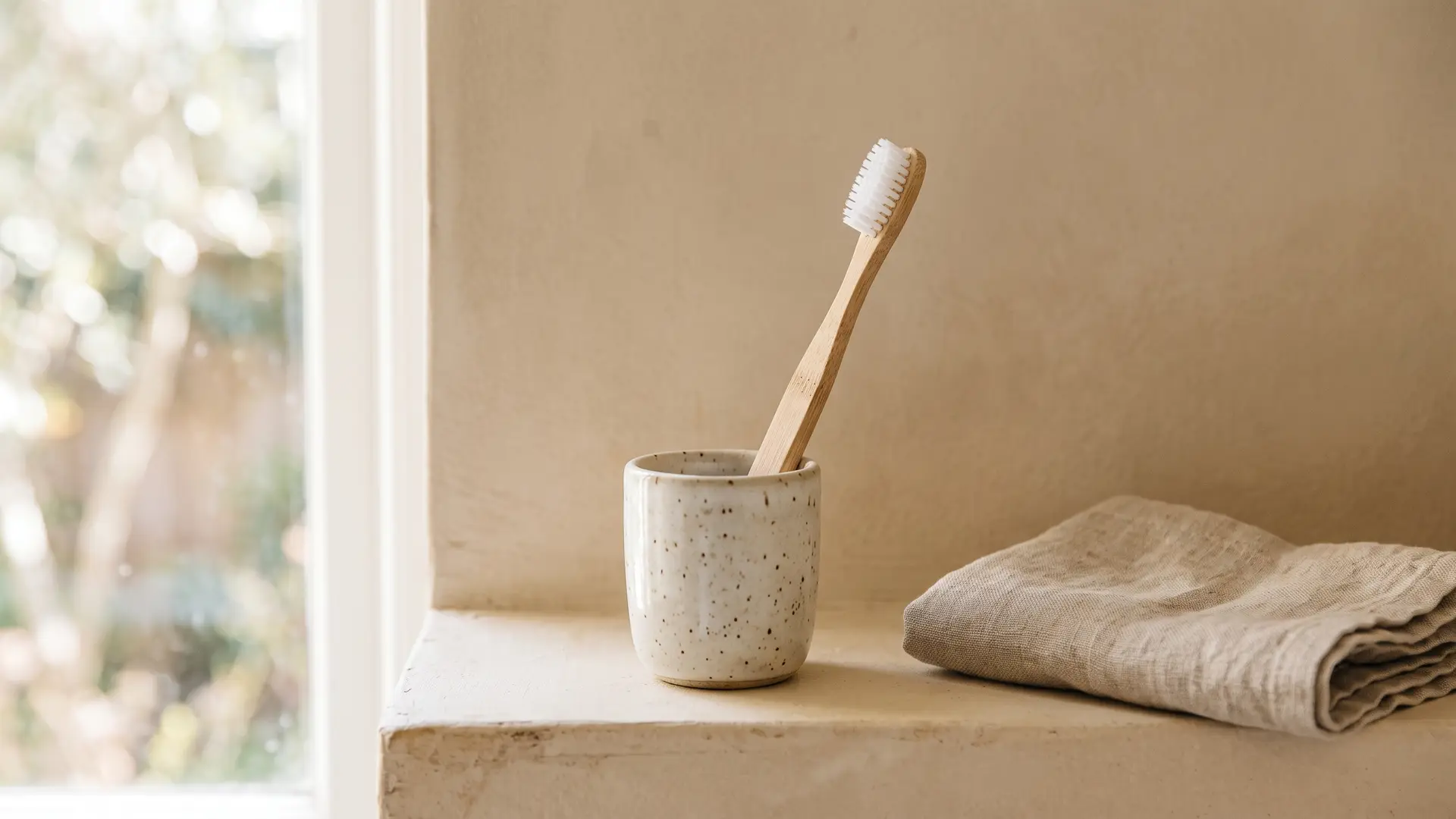
We should say up front that we sell one of these, which gives us an obvious reason to tell you they’re wonderful. What follows is the version with the awkward parts left in, because the alternative is a page you have no reason to believe.
Does it clean as well?
Yes, and the reason is almost dull: the handle is not the part that cleans. It never enters the equation. Cleaning is done by the bristles, and what governs it is how soft they are, what condition they’re in, and what you do with them.
So a bamboo brush with soft nylon bristles cleans exactly like a plastic brush with soft nylon bristles — because, functionally, that is the same brush with a different stick attached. Anyone claiming a bamboo handle improves your brushing is selling you something.
There is one real difference, and it’s ergonomic rather than dental. Bamboo can’t be moulded, so the handles tend to be chunkier and less contoured than injection-moulded plastic, with no rubber grip. Most people stop noticing within a week. Some never get on with it, and that’s a legitimate reason to go back.
Does it actually help?
Here is where the honest answer is more complicated than the packaging.
The handle is a genuine improvement. Bamboo grows fast, needs no irrigation to speak of, and at the end of its life it breaks down instead of persisting for centuries. Swapping a moulded polypropylene handle for that is a real reduction in permanent plastic.
The bristles usually aren’t. Almost every bamboo toothbrush sold in Australia uses nylon bristles, pinned into the head with a small metal staple. Nylon is a plastic. It doesn’t compost, and it has to be pulled out with pliers before the handle can go anywhere near a compost heap — a job we walk through in how to dispose of a bamboo toothbrush. If you skip that step and bin the brush whole, you have landfilled a piece of plastic wrapped in wood.
And it doesn’t weigh less. This one surprised us: when we weighed brushes for our estimate of Australian toothbrush waste, a bamboo brush came in at the same 17 grams as the plastic one. Switching handles doesn’t shrink the tonnage going to landfill. It changes what that tonnage is made of, and whether it’s still there in a hundred years. That is worth doing — but it is a different claim from the one usually made.
The practical downsides
Things a bamboo brush actually asks of you, none of them dealbreakers, all of them real.
- It needs to dry. Untreated wood holds water in a way sealed plastic doesn’t. Left damp in a closed cup it can darken, and it can go mouldy. Rinse it, stand it upright, give it airflow, and this simply doesn’t happen.
- It ages visibly. The handle may darken or roughen near the head over a few months. It’s cosmetic, but if you want something that looks factory-new until the day you bin it, wood won’t.
- It usually costs more. Often several times the price of a supermarket multipack.
- “Biodegradable” on the box may only mean the handle. Read it as a claim about the part it doesn’t specify, and assume the bristles are nylon unless it says otherwise.
What the guidance actually says
Professional advice on toothbrushes concerns the bristles, not the handle — use a soft brush, replace it roughly every three months or sooner if the bristles splay, and mind your technique. We couldn’t find an Australian dental body that takes any position on handle material, which fits neatly with the handle not affecting how well a brush cleans. More on the replacement side of that in how often you should replace your toothbrush.
One thing we won’t claim, since we sell a natural-bristle brush: we are not going to tell you natural bristle cleans better, or is gentler on your gums, than a soft nylon brush. We can’t evidence that, so we don’t say it. If a brush of any kind feels scratchy in your mouth, stop using it and ask your dentist what firmness suits you.
So — are they good?
A bamboo brush with nylon bristles is a partial fix that is still clearly better than an all-plastic one, provided you actually do the pliers job at the end. It cleans identically. It costs more. It needs to dry properly.
If what you want is a head that isn’t plastic at all, the handle was never the part to look at. That decision lives in the bristles, which is the whole reason we ended up making a brush with horse hair bristles — a choice with its own trade-offs, including that it isn’t vegan.
Common questions
01Do bamboo toothbrushes clean as well as plastic ones?
The handle never touches your teeth, so what it is made of makes no difference to cleaning. What matters is the bristles — their firmness and condition — plus your technique and how often you replace the brush. A bamboo brush with soft nylon bristles cleans like a plastic brush with soft nylon bristles, because functionally that is the same brush with a different stick attached.
02Are bamboo toothbrushes better for the environment?
Partly, and less than most people assume. The handle is renewable and will break down. But the bristles on almost every bamboo brush sold are nylon, which is plastic and does not, and they have to be pulled out with pliers before the handle can be composted. So a typical bamboo brush is a partial fix: it removes the plastic handle from the waste stream, not the plastic head.
03Do bamboo toothbrushes go mouldy?
They can darken or develop mould if they are kept damp, because the handle is untreated wood rather than sealed plastic. Rinsing the brush and standing it upright somewhere with airflow prevents it. Storing it head-down in a closed cup or sealed in a travel case while wet is what causes problems.
04Do dentists recommend bamboo toothbrushes?
Professional guidance concerns the bristles, not the handle: use a soft brush, replace it about every three months or sooner if the bristles splay, and pay attention to technique. We could not find an Australian dental body that takes a position on what the handle is made of, which is consistent with the handle not affecting how well the brush cleans.
05Are bamboo toothbrushes worth it?
If you want to use less plastic and you are willing to pull the bristles out before composting the handle, yes — it is a genuine reduction. If you expect it to clean better than a plastic brush, no, and no honest seller should tell you otherwise. If you want the whole head to be plastic-free you need to check the bristle material, because the handle is not the part that decides that.
Nothing here is dental advice. For anything about your own teeth or gums, ask your dentist or oral health therapist.