How to dispose of a bamboo toothbrush in Australia
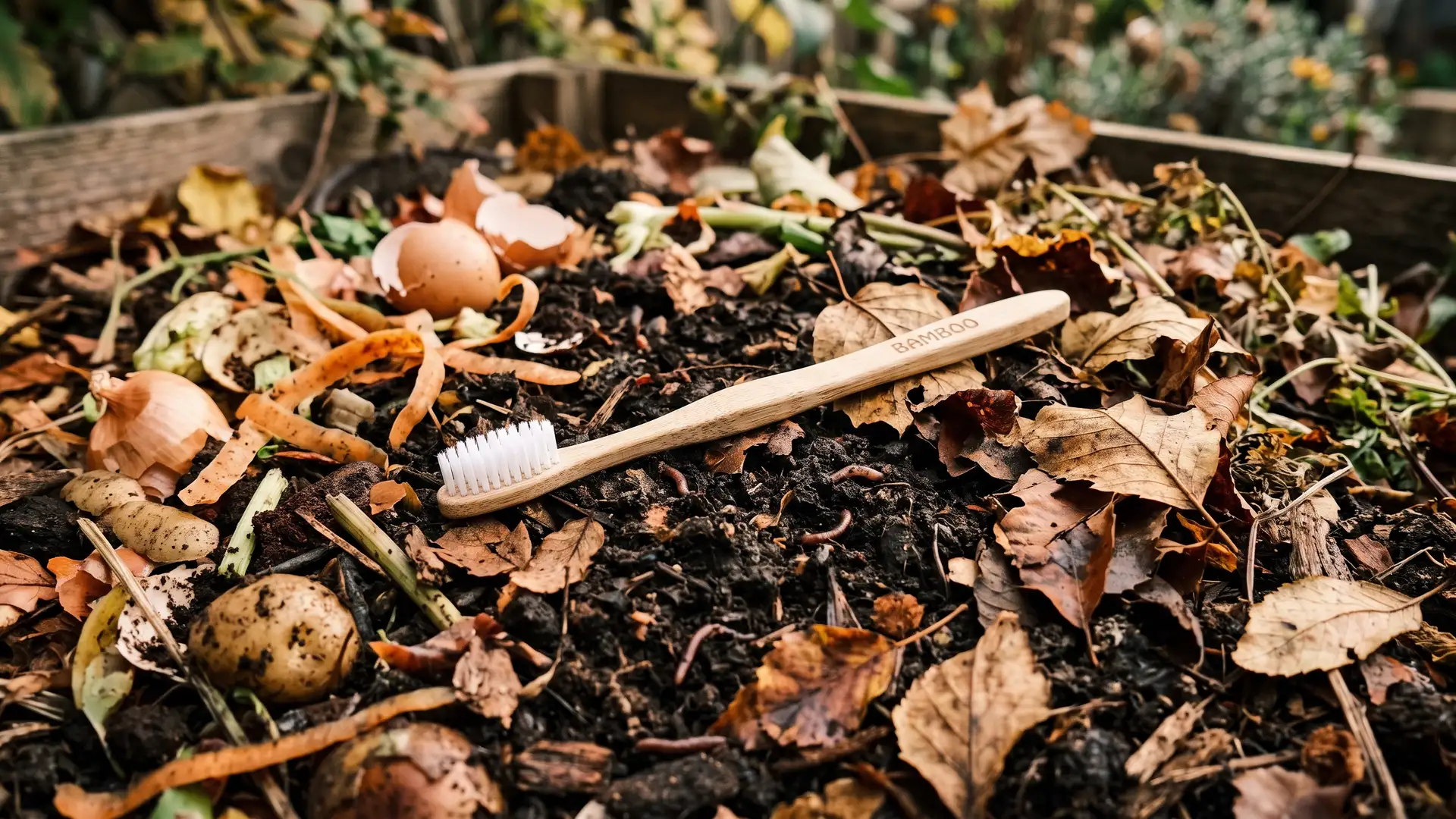
Pull the bristles out with pliers, then compost the handle. Almost every bamboo toothbrush has nylon bristles, which are plastic and never break down — so the brush can’t go in a compost or green bin intact. Once the bristles are out, the bare bamboo handle can go in a home compost, or in your council organics bin if your council accepts untreated wood. Bristles go in general waste.
Written by Reuben S., who runs BARE and packs every order. Published 10 August 2026 · Last fact-checked 27 September 2026
First, work out what your bristles are made of
This is the whole question, and it’s the one the packaging is usually quietest about. The handle is the part everyone photographs; the bristles are the part that decides which bin the thing ends up in.
Almost all bamboo toothbrushes sold in Australia use nylon bristles. Nylon is a plastic. It doesn’t matter that the handle is bamboo, and it doesn’t matter that the packaging is compostable — if the bristles are nylon, the head of that brush is a small piece of permanent plastic attached to a compostable stick.
You may see “nylon-4” described as biodegradable. Treat that claim carefully. The studies behind it are laboratory work under controlled conditions, which is a different thing from a backyard compost heap or a landfill cell, and independent real-world evidence is thin. If a brush says nylon-4, the honest position is that nobody can tell you with confidence what it does in your compost.
“BPA-free” is not relevant here either. It tells you something about the chemistry of the plastic, not about whether it’s plastic. It is.
How to check: look for the bristle material on the packaging or the brand’s site. If it says nylon, or nylon-6, or nylon-4, it’s plastic. If it says nothing at all, assume nylon — brands that use something else tend to say so, because it’s the more interesting claim.
If your brush has nylon bristles
You have to separate the two materials. It takes a couple of minutes with a pair of needle-nose pliers.
Most brushes hold each tuft the same way: the bristles are folded in half and pinned into a drilled hole with a small metal staple, which grips the sides of the hole. That is why the tufts pull out rather than needing to be cut, and why a little piece of metal comes out with each one. A minority of brushes are made without staples, with the tufts welded or glued to the head instead — those don’t come apart cleanly, and if yours resists, that’s likely why.
- Grip one tuft of bristles at the base, as close to the head as you can get.
- Pull straight out rather than sideways. The small metal staple anchoring the tuft usually comes out with it.
- Work across every tuft. A standard head has somewhere around twenty.
- Bristles and staples go in general waste. The bare handle goes to compost or organics.
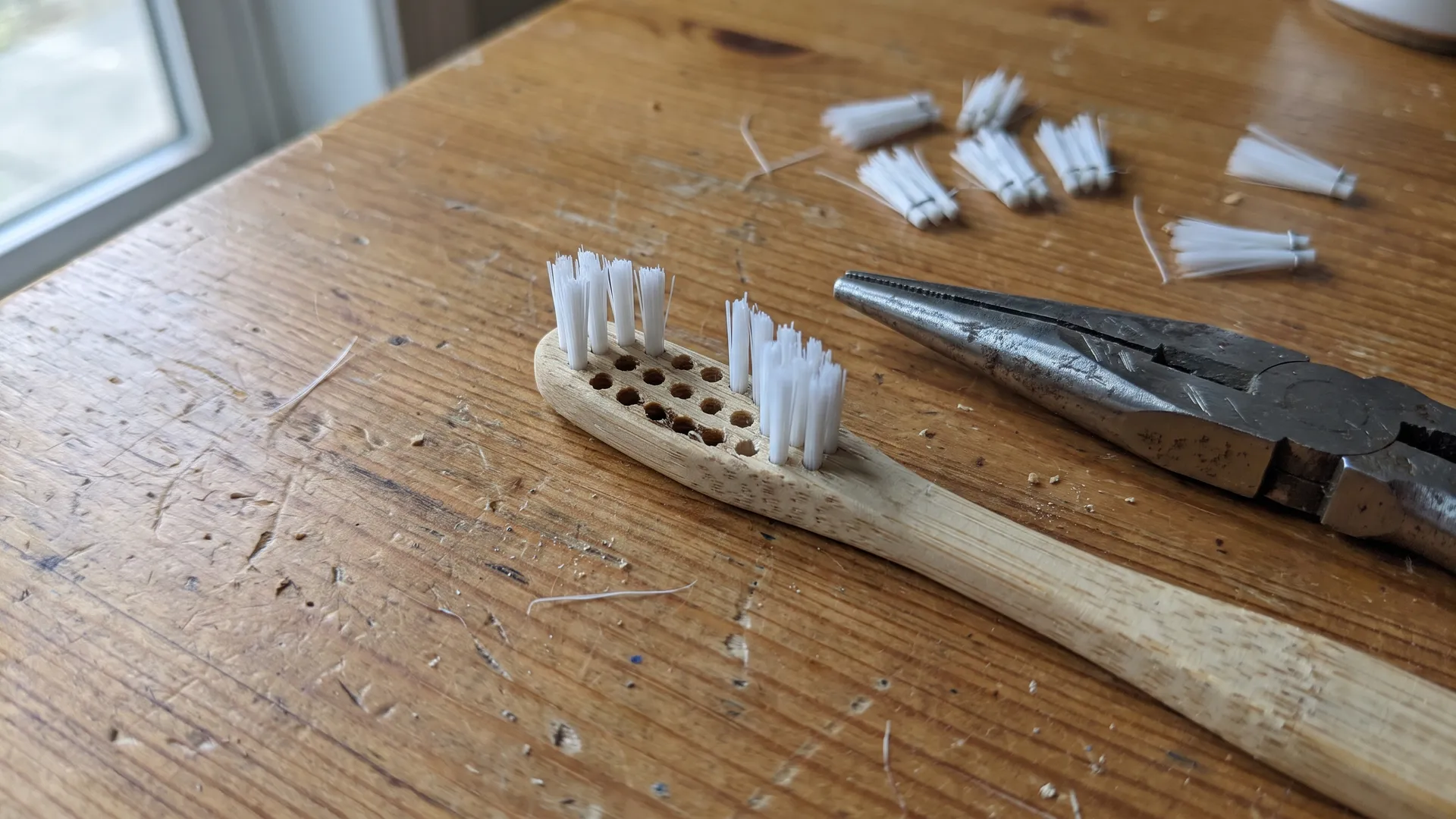
It is a slightly ridiculous thing to have to do to a toothbrush. That’s rather the point — the category has quietly accepted a product that can only be disposed of properly with tools.
If your brush has natural bristles
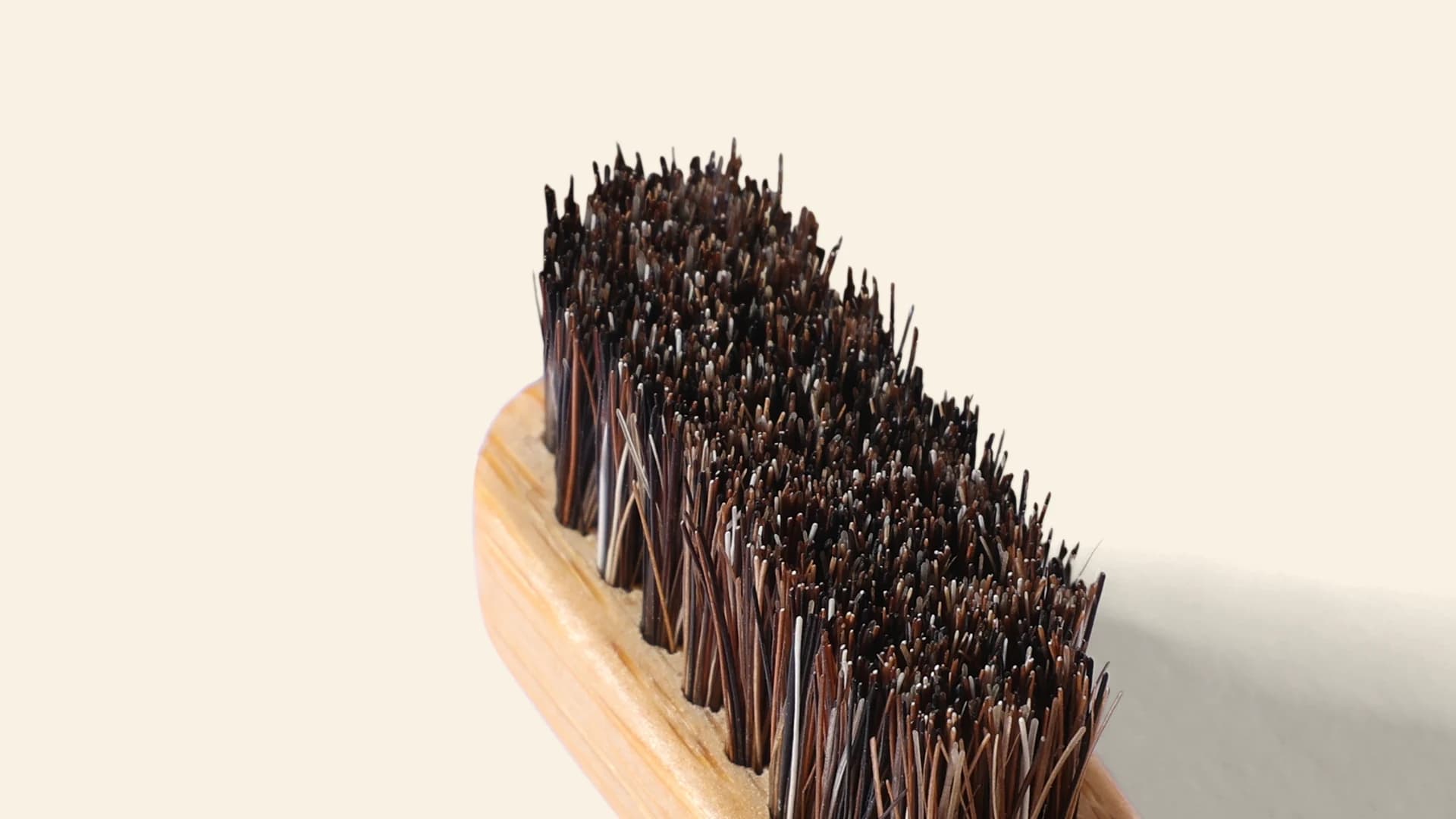
Natural-bristle brushes — horse hair, or boar — are the exception. Those bristles are a protein fibre, closer to wool than to plastic, and they break down the way other animal fibres do. If the head is woven rather than glued, there’s no adhesive left behind either.
With a brush like that, the bristles go into the compost along with the handle — no pliers and no plastic left over, just one small aluminium staple to fish out at the end. This is the one we make, and it’s the reason we made it, though it comes with its own trade-off: horse hair is an animal product, so the brush isn’t vegan.
Which bin, specifically
Once the handle is bare, you have three options, in rough order of preference.
Home compost
The most reliable route, because you control it. Bamboo is a woody material and breaks down slowly — expect months to a few years, depending on how hot and active your heap is, how damp it stays, and how small the pieces are. Snapping or splitting the handle first makes a real difference. A handle in a cold, dry heap can sit there for a very long time looking exactly like a toothbrush handle.
A note on wording, since the category is loose with it: breaking down in a home compost is not the same as being certified compostable. Certification against the Australian home-compost standard (AS 5810) is a specific test that a product either has or hasn’t passed. Ours hasn’t been through it, so we don’t claim it, and you should be sceptical of anyone using the word “certified” without naming the standard.
Council organics bin (FOGO or garden organics)
Many Australian councils now run a FOGO bin — food organics and garden organics — and many accept untreated wood in it. Many also don’t. Bin rules are set council by council, and the same item can be accepted in one suburb and rejected in the next one over.
Check your own council’s A–Z waste guide before putting a handle in the green bin, and take that guide over anything a brand tells you, including us. If your council’s guide doesn’t list it, general waste is the safe answer — a contaminated organics load is worse than one handle in landfill.
General waste
Not the goal, but not a failure either. A bare bamboo handle in landfill is still a considerably smaller problem than a whole plastic brush, and it is much better than putting either one in the recycling bin.
What about the old plastic brush?
General waste. Loose plastic toothbrushes do not belong in kerbside recycling — they’re too small for the sorting machinery, which drops them out of the stream, and they combine several materials in one moulded body. Putting them in the yellow bin makes the load harder to process rather than easier.
The exception is a dedicated oral-care collection program. Some brands and retailers run them, and they are the only route that reliably ends in recycling rather than sorting-line rejection. Worth a look before you bin a drawer full of old brushes.
For a sense of the scale of it, we put together an estimate of how many toothbrushes Australia throws away each year, with every input and the full method published — including why the figure everyone quotes doesn’t add up.
The short version
- Nylon bristles: pull them out with pliers, bin the bristles, compost the handle.
- Natural bristles: compost the handle and bristles, then fish out the small aluminium staple.
- Green bin only if your council’s own guide says untreated wood is accepted.
- Old plastic brushes: general waste, not recycling.
Common questions
01Can you put a bamboo toothbrush in the green bin?
Only if the bristles have been removed first, and only if your council accepts it. Most bamboo handles are untreated wood, which many councils accept in FOGO (food organics and garden organics) bins — but bin rules are set council by council, so check your own council's A–Z waste guide before assuming. Nylon bristles never belong in a green bin.
02How long does a bamboo toothbrush take to break down in a home compost?
A bamboo handle typically breaks down over a period of months to a few years in a home compost, depending on how hot and active the heap is, how damp it stays, and whether the handle was split or snapped into smaller pieces first. A handle sitting in a cold, dry heap can persist for a long time.
03Are bamboo toothbrush bristles compostable?
Almost always no. The overwhelming majority of bamboo toothbrushes sold in Australia use nylon bristles, which are a plastic and do not compost. There is usually a small metal staple pinning each tuft into the head as well, which is a second thing that has to come out. Natural-bristle brushes, such as those using horse hair, are the exception — those bristles are a protein fibre and break down like other animal fibres.
04What do you do with the old plastic toothbrush you're replacing?
Put it in the general waste bin. Loose plastic toothbrushes do not belong in kerbside recycling — they are too small and too mixed in material, so they fall out of sorting machinery or contaminate the stream. Some brands and retailers run dedicated oral-care collection programs; those are the only reliable recycling route.
Bin rules vary by council and change over time. Your own council’s A–Z waste guide is the authority on what your green bin accepts — this page can’t be, and neither can any other brand’s. Tell us if something here is out of date.