Do dentists recommend bamboo toothbrushes?
Mostly, dentists don’t recommend a handle material at all. Dental guidance — the Australian Dental Association’s included — is about soft bristles, light pressure, two minutes twice a day, and a new brush roughly every three months. A bamboo brush that meets those criteria fits the advice exactly as well as a plastic one; the handle is an environmental decision, not a dental one.
Written by Reuben S., who runs BARE and packs every order. Published 15 August 2026
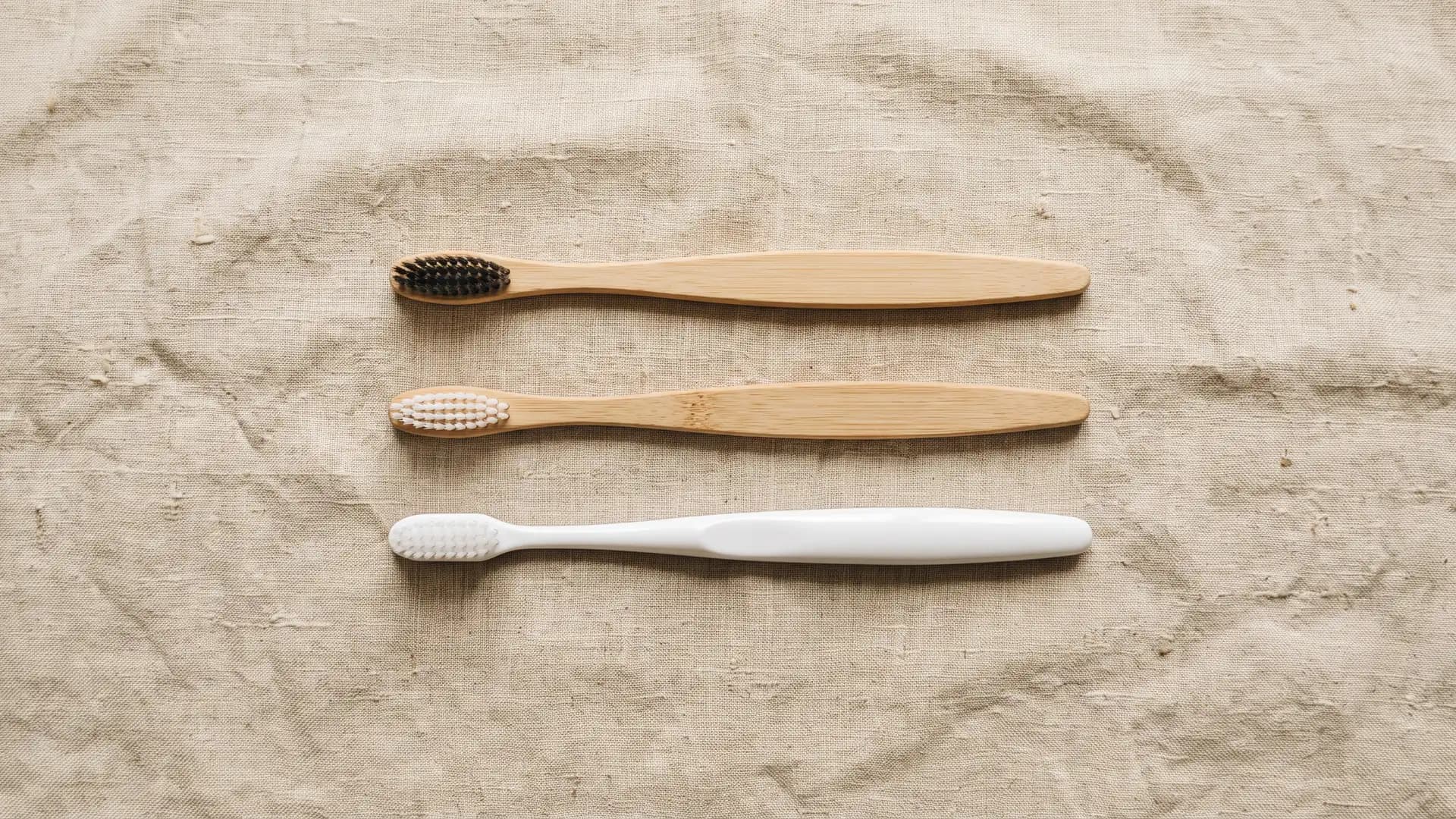
What dental guidance actually says
Read any dental association’s consumer advice on toothbrushes — the ADA here, its counterparts overseas — and the same short list appears every time: soft bristles, so you clean without abrading gums and enamel; light pressure and good technique, because scrubbing harder is not cleaning better; two minutes, twice a day; and replacement about every three months, or sooner once the bristles splay.
Notice what the list never mentions: what the handle is made of. That’s not an oversight — the handle’s job is to be held. Every part of brushing that affects your teeth happens at the bristles and in your hand.
So where does bamboo fit?
Neutrally, which is the honest headline. A bamboo brush with a soft head, used gently and replaced on schedule, satisfies dental guidance completely. A bamboo brush with hard bristles, or one kept past its useful life because it cost more and feels wasteful to bin, fails the guidance the same way a plastic brush would. We’ve gone deeper on the cleaning-versus-environment split in are bamboo toothbrushes actually good? — the short version is that they’re two different questions, and the handle only ever answered the second one.
One practical caveat a dentist would raise if asked: check the bristle softness rating when you switch, because eco-brush labelling is less standardised than the big brands’ — a point we cover in the soft-brush guide. Soft is the setting almost everyone should be on.
Why you won’t find many dentists with a bamboo position
Search for an official dental-association statement on bamboo toothbrushes and you’ll come back mostly empty. That’s worth understanding rather than spinning: professional guidance addresses what affects clinical outcomes, and handle material doesn’t. The absence of a recommendation isn’t an endorsement or a warning — it’s the profession correctly filing the question under “not dental”.
Which is also why we won’t do the thing this page’s search results are full of: paraphrasing that silence into “dentist approved”. No dentist has reviewed this page — when one does, their name and credential will be on it, and not before. What we can honestly say is narrower and more useful: nothing in dental guidance argues against a well-made soft bamboo brush, and everything in it applies to one.
The questions to actually ask your dentist
- “Am I brushing too hard?” — the answer changes more outcomes than any purchase.
- “Is a soft brush right for me, or do I have a specific need?” — braces, implants, gum treatment and prescribed brushes all override anything a manufacturer says, us included.
- “Does my technique reach everywhere?” — two minutes badly aimed cleans less than it feels like it does.
The short version
- Dental guidance specifies bristles, pressure, time and replacement — never handle material.
- A soft bamboo brush replaced on time fits the guidance fully; the handle is an environmental choice.
- There’s no association position on bamboo because it isn’t a clinical question — and no, that doesn’t make anything “dentist approved”.
- Your own dentist outranks every toothbrush website, including this one.
Common questions
01Do dentists recommend bamboo toothbrushes?
Dental guidance doesn't really take a position on handle material. What dentists and dental associations consistently recommend is a soft-bristled brush, light pressure, two minutes twice a day, and replacement about every three months. A bamboo brush that has soft bristles and gets replaced on time fits that guidance exactly as well as a plastic one does — and one that doesn't, doesn't.
02Are bamboo toothbrushes as good as plastic ones for your teeth?
The cleaning is done by the bristles, your technique and your consistency — not the handle. A soft-bristled bamboo brush used well cleans the way any soft-bristled brush used well cleans. No dental association we're aware of advises against wooden handles; equally, none claims bamboo cleans better. The handle is an environmental choice, not a dental one.
03What kind of toothbrush do dentists actually recommend?
Soft bristles, a head small enough to reach everywhere comfortably, and replacement every three months or when the bristles splay — that's the consistent core of consumer guidance from dental associations, including the Australian Dental Association. Beyond that, the best brush is largely the one you'll actually use properly, twice a day.
04Do dentists recommend natural bristle toothbrushes?
Natural bristle sits outside mainstream dental guidance, which was written in and for the nylon era — most dentists will simply never have been asked. The relevant guidance still applies: bristles should be soft and the brush replaced regularly. Horse hair is the softest natural bristle in common use, which is why it's the one we chose; if you have any specific dental condition, ask your own dentist rather than taking a manufacturer's word — including ours.
05Should I ask my dentist before switching toothbrushes?
For most people a toothbrush swap isn't a medical event. The cases where asking first genuinely matters: braces or aligners, implants, recent gum surgery or active gum disease, or any time your dentist has prescribed a specific brush. In those cases follow the professional who can see your mouth, not a website — again, including this one.
Nothing here is dental advice, and no dental professional has reviewed this page — if that changes, their name will appear above. For your own teeth and gums, ask your dentist or oral health therapist.