Are charcoal toothbrushes worth it?
Not for the reasons on the box. Charcoal bristles are ordinary nylon with black pigment added, and the published evidence for the whitening and antibacterial claims is thin to absent. The things that make a brush good — soft bristles, light pressure, replaced on time — don’t change with the colour.
Written by Reuben S., who runs BARE and packs every order. Published 18 August 2026
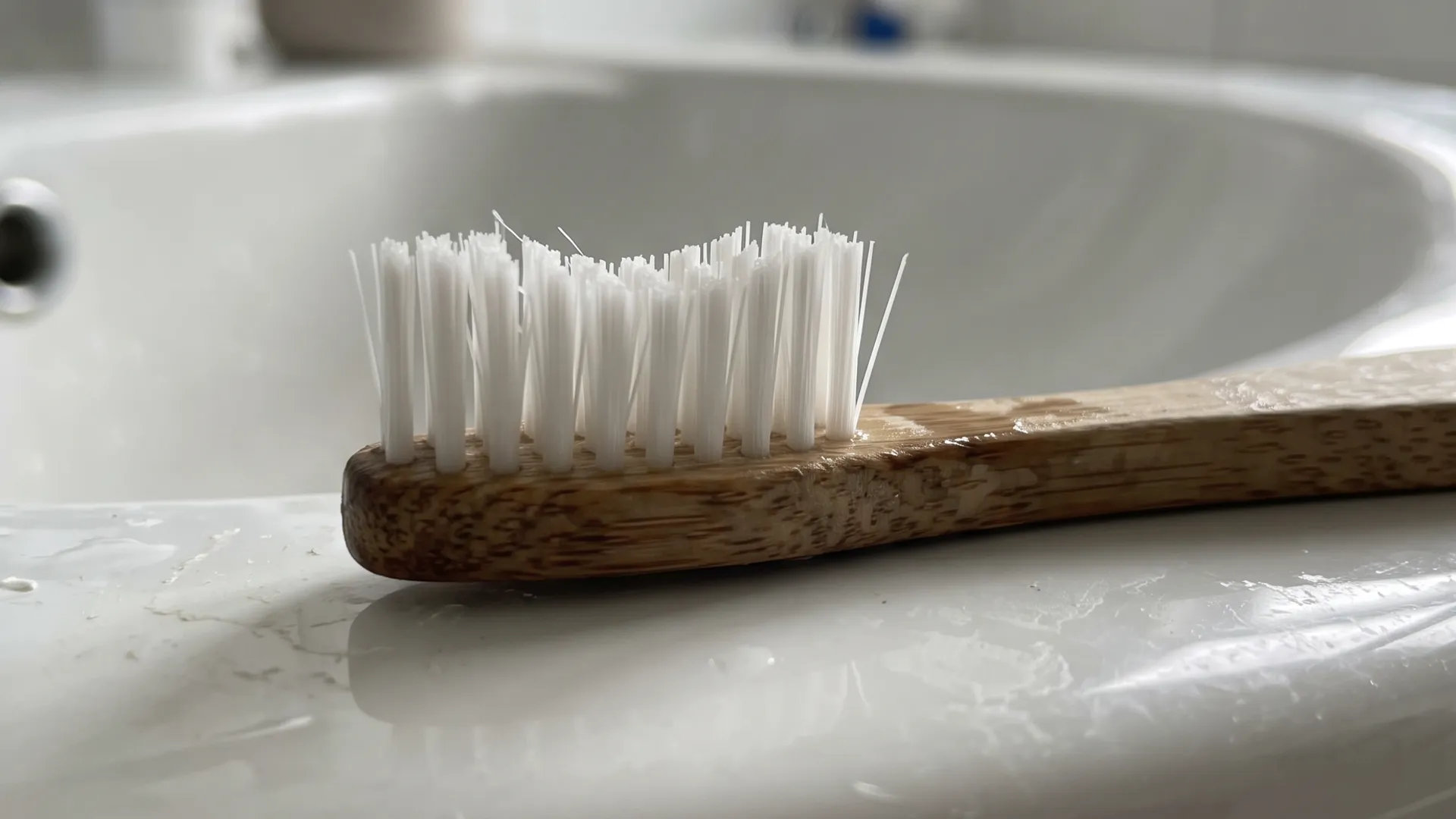
What a charcoal toothbrush actually is
Take an ordinary brush — usually a bamboo handle, since charcoal sells hardest to eco-minded buyers — and make the nylon bristles with charcoal particles mixed in as a pigment. That’s the product. The bristle is still nylon, which is a plastic; the charcoal is locked inside the fibre, turning it black. Nothing else about the brush changes: not the softness grades, not the way it wears, not the three-month replacement rule, and not what has to happen to the bristles before the handle can be composted.
The whitening claim, checked
The pitch borrows charcoal’s real absorbent reputation — activated charcoal in filters and emergency medicine does bind things to its surface. But a pigment sealed inside a nylon strand isn’t a filter bed, and the surface actually touching your teeth is nylon. The published research on charcoal oral care, which mostly examines charcoal toothpastes — where far more charcoal actually contacts the tooth — concluded the whitening evidence was insufficient. For pigmented bristles, with their far smaller dose, there is even less to point to. We couldn’t find a study that would justify buying a brush for its charcoal, and we looked as a competitor hoping to be corrected.
The antibacterial claim, checked
Also thin. There are small studies with mixed results, not a body of evidence — and the practical hygiene of a toothbrush was never really a bristle-chemistry problem. Every brush head hosts microbes after use; rinsing well and drying upright in open air is what actually keeps a brush clean, whatever colour the bristles are.
Where charcoal claims can genuinely bite
One fairness note in the other direction: the abrasion worries you may have read about charcoal attach mostly to charcoal toothpastes — gritty powders scrubbed directly on enamel — not to pigmented bristles. A soft charcoal brush used gently is not a hazard, and we won’t pretend otherwise to score a point. The honest complaint about charcoal brushes isn’t danger; it’s that you’re paying for a colour dressed up as a treatment, on a bristle that’s still the plastic the bamboo handle implies it isn’t.
What to check instead
The label facts that actually predict a good brush: genuinely soft bristles, a head size that fits your mouth, and a bristle material you’ve chosen knowingly — nylon (vegan, plastic) or natural hair (plastic-free, not vegan). Colour isn’t on the list. If a black brush suits your bathroom, buy it for that and enjoy it — just don’t pay extra for the word “detoxifying”.
The short version
- Charcoal bristles are nylon with black pigment — the same plastic, wearing the same way.
- No solid published evidence supports the whitening or antibacterial claims; the main research is on charcoal toothpastes, and even there it’s insufficient.
- The abrasion concern also belongs to toothpastes, not soft pigmented bristles — we won’t overclaim harm either.
- Soft bristles, light pressure, on-time replacement: the boring fundamentals, unchanged by colour.
- Like the look? Fine reason. Expecting a treatment? That’s the part the evidence doesn’t back.
Common questions
01Are charcoal toothbrushes worth it?
Not for the reasons they're sold. Charcoal toothbrush bristles are ordinary nylon with charcoal added as a pigment, and there is no solid published evidence that the charcoal delivers the whitening or antibacterial benefits claimed. What actually matters in a brush — soft bristles, light pressure, regular replacement — is unchanged by the colour. If you like the look, that's a fine reason; the charcoal itself isn't.
02Do charcoal toothbrushes whiten teeth?
There's no good evidence they do. The whitening claims lean on charcoal's absorbent reputation, but a bristle with pigment locked inside the nylon isn't a filter, and the published research on charcoal oral-care products — mostly toothpastes, where the exposure to charcoal is far greater — found the whitening evidence insufficient. A brush's job is plaque removal, and colour doesn't change how well it does it.
03Are charcoal bristles antibacterial?
The claim is common and the supporting evidence is thin — small studies with mixed results, not a body of research a buying decision should rest on. Every toothbrush hosts microbes after use regardless of bristle colour; the hygiene practice that matters is the same for all brushes: rinse well and let the head dry upright in open air.
04Are charcoal toothbrush bristles still plastic?
Yes. Charcoal bristles are nylon — a plastic — with charcoal particles added as a pigment during manufacture. A black bristle on a bamboo handle reads as extra-natural, but materially it's the same nylon as a white bristle, sheds the same way, and has to be pulled out the same way before the handle can be composted.
05Is a charcoal toothbrush bad for your teeth?
A soft charcoal brush used gently is no worse for your teeth than any other soft nylon brush — the harm question mostly attaches to charcoal toothpastes, which are abrasive powders, not to pigmented bristles. The usual rules decide it: soft bristles, light pressure, and if you have worn enamel or receding gums, ask your dentist what suits your mouth.
Nothing here is dental advice. For anything about your own teeth or gums, ask your dentist or oral health therapist.