How to choose a plastic-free toothbrush
Start where the plastic actually hides: the bristles. Almost every brush sold as eco, bamboo or plastic-free still has nylon in the head — so check the bristle material first, then how the bristles are fixed in, then the handle, and only then the colour of the box. If a listing won’t name its bristle fibre, that silence is your answer.
Written by Reuben S., who runs BARE and packs every order. Published 12 August 2026 · Last fact-checked 27 September 2026
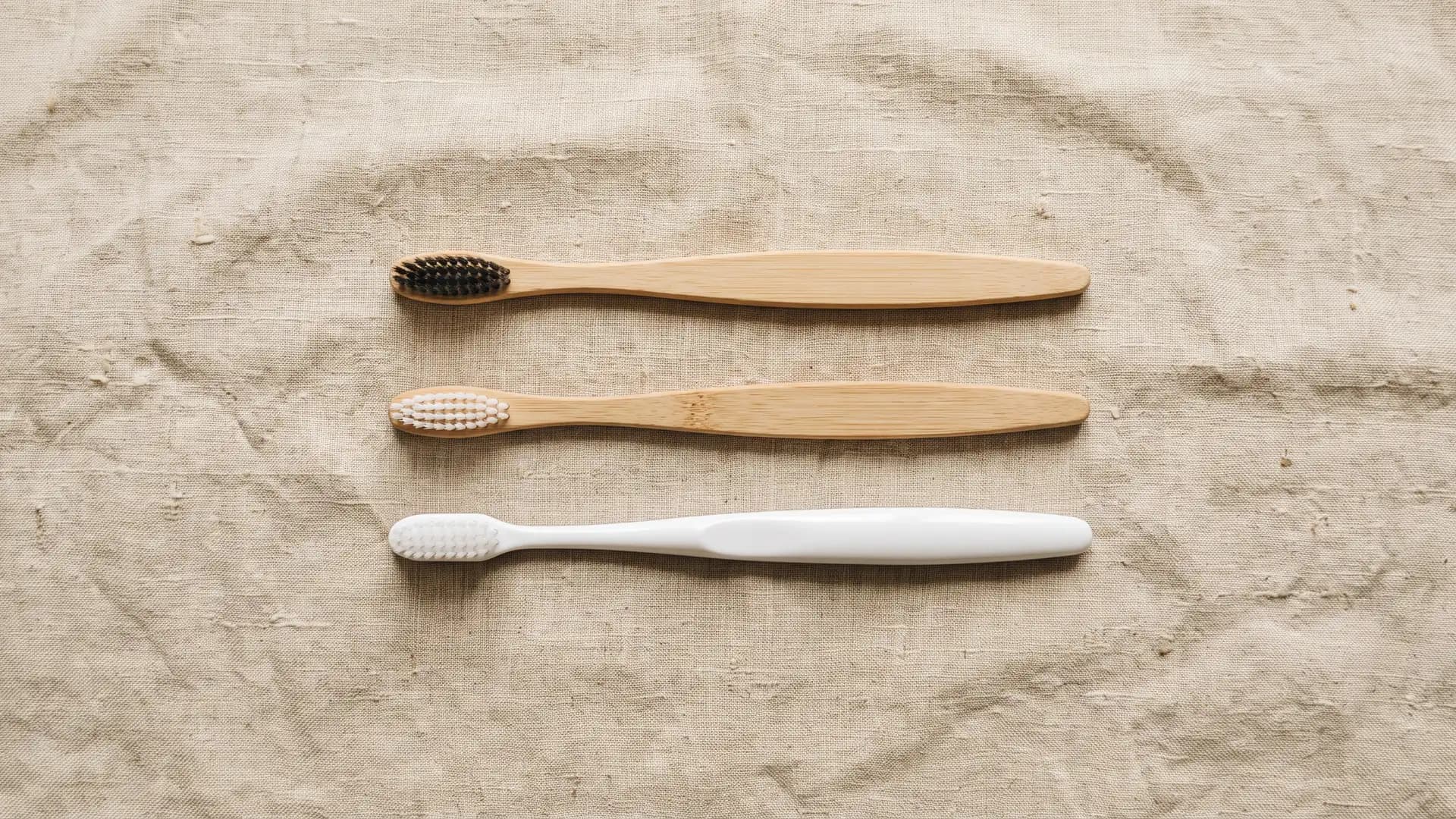
1. Bristles first — that’s where the plastic is
Nylon is the most widely used toothbrush bristle material, and it is the most common choice on bamboo brushes too. The handle changed; the head didn’t. So the first question for any “plastic-free” brush is the one we wrote a whole guide about: what, exactly, are the bristles made of?
A genuine answer names a fibre. The natural options in practice are boar bristle — common, and stiff enough that dentists’ soft-brush advice counts against it — and horse hair, the softest natural bristle in common use, which is what we build with. Both are keratin, both compost, neither is vegan.
2. Learn the label dodges
Three phrases do most of the misleading in this category:
- “Biodegradable bristles” with no material named. The claim usually traces to bio-based nylon, and the research behind it tested thin films in lab conditions, not bristles in bathrooms.
- “Plant-based” or castor-oil bristles. Bio-based describes the feedstock, not the material. Nylon made from castor oil is still nylon — a plastic that sheds like one.
- “BPA-free bristles.” True and empty: nylon doesn’t contain BPA anyway. It’s a reassurance about a problem the material never had, doing work the word “nylon” should be doing.
3. Check how the bristles are held in
Heads are built three ways: bristles glued into the holes, stapled in with small metal anchors, or woven through the head. Glue is the one worth avoiding where you can — it adds an unnamed adhesive to something you hold in your mouth twice a day, and it complicates composting. Our head is woven with no glue, but one small aluminium staple still holds the weave. Plenty of honest brushes use staples; they work, but they mean a small metal part travels with the head.
4. The handle is the easy part
By the time you’re here, the hard choices are made. Moso bamboo is the standard for good reasons — fast-growing, light, holds up wet — and beech and other timbers are fine too. Just don’t let a beautiful handle close the sale before you’ve read the bristle line; that’s the trick the category plays.
5. Ask what happens at the end
A plastic-free brush should come with a straight answer about disposal. Ours: the handle and bristles are home compostable. A bamboo brush with nylon bristles needs the bristles pulled before the handle can be composted — here’s how that actually goes — and if a brush is sold as “compostable” without mentioning that step, its other claims are worth checking too.
6. Be honest about the trade-offs
Choosing plastic-free means choosing natural bristle, and natural bristle comes with real trade-offs: it’s an animal product, so it’s not vegan; it feels different from nylon in the first week; and it rewards drying in open air. If those don’t suit you, a fine soft nylon brush or an electric with replaceable heads may be the better fit — smaller plastic footprint than a whole disposable brush, honestly weighed. We’d rather you pick with the trade-offs in view than regret a purchase from us.
The checklist
- Bristle material named? If not, walk.
- Natural fibre (boar or horse hair) if you want genuinely plastic-free; fine soft nylon if you need vegan.
- Woven or stapled head over glued, where you can tell.
- Handle: bamboo or timber — the easy part.
- A straight disposal answer from the maker.
- Soft, and replaced every three months — the rules that apply to every brush still apply.
Common questions
01Are bamboo toothbrushes plastic-free?
Usually not. The handle is plastic-free; the bristles almost never are. Nylon is the most widely used bristle material, and the most common choice on bamboo brushes too. A genuinely plastic-free brush needs a natural bristle fibre as well as a wooden handle.
02What are plastic-free toothbrush bristles made of?
Natural fibres — in practice boar bristle or horse hair, both keratin. Boar is the common one and runs stiff; horse hair is the softest natural bristle in common use. Plant-based bristle claims are usually bio-based nylon, which is still a plastic polymer regardless of what the feedstock was.
03Is bio-based or castor-oil nylon plastic-free?
No. 'Bio-based' describes where the raw material came from, not what the finished material is. Nylon made from castor oil is chemically still nylon — a plastic — and sheds like one. The research often cited for biodegradable nylon tested thin films under lab conditions, not bristles in a bathroom.
04Do plastic-free toothbrushes clean as well as regular ones?
Cleaning is technique, coverage and time — two minutes, gentle pressure, every surface. The handle material makes no difference to any of that, and a soft natural bristle cleans the way any soft brush does. What matters for your teeth is how you brush and how often you replace the head, not what the brush is made of.
05What should you check before buying a plastic-free toothbrush?
In order: what the bristles are made of (a named natural fibre, not just 'biodegradable'); how the bristles are fixed in the head (glue, staple, or woven); what the handle is; and what the maker tells you about disposal. If a listing names none of these, that silence is the answer.
06Is there a plastic-free toothbrush for kids?
Kids' bamboo brushes with smaller heads exist, but nearly all of them have nylon bristles — the same catch as the adult ones, so check the bristle material first there too. We don't make a kids' size yet, so we have nothing to sell you here: look for a small head, soft bristles, and a handle sized for the child's grip, and ask your dentist if you're unsure what suits their age.
Nothing here is dental advice. For anything about your own teeth or gums, ask your dentist or oral health therapist.