Are electric toothbrushes bad for the environment?
Their footprint is larger: in a 2020 life-cycle study, an electric toothbrush had the greatest impact in 15 of 16 environmental categories, and 11 times the climate impact of a bamboo brush. But a Cochrane review found electric brushes reduce plaque and gum inflammation more on average, and a dentist may recommend one for some people. If you use one, keep the handle going, and keep it out of household bins: its battery is a fire risk.
Written by Reuben S., who runs BARE and packs every order. Published 8 October 2026
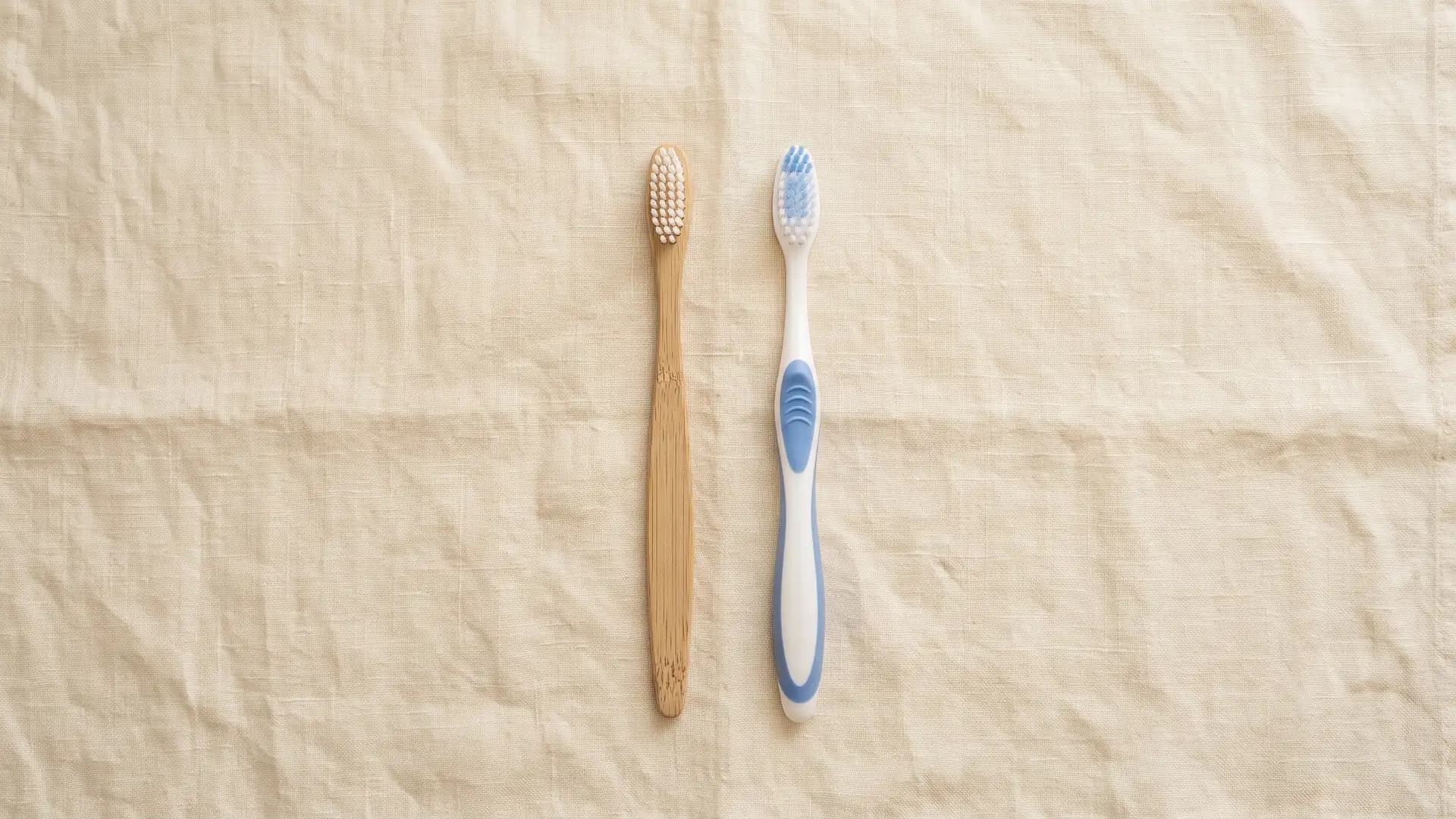
We sell a manual brush, so we’d be expected to say electric is bad. The honest answer has two halves, and this page gives both.
What the life-cycle study found
A 2020 British Dental Journal study compared four toothbrush types over five years: a plastic manual brush, a bamboo brush, a plastic brush with replaceable heads, and an electric brush. The electric toothbrush had the greatest impact in 15 of 16 environmental categories, and its climate change potential was 11 times that of the bamboo brush. The bamboo and replaceable-head brushes had the lowest impact in every category.
Three things to keep in mind. A life-cycle study models particular products, so it tells you about those brushes rather than every electric brush on sale. “11 times” is climate impact against the bamboo brush specifically, not a general multiplier. And the bamboo brush in the study had nylon bristles; no natural-bristle brush was modelled. The study’s lead researcher has said there is not a lot of evidence electric brushes are more effective unless you struggle to clean your teeth with a normal toothbrush. We compare all the brush types in bamboo vs plastic vs electric.
The case for electric
The footprint isn’t the whole story. A Cochrane review found moderate-quality evidence that powered toothbrushes reduce plaque and gingivitis more than manual brushing, by 21% and 11% respectively after more than three months, though the reviewers say the clinical importance is unclear. An 11-year German study found powered-brush users had less gum disease and decay progression and kept more teeth, though that study shows an association, not cause.
The Australian Dental Association says electric brushes can remove bacteria and decrease gum inflammation more than manual brushes, that how well any brush cleans depends on how you use it, and that a dentist may recommend one if you have trouble holding a brush, have braces or have gum disease. healthdirect adds that some people find an electric toothbrush easier to use and better at cleaning their teeth and gums.
So which should you use?
- If your dentist recommends electric, use electric. Your teeth and gums come first, and a brush you use well beats one you don’t.
- If you brush well with a manual, a manual had the smaller footprint in that study. As healthdirect puts it, the way you use your toothbrush is just as important as the type.
- If you have an electric brush, keep using it. Making the handle last longer means fewer handles made and thrown out.
What to do with an electric toothbrush in Australia
The handle: keep it out of household bins
Most electric toothbrushes have a rechargeable battery, usually sealed in. Victoria warns that batteries, including those inside electric toothbrushes, can cause fires in recycling collection trucks and facilities, and there it’s illegal to put e-waste in any household or kerbside bin. In South Australia, electrical and electronic equipment is banned from landfill, and Green Industries SA’s drop-off sites accept electric toothbrushes, and the batteries are separated for recycling. Elsewhere, ask your council where e-waste goes.
One thing to know: B-cycle battery drop-offs take loose, removable batteries, not batteries sealed inside a device. A whole toothbrush goes to an e-waste or embedded-battery drop-off instead. If yours runs on AA batteries, those can go to B-cycle.
The heads
We couldn’t find a kerbside service that takes electric toothbrush heads. The free TerraCycle oral care program takes them until it closes, with final shipments due by 30 December 2026, and TerraCycle’s paid Zero Waste Box accepts heads without an RFID chip, but not whole electric brushes. Otherwise, check your council’s guide. Their bristles are plastic filaments such as nylon or PBT; our guide to recycling a plastic toothbrush in Australia covers the options. Rules and programs here are as at October 2026.
Where we fit
We make a manual brush: sterilised horse hair woven into the bamboo head, with no nylon and no glue. We don’t claim it cleans better than an electric brush, and if your dentist has suggested electric, take their advice. If you’re happy with a manual, ours has no battery, no plastic bristles, and a handle and bristles that break down in a home compost, slowly. One small aluminium staple inside the head doesn’t: fish it out at the end.
The short version
- In one study, the electric brush had the largest footprint in 15 of 16 categories.
- A Cochrane review found electric brushes reduce plaque and gum inflammation more on average; how much that matters clinically is unclear.
- If your dentist recommends electric, use it, and make the handle last.
- Keep an electric toothbrush out of household bins: take it to an e-waste drop-off.
- B-cycle battery bins don’t take sealed-in batteries.
Common questions
01Are electric toothbrushes bad for the environment?
Compared with a manual brush, their footprint is larger. In a 2020 British Dental Journal life-cycle study, the electric toothbrush had the greatest impact in 15 of 16 environmental categories, and 11 times the climate change potential of a bamboo brush. But a Cochrane review found moderate-quality evidence that electric brushes reduce plaque and gum inflammation more on average (how much that matters clinically is unclear), and a dentist may recommend one for some people, so the footprint is only half the question.
02Is an electric toothbrush better for your teeth than a manual one?
On average, somewhat. A Cochrane review found moderate-quality evidence that powered brushes reduce plaque and gingivitis more than manual brushing, though the clinical importance is unclear. The Australian Dental Association says how well any brush cleans depends on how you use it, and that a dentist may recommend an electric brush if you have trouble holding a brush, have braces or have gum disease.
03How do you dispose of an electric toothbrush in Australia?
Keep it out of household bins. Most have a rechargeable battery, usually sealed in, and batteries can cause fires in recycling collection trucks and facilities. In Victoria it is illegal to put e-waste in any household or kerbside bin, and in South Australia electronic equipment is banned from landfill. Take it to an e-waste or embedded-battery drop-off; B-cycle battery drop-offs only take loose, removable batteries (if yours runs on AA batteries, those can go to B-cycle). Check your council for local drop-off points.
04Can you recycle electric toothbrush heads in Australia?
We found no kerbside recycling service that takes them. The free TerraCycle oral care program accepts them until it closes, with final shipments due by 30 December 2026, and TerraCycle's paid Zero Waste Box accepts heads without an RFID chip. Otherwise, check your council's guide. Replace heads every three months, or sooner if worn.
Sources
- Combining evidence-based healthcare with environmental sustainability: using the toothbrush as a model. British Dental Journal, 2020. DOI 10.1038/s41415-020-1981-0. Checked .
- Powered versus manual toothbrushing for oral health. Cochrane Database of Systematic Reviews, 2014. DOI 10.1002/14651858.CD002281.pub3. Checked .
- Long-term impact of powered toothbrush on oral health: 11-year cohort study. Journal of Clinical Periodontology, 2019. DOI 10.1111/jcpe.13126. Checked .
- Brushing teeth. Australian Dental Association. Checked .
- Researchers ask: how sustainable is your toothbrush?. Trinity College Dublin, 2020. Checked .
- Dental care and teeth cleaning. healthdirect Australia. Checked .
- How to dispose of batteries and electronic waste in Victoria. Victorian Government, Department of Energy, Environment and Climate Action. Checked .
- Waste management. Environment Protection Authority South Australia. Checked .
- Embedded battery drop-off sites. Green Industries SA. Checked .
- FAQs. B-cycle (Battery Stewardship Council). Checked .
- Oral Care Recycling Program. TerraCycle Australia. Checked .
- Oral Care Waste and Packaging Zero Waste Box. TerraCycle Australia (shop). Checked .
- Cleaning element carrier and toothbrush head comprising it (US 11,844,419 B2). The Procter and Gamble Company, US patent, 2023. Checked .
Sources were checked on 8 October 2026: dental journals, the Cochrane Library, the Australian Dental Association, healthdirect, and Victorian and South Australian government pages. Disposal rules change, so check your own council’s current guide.