Can you recycle a plastic toothbrush in Australia?
Not in your kerbside bin. Brushes are too small and too mixed-material for council sorting, so at home they belong in general waste. The free route is closing: Colgate’s TerraCycle program takes any brand, but its last shipments are due by 30 December 2026. After that, TerraCycle’s option is an Oral Care Zero Waste Box you buy. Checked 1 October 2026.
Written by Reuben S., who runs BARE and packs every order. Published 14 August 2026 · Last fact-checked 1 October 2026
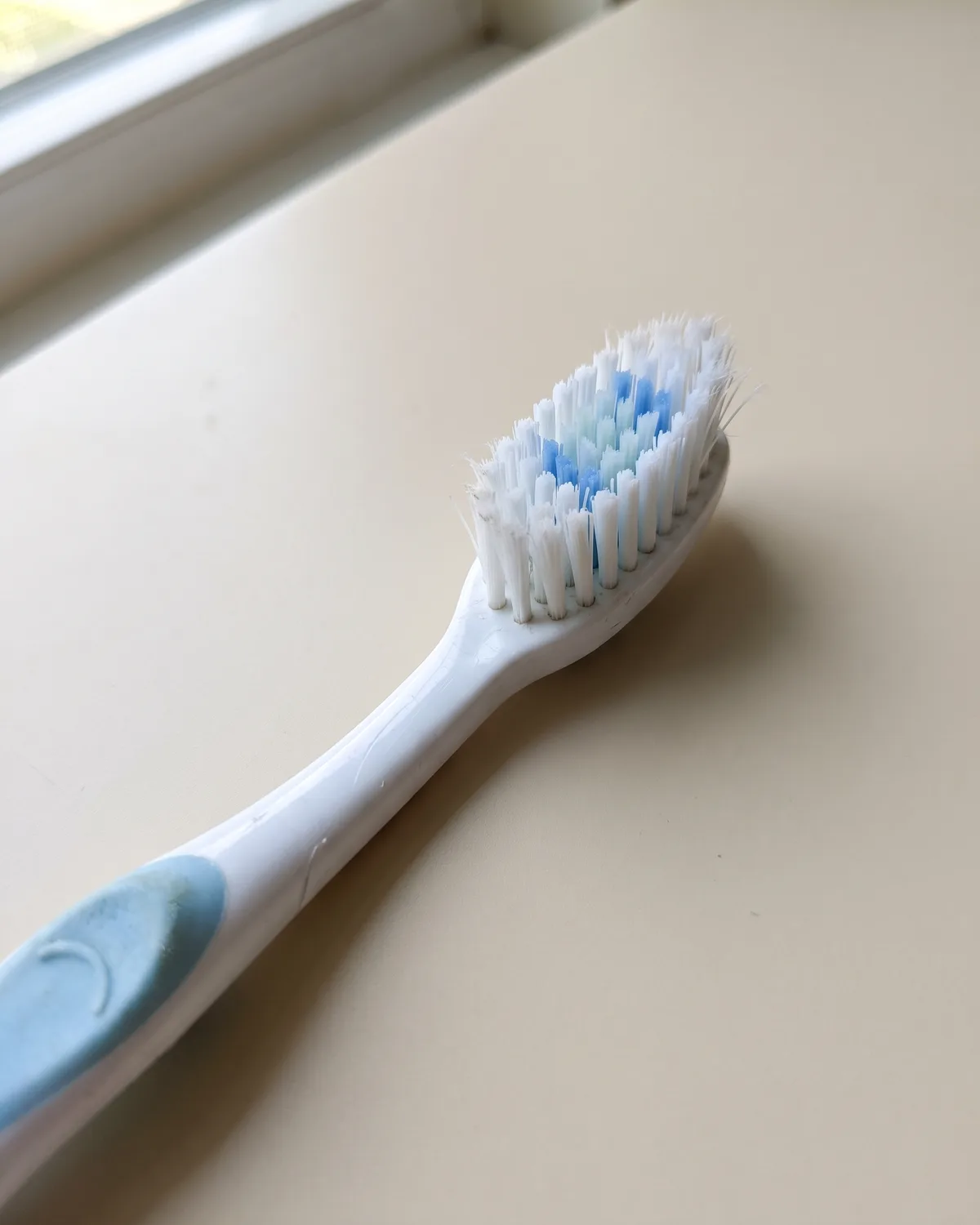
Why the yellow bin says no
Kerbside recycling is built for containers — bottles, cans, tubs, cardboard. A toothbrush fails it twice over.
First, size. Council sorting facilities use screens and rollers that anything much smaller than a credit card falls straight through; small items end up in the glass stream or on the floor, as contamination either way. Second, materials. A toothbrush is typically a polypropylene handle, nylon bristles and a thermoplastic-rubber grip, fused together with no way to separate them mechanically. Recycling systems process single materials; a toothbrush is three at once.
Australian council guidance is consistent on where that leaves you: toothbrushes go in the general waste bin, not recycling — the ACT government’s Recyclopaedia entry for dental products at cityservices.act.gov.au is a representative example, and your own council’s A–Z will say the same. Wishcycling it into the yellow bin feels better and does worse.
The free program, and its closing date
TerraCycle runs an Oral Care Recycling Program in Australia, sponsored by Colgate, which makes it free to use and takes products of any brand. When we checked on 1 October 2026, TerraCycle’s page carried a notice that Colgate is closing the program, with the last shipments due by 30 December 2026. Until then it still works two ways:
- Drop it off. TerraCycle’s site still maps participating public drop-off points, free and with no account or label. Some have already stopped collecting, so it’s worth a quick call before you make the trip.
- Post it from home. Create a free TerraCycle account, collect oral care waste in any box you have, and send it with a prepaid Australia Post label. TerraCycle asks that everything be dry and as empty of product as possible. Allow for postage time: the box needs to be on its way before 30 December.
The program takes manual toothbrushes, electric toothbrush heads, toothpaste tubes and caps, floss containers and picks, and mouthwash bottles. (The electric handle is an e-waste item, since it has a battery, and belongs in e-waste collection instead.)
After 30 December 2026
TerraCycle points people to its Oral Care Zero Waste Box, a box you buy from its shop. It takes plastic toothbrushes and electric toothbrush heads without an RFID chip, but not whole electric toothbrushes or smart heads. It’s a real option for a household, a clinic or a workplace that gets through a lot of oral care waste. For a few brushes a year, most people will find general waste is where they end up, and we’d rather say that plainly. If a new free program appears, we’ll update this page.
What happens next is worth being honest about. Collected items are sorted, shredded and pelletised, and the pellets are moulded into products like outdoor furniture. That is downcycling: the plastic gets one more life as something chunkier, and no toothbrush becomes a toothbrush again. Better than landfill, clearly. A solution, no.
The drawer of old brushes
If you’re reading this, there’s a fair chance you have a few worn-out brushes saved up somewhere, kept out of the bin by good intentions. The practical sequence:
- Keep one as a cleaning brush. An old toothbrush is legitimately the best tool ever made for tile grout, tap bases and bike chains. One. Nobody needs six cleaning toothbrushes.
- Before 30 December 2026, the rest can go to the TerraCycle program. One drop-off or one posted box clears the whole drawer. After that, it’s the paid Zero Waste Box or general waste.
- Bamboo brushes take a different path: bristles out, handle composted — the full method is in how to dispose of a bamboo toothbrush in Australia.
The honest maths
Recycling one toothbrush diverts about 17 grams of plastic. That’s real, and worth the trip if the drop-off is on your way. But the arithmetic that matters runs upstream: dental guidance is a new brush every three months, so one person’s brushing habit produces a steady stream of them — nationally, our estimate runs to tens of millions of brushes a year in Australia alone. Recycling trims where that stream ends up. Changing what the brush is made of turns it off at the tap, which is the version of this problem we decided to work on — you can weigh our obvious interest in saying so.
The short version
- Kerbside recycling: no. Too small, too mixed. General waste if it must go in a bin at home.
- TerraCycle’s Colgate-sponsored program: free, any brand, drop-off or posted from home, but closing. Last shipments by 30 December 2026.
- After that, TerraCycle’s route is an Oral Care Zero Waste Box you buy.
- Electric heads: yes, in either. Electric handles are e-waste.
- Recycling is downcycling. The bigger lever is a brush that doesn’t need the program at all.
Common questions
01Can you put a toothbrush in the recycling bin?
No. Toothbrushes are too small for the sorting machinery at council recycling facilities and are made of several materials fused together — typically a polypropylene handle, nylon bristles and a rubber grip — so kerbside recycling can't process them. Australian council guidance consistently directs toothbrushes to general waste. Putting them in the yellow bin doesn't recycle them; it adds contamination.
02Where can you recycle toothbrushes in Australia?
Until 30 December 2026, through TerraCycle's Oral Care Recycling Program, sponsored by Colgate. It is free, takes any brand, and works through participating public drop-off points or a box posted from home with a prepaid label. Colgate is closing the program, and TerraCycle has asked for final shipments by that date. After it, TerraCycle's route is its Oral Care Zero Waste Box, which you buy. Checked 1 October 2026.
03Does it cost anything to recycle toothbrushes?
The Colgate-sponsored TerraCycle program is free, postage included, until it closes: final shipments are due by 30 December 2026. After that, TerraCycle's option is the Oral Care Zero Waste Box, a box you buy from its shop. Without either, a plastic toothbrush goes in general waste. Checked 1 October 2026.
04Can you recycle electric toothbrush heads?
Yes. The free TerraCycle oral care program takes electric toothbrush heads until it closes on 30 December 2026, and TerraCycle's paid Oral Care Zero Waste Box takes heads that have no RFID chip. The electric handle itself contains a battery, so it belongs in e-waste collection, never a household bin. Checked 1 October 2026.
05What happens to recycled toothbrushes?
They're downcycled, not turned back into toothbrushes: TerraCycle sorts collected items by material, shreds and pelletises the plastics, and the pellets go into moulded products such as outdoor furniture. That's genuinely better than landfill, but it's a one-way trip down the material ladder — which is why not creating the waste beats recycling it.
06How do you dispose of a bamboo toothbrush?
Differently. A bamboo brush isn't recycled, it's composted, but almost all bamboo brushes have nylon bristles that must be pulled out first, and those go in general waste. We've written a full step-by-step guide to disposing of a bamboo toothbrush in Australia.
Program details are as at 1 October 2026 and are changing. TerraCycle’s own site is the source of truth for deadlines, drop-off points and accepted items. Bin rules vary by council; check your council’s A–Z when in doubt.