Are plastic toothbrushes safe? BPA, nylon and what's actually known
By the evidence available: yes, in the sense people usually mean. The BPA worry is misdirected — toothbrushes are polypropylene and nylon, materials not made with BPA — and no regulator flags brushing with plastic as a chemical hazard. The one genuinely open question is microplastics from worn bristles, where the honest answer is that nobody knows yet. You’re reading a company that sells the alternative, and we still won’t scare you.
Written by Reuben S., who runs BARE and packs every order. Published 15 August 2026
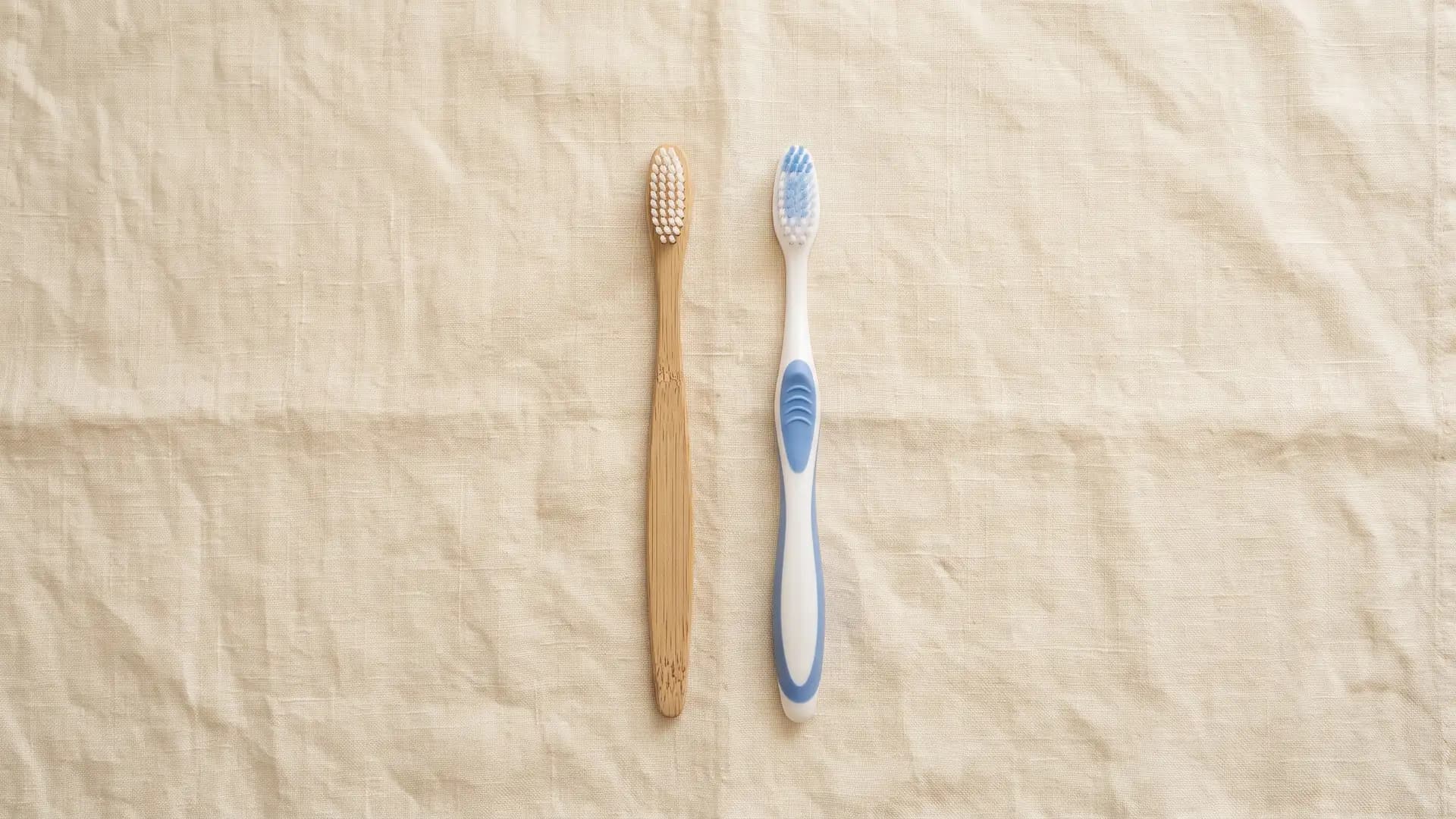
What a plastic toothbrush is actually made of
Nearly every plastic toothbrush is the same three materials: a polypropylene handle, often with a thermoplastic rubber grip, and bristles of nylon (or PBT on many electric heads). Polypropylene and nylon are two of the most-studied polymers in existence — they’re used in food containers, medical devices and textiles — and both have held the toothbrush job for the better part of a century.
The BPA question answers itself
BPA — bisphenol A, the chemical the modern plastic-safety conversation largely started with — is a building block of polycarbonate and epoxy resins. It is not used to make polypropylene, nylon or PBT. A toothbrush doesn’t contain BPA for the same reason water doesn’t contain fat: the recipe never called for it.
Which casts the “BPA-free!” badge on toothbrush packaging in its true light: it’s marketing to a fear, not information. Every ordinary toothbrush earns that label automatically — we made the same point about bristle claims in the nylon-free guide. When a label reassures you about a hazard the product never had, it’s telling you about the marketer, not the product.
We’d note the obvious: it would be commercially convenient for us to whisper that plastic brushes leach something sinister. They’re not known to, normal use isn’t flagged by any regulator we’re aware of, and a company that needs you frightened to buy its brush has a worse product than we hope we do.
The genuinely open question
One issue survives honest scrutiny, and it deserves its precise shape rather than a scare: worn bristles shed microplastic fragments. Preliminary research has measured on the order of dozens of particles a day during brushing, and the health significance of ingesting them is unknown — not “known to be harmful”, not “known to be fine”, unknown. We’ve laid out exactly what the studies show, and the popular figure we refused to repeat, in do toothbrushes shed microplastics?
Reasonable people land differently on an open question. Replacing on time and brushing gently reduces the shedding either way; bristles that aren’t plastic step out of the question entirely. Both are choices, not prescriptions.
Where the real case against plastic brushes lives
Not in your mouth — in the bin. The solid ground against the plastic toothbrush was never toxicity; it’s that every one ever made persists, that they’re discarded on a quarterly schedule by design, and that kerbside recycling can’t take them. That case doesn’t need exaggerating, which is why this page didn’t.
The short version
- Toothbrushes are polypropylene and nylon — materials not made with BPA. “BPA-free” on a brush is trivially true.
- No regulator flags normal brushing with plastic as a chemical hazard, and we won’t invent one.
- The open question is microplastics from worn bristles: real particles, unknown significance.
- The strong case against plastic brushes is environmental, and it stands on its own.
Common questions
01Do plastic toothbrushes contain BPA?
As a rule, no — and not because of the 'BPA-free' badge. BPA is a building block of polycarbonate and epoxy resins. Toothbrush handles are polypropylene and the bristles are nylon or PBT, none of which are made from BPA. The 'BPA-free' label on a toothbrush is true in the way 'fat-free' is true on bottled water: accurate, and telling you nothing the materials didn't already guarantee.
02Is nylon toxic in a toothbrush?
Nylon has been the dominant bristle material since 1938 and is used across food-contact and medical applications; regulators haven't flagged nylon bristles as a chemical hazard in normal use, and we found no evidence that they are. The honest open question about nylon bristles isn't acute toxicity — it's the microplastic particles worn bristles shed, where the health significance is genuinely unknown.
03Are old or worn toothbrushes unsafe?
Not chemically — a worn brush's problem is that splayed bristles clean poorly and shed more worn material. Dental guidance says replace about every three months, or sooner once bristles splay. If 'unsafe' means bacteria: rinsing well and drying upright handles the everyday hygiene question for any brush, whatever it's made of.
04Should I worry about microplastics from my toothbrush?
Worry is optional; awareness is fair. Worn nylon bristles do shed microplastic fragments — preliminary research measured on the order of dozens of particles a day — and nobody yet knows what ingesting them means for health, in either direction. We've written that evidence up carefully in a dedicated guide rather than compressing it into a scare or a shrug here.
05Is a bamboo or natural toothbrush safer than a plastic one?
We sell a natural-bristle brush and we won't claim it: there is no evidence that any toothbrush handle or bristle material is a health hazard in normal use, so there's no established safety gap for us to sell you across. The honest differences are environmental — waste and material persistence — plus the open microplastics question that non-plastic bristles simply don't participate in.
Nothing here is health advice, and this page makes no claim that any toothbrush causes or prevents any health condition. For anything about your own health, talk to your doctor or dentist.