Can you use a horse hair toothbrush if you're allergic to horses?
If you’re allergic to horses, talk to your doctor or an allergy specialist before using one, and if in doubt choose a different brush. Horse allergens have been measured in horse hair, and we couldn’t find any study showing whether sterilising the hair, as we do, removes them.
Written by Reuben S., who runs BARE and packs every order. Published 9 October 2026
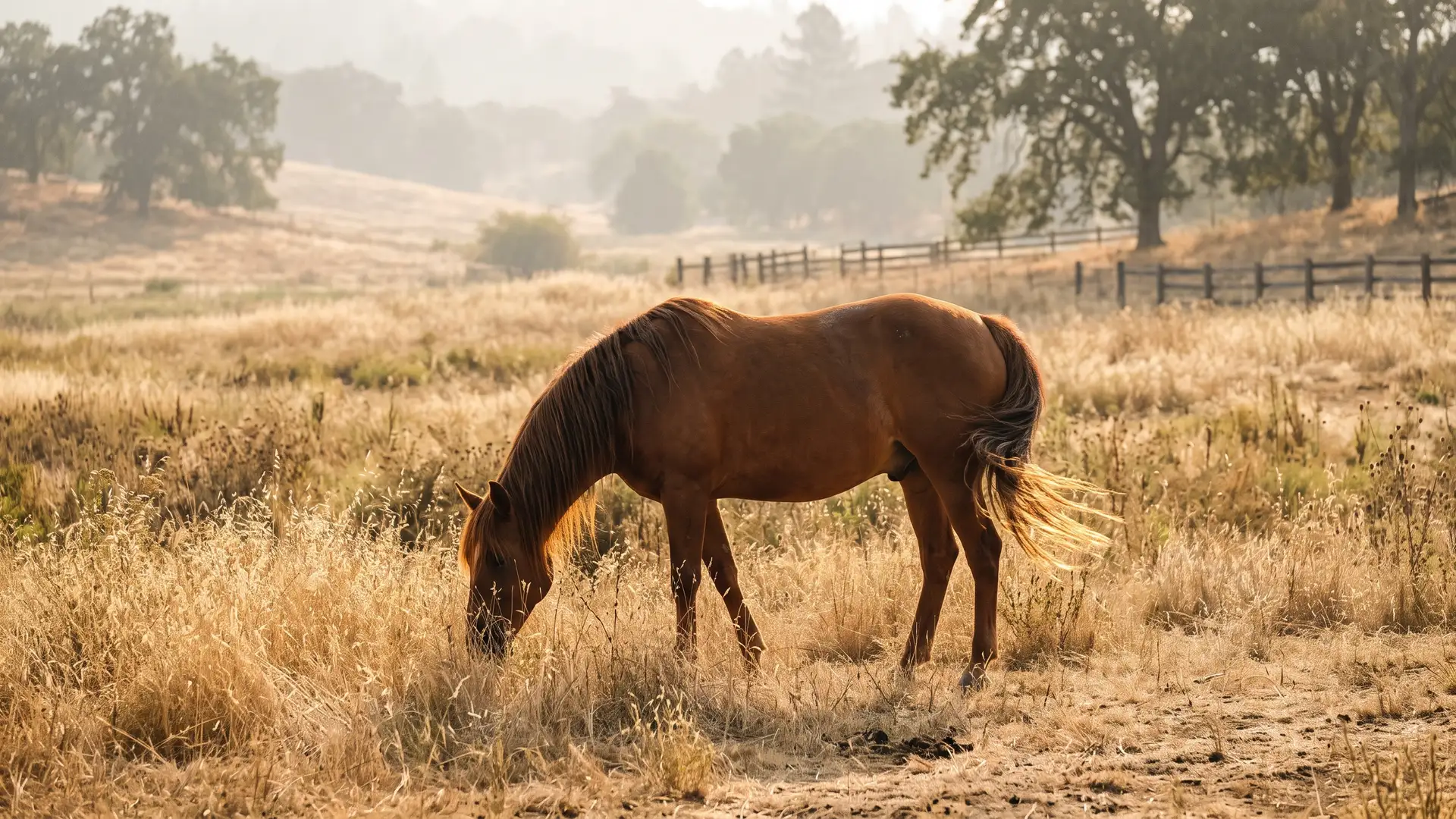
Where horse allergens are found
Five horse allergens are listed in the international allergen naming database, named Equ c 1, 2, 3, 4 and 6. Equ c 1 is described as the major one, found in horse saliva, coat and dander; in one Polish clinic, 83% of the people allergic to horses who were tested had IgE antibodies to it.
It’s in the hair as groomed off the horse, too. A 2018 German study measured Equ c 1 and Equ c 4 in 224 hair samples from 32 breeds. Levels differed by breed, but far more from horse to horse, and Curly Horses, said to be hypoallergenic, came out no lower than the rest. A 2024 study found every known respiratory horse allergen in horse hair extracts.
What nobody has tested
Both of those studies used body hair groomed off live horses, and both deliberately left out mane and tail hair. Like the study hair, ours is collected through grooming. Unlike it, ours is then sterilised with high heat, and nobody has measured allergen after that step.
We looked for a study that measured allergens in horse hair after heating or sterilising, or in mane or tail hair, and couldn’t find one. Allergen is known to be in groomed horse hair before processing; nobody has shown that high heat removes it, and nobody has shown it doesn’t. Whatever part of the horse the hair comes from, nobody has shown it is free of horse allergen. So we can’t tell you our bristles are allergen-free or hypoallergenic, and we won’t. We couldn’t find any reported case of a reaction to a horse hair toothbrush either, but that’s an absence of reports, not evidence of safety.
Horse hair in everyday things
Allergy researchers have suggested that horse hair in manufactured goods, such as mattresses, upholstery and the stiffening in jacket lapels, may be a hidden source of exposure for people who react to horses without going near one. It’s put forward as a possibility rather than a proven route, and cross-reactions with other animals’ allergens are the other explanation put forward. For scale, in an Italian study, of 113 allergy patients who tested positive to horse dander, 60 said they’d had no direct or indirect contact with horses at all.
What Australia’s allergy specialists say
The Australasian Society of Clinical Immunology and Allergy (ASCIA) says horse allergens can trigger hay fever and asthma, though horse allergy is less common than cat and dog allergy, and that a clinical immunology/allergy specialist can diagnose it with skin or blood tests. It also says horse dander may cling to clothes, that this may be enough to trigger asthma in people with serious horse allergy, and that avoiding the animal is the most effective way to minimise exposure.
ASCIA doesn’t mention horse hair products. Taking its advice at face value, though, a brush made of horse hair is a possible exposure that someone with a serious horse allergy would want to clear with their doctor first.
What we’d suggest
- Allergic to horses, or not sure? Ask your doctor or an allergy specialist before using a horse hair brush. If in doubt, choose a brush without animal fibre.
- Ever reacted around horses or stables? Treat that as a reason to check first, even without a diagnosis.
- Already using one and notice itching, swelling or wheezing? Stop using it and get medical advice. If your lips, tongue or throat swell or you have trouble breathing, call 000.
- No horse allergy? The other questions people ask about horse hair, like hygiene and how the hair is collected, are covered in are horse hair toothbrushes hygienic and how the hair is sourced.
Where we fit
Our bristles are sterilised horse hair, a by-product of routine grooming, woven into a bamboo head with no nylon and no glue. We make no allergy claims about them, because we haven’t seen evidence that would support one. If you have a horse allergy, please check with your doctor before you order rather than after.
The short version
- Horse allergens have been measured in horse body hair as groomed off the horse.
- No study we found has tested mane or tail hair, or sterilised horse hair, either way.
- Researchers have suggested horse hair goods may be a hidden source of exposure.
- If you’re allergic to horses, ask your doctor first; if in doubt, choose a different brush.
Common questions
01Can you use a horse hair toothbrush if you're allergic to horses?
Talk to your doctor or an allergy specialist first, and if in doubt choose a brush without animal fibre. Horse allergens have been measured in horse hair, and we couldn't find any study showing whether sterilised horse hair like ours still carries them. ASCIA, the peak allergy body for Australia and New Zealand, says avoiding the animal is the most effective way to minimise exposure.
02Does sterilising horse hair remove allergens?
Nobody seems to know. We searched the research literature and couldn't find a study that tested whether heating or sterilising horse hair removes or destroys horse allergens, in either direction. So a sterilised horse hair bristle shouldn't be described as allergen-free or hypoallergenic.
03Are horse allergens in the hair or only in the dander?
In the hair as groomed off the horse, too, at least for body coat hair. A 2018 German study measured the allergens Equ c 1 and Equ c 4 in 224 horse hair samples, and a 2024 study found all known respiratory horse allergens in hair extracts. Both used hair groomed off live horses, and both left out mane and tail hair.
04Is horse hair hypoallergenic?
Not on any evidence we found. A 2024 study found all known respiratory horse allergens in body hair extracts and no evidence that Curly Horses, said to be hypoallergenic, are any less allergenic, and no study we found has tested sterilised toothbrush bristles. If you're allergic to horses, ask your doctor before using a horse hair toothbrush.
Sources
- Measurement of Horse Allergens Equ c 1 and Equ c 2: A Comparison among Breeds. International Archives of Allergy and Immunology, 2022. DOI 10.1159/000525960. Checked .
- Sensitization to Horse Allergens: Molecular Analysis Based on the Results of Multiparameter Tests. International Journal of Molecular Sciences, 2025. DOI 10.3390/ijms26041447. Checked .
- Lower allergen levels in hypoallergenic Curly Horses? A comparison among breeds by measurements of horse allergens in hair and air samples. PLOS ONE, 2018. DOI 10.1371/journal.pone.0207871. Checked .
- Proteomic analysis of horse hair extracts provides no evidence for the existence of a hypoallergenic Curly Horse breed. Clinical and Translational Allergy, 2024. DOI 10.1002/clt2.12329. Checked .
- Sensitization to horse allergens in Italy: a multicentre study in urban atopic subjects without occupational exposure. International Archives of Allergy and Immunology, 2011. DOI 10.1159/000321414. Checked .
- Pet Allergy Frequently Asked Questions. Australasian Society of Clinical Immunology and Allergy (ASCIA), 2024. Checked .
- Allergen Minimisation. Australasian Society of Clinical Immunology and Allergy (ASCIA), 2024. Checked .
Sources were checked on 9 October 2026: peer-reviewed allergy research and the Australasian Society of Clinical Immunology and Allergy. This page is general information, not medical advice; talk to your doctor about your own allergies.