Choosing a nylon-free toothbrush in Australia: a label checklist
The short answer
Ask for the bristle material by name. Nylon-free means no nylon, not necessarily no plastic: PBT is a plastic, but it is not nylon. If you want animal-fibre bristles, look for horse hair or boar. A bamboo handle only describes the handle. We won’t crown a winner, but this page shows you how to check any listing in a minute.
Written by Reuben S., who runs BARE and packs every order. Published 16 September 2026 · Updated 12 November 2026
The brush we sell, the BARE horse hair toothbrush, has its bristles woven into a bamboo head, with no nylon and no glue.
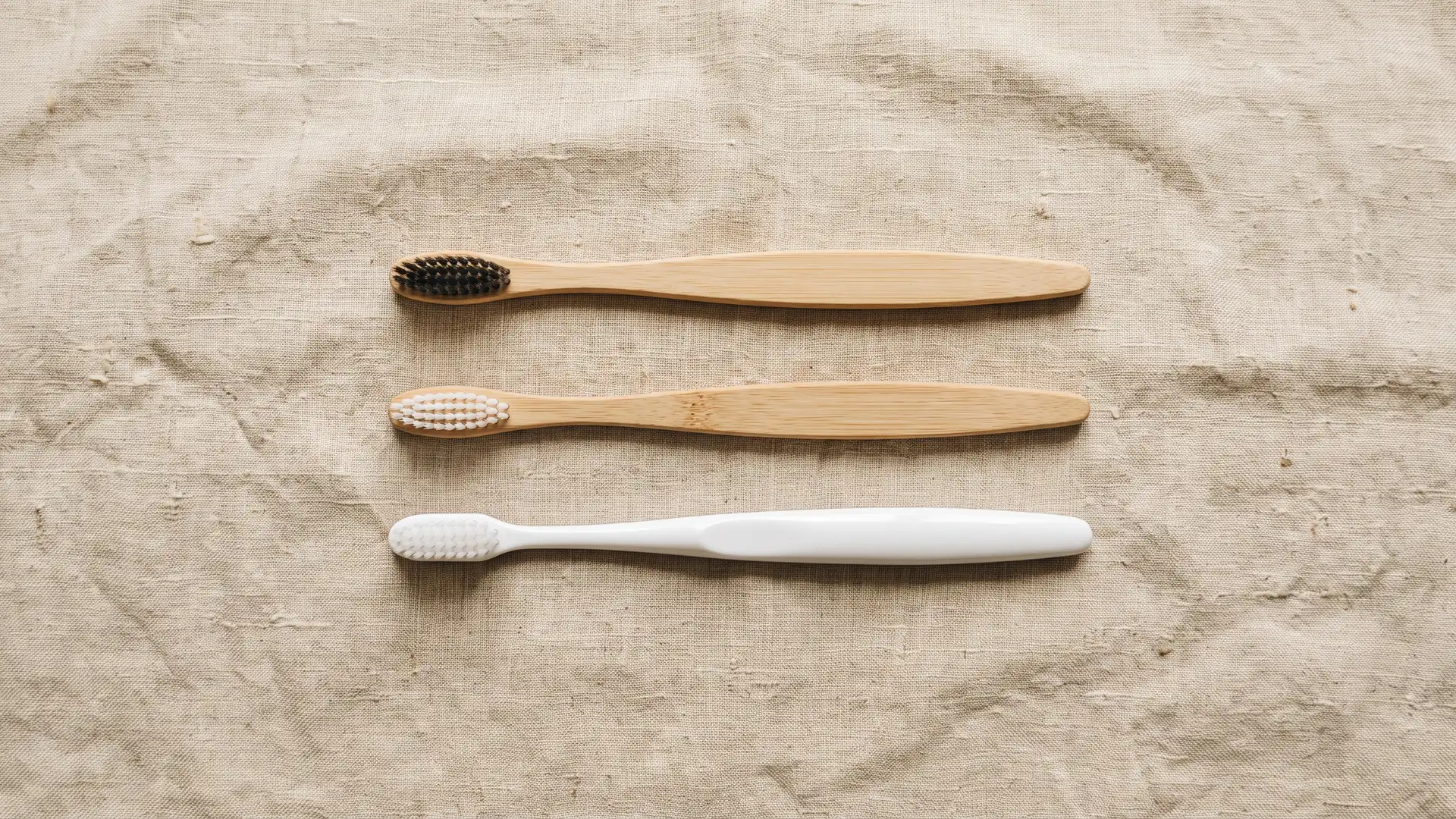
What to check before you buy
- The bristles, named in plain words. Look for the actual material name, then check whether it fits your preference. An unnamed fibre is unknown, not proof of nylon. Which materials count is set out in our guide to what makes a nylon-free toothbrush.
- Handle and bristles, described separately. “Plastic-free bamboo toothbrush” often means a plastic-free handle only. The bristle line is where the answer is.
- Vegan or not. Horse hair and boar are animal fibre, so neither is vegan. A vegan brush has a synthetic bristle. The trade-offs are in is a bamboo toothbrush vegan?
- Trial and returns. Know before you order whether you keep the brush or post it back. Ours is summarised below, with full terms on shipping and returns.
The wider shopping order, bristles first, then how they are fixed, then the handle, is in how to choose a plastic-free toothbrush. If you are weighing the two natural fibres, start with boar bristle vs horse hair.
Label words that don’t mean nylon-free
Eco shelves reuse the same friendly words on different materials. Tap a label style to see what it usually means for the bristles.
Castor oil is a good example. It describes where the raw material comes from. In the castor-oil brush that McGill University’s Office for Science and Society examined, the bristles were nylon 11, made from castor oil through several chemical steps. So a plant-based starting point doesn’t settle the question. The fibre name does.
Where BARE fits
We make one brush. Horse-hair bristles are woven into a bamboo handle, with no nylon. There is no glue, and the hair goes through high-temperature processing before the brush is made. One small aluminium staple holds the weave inside the head. It doesn’t break down: leave it in the home compost, or pick it out later.
It is not vegan. The brush is imported. We are Australian owned and designed, and we pack and post every order by hand from South Australia. Shipping is free anywhere in Australia. A single is A$12.99, a pack of 4 is A$44.99 and a pack of 8 is A$79.99.
If natural bristle isn’t for you, the 30-Day Soft Switch is there for that:
Switch to BARE for thirty days. If you'd honestly go back to nylon, tell us and we refund the lot. You keep the brush, so there's nothing to post back and no forms.
First order only, one claim per customer. Full terms on shipping and returns.
How to compare any nylon-free listing
| What to check | Looks right | Worth a question |
|---|---|---|
| Bristle name | Horse hair or boar named on the listing | Bamboo, charcoal, bio-based or biodegradable with no fibre named |
| Handle claim | Handle and bristles described separately | Plastic-free or eco with no bristle line |
| Vegan claim | Names its synthetic bristle material | Vegan bamboo brush with unnamed bristles |
| Trial and returns | A clear path if the feel is wrong, and you know whether you keep the brush | Vague satisfaction wording and no returns detail |
The short version
- Nylon-free means no nylon. For plastic-free bristles, the material name matters too; a bamboo handle alone is not enough.
- Plant or castor-oil wording describes the raw material, not the finished bristle.
- Use the checklist and the table, and ask the seller when the bristle line is silent.
Common questions
01What does nylon-free mean on a toothbrush?
It means the bristles contain no nylon. Horse hair and boar are nylon-free animal fibres; PBT and silicone are not nylon either, although they are synthetic. Nylon-free does not mean plastic-free. A bamboo handle alone says nothing about the bristles.
02Are bamboo toothbrushes nylon-free?
Not by default. Bamboo describes the handle. Nylon is the most common bristle choice on bamboo brushes, so check the bristle line on the listing. If it doesn't name the fibre, ask the seller before you buy.
03Is a castor-oil or plant-based bristle nylon-free?
Not in the example researchers have looked at. Nylon 11 can be made from castor oil, and the castor-oil toothbrush bristles McGill University's Office for Science and Society examined were nylon 11. Where the raw material comes from and what the finished bristle is are two different questions.
04Is BARE vegan?
No. The bristles are horse hair, which is an animal product. If vegan is your line, you will want a brush with a named synthetic bristle instead.
05What if I try a natural bristle and don't like it?
BARE comes with the 30-Day Soft Switch. Switch to BARE for thirty days. If you'd honestly go back to nylon, tell us and we refund the lot. You keep the brush, so there's nothing to post back and no forms. First order only, one claim per customer, and the full terms are on the shipping and returns page.
Sources (3)
- Physicochemical Properties of Curen Filaments Versus Nylon Filaments in Toothbrush Bristles: An In Vitro Study. Cureus, 2024. DOI 10.7759/cureus.75767. Checked .
- Exploring Sustainable Alternatives for Toothbrushes. Plastics Engineering (Society of Plastics Engineers), 2024. Checked .
- Plant-based toothbrush? Really?. McGill University Office for Science and Society, 2017. Checked .
Nothing here is dental advice. For anything about your own teeth or gums, ask your dentist or oral health therapist.