Boar bristle vs horse hair toothbrush: which is softer?
Horse hair is the softer of the two: the softest natural bristle in common use, where boar is firmer and was the world’s default toothbrush fibre for more than four centuries. Otherwise they’re close cousins: both keratin, both needing the same rinse-and-dry care, neither vegan. We make the horse-hair kind, so read our comparison knowing that.
Written by Reuben S., who runs BARE and packs every order. Published 14 August 2026 · Last fact-checked 27 September 2026
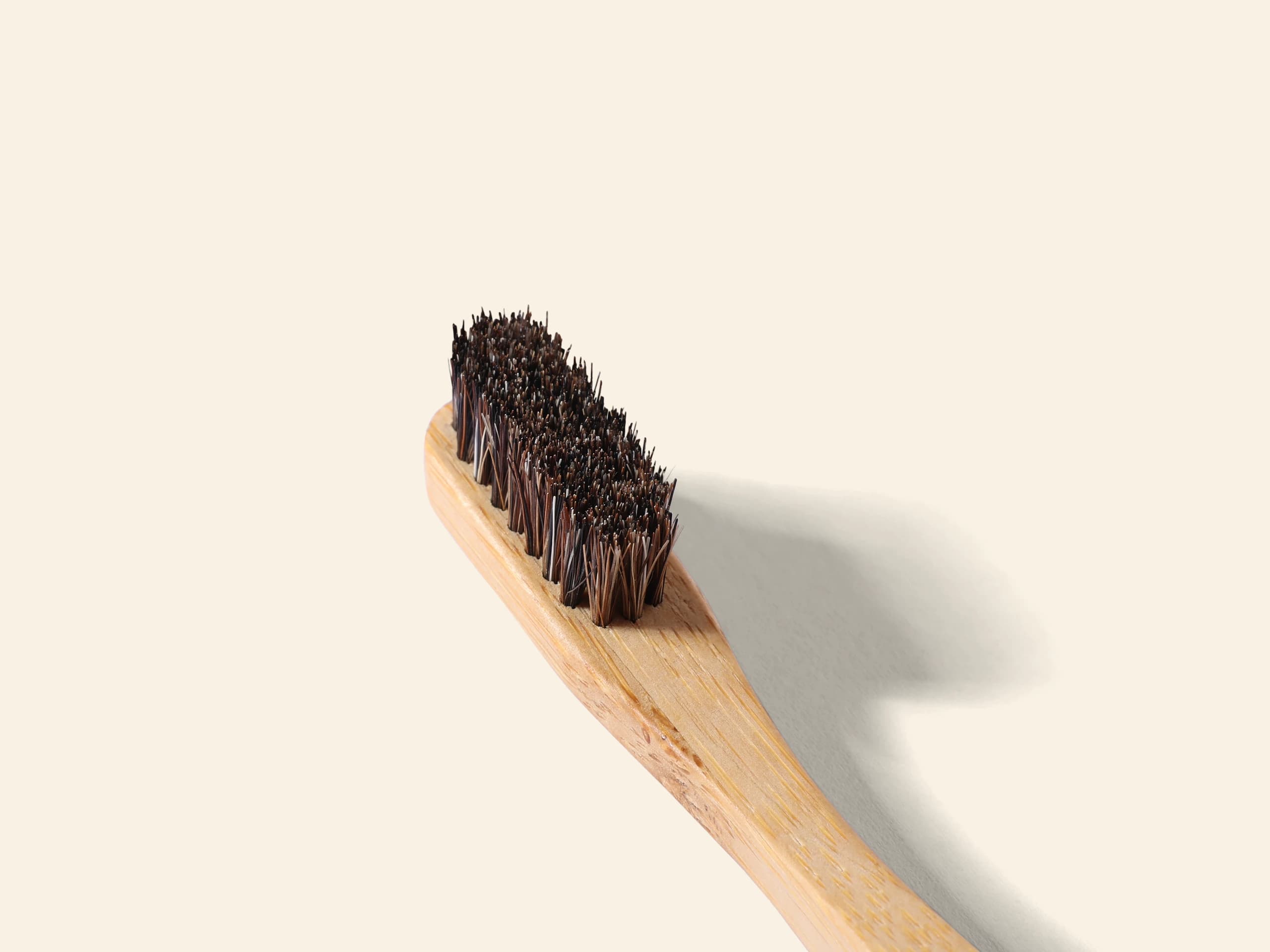
The fibre that owned brushing for over four hundred years
If this comparison had been written any time between the 1400s and 1938, it would have been short: boar. The bristle toothbrush as an object was developed in China with boar bristle set into bone or bamboo, the design travelled to Europe and stayed boar-bristled for centuries, and “bristle” simply meant pig until DuPont’s nylon arrived in 1938 and took the category within a generation — a story we’ve told from the horse side in horse hair toothbrush bristles, explained.
Horse hair was the quieter alternative through that same history — used where a softer brush was wanted. That’s still the split today, and it’s the honest heart of this page: the choice between boar and horse hair is mostly a choice of stiffness.
Side by side
| Boar bristle | Horse hair | |
|---|---|---|
| Fibre | Keratin — hog/boar body bristle | Keratin — mane or tail hair |
| Feel | Firm and springy; closest to an old-school medium/firm brush | The softest natural bristle in common use; fine and flexible |
| Suits | People who actively want a firm, scrubby feel — and brush gently | Light-pressure brushing; people told to use a soft brush |
| Sourcing | By-product of the pork industry | Cut from mane or tail — hair that regrows; a grooming by-product |
| Vegan | No | No |
| Care | Identical: rinse well, shake, dry upright in open air, replace when worn | |
| Availability in Australia | A few importers; small runs | Rarer still — small makers, ours among them |
The stiffness question is really the pressure question
Dental advice has spent decades converging on two words: soft, and gentle. Cleaning quality comes from technique, coverage and time, not from force — and firm bristles in a heavy hand are the combination dentists keep warning about.
That framing does most of the choosing for you. If you’re a light brusher who misses the firm feel of old-fashioned brushes, boar is the authentic version of exactly that. If your gums prefer soft — or a dentist has ever said the words “brush gentler” to you — horse hair is the natural fibre that matches the advice. That softness is why we picked it; and yes, picking it is also why we’re the ones telling you this, so weigh the source.
Sourcing, plainly
Neither fibre comes from nowhere. Boar bristle is recovered as a by-product of the pork industry. Horse hair is cut from manes and tails — hair that regrows — largely as a by-product of grooming, and ours is collected exactly that way, gently and as part of the care horses need anyway. Both are animal products; neither brush is vegan, and any natural-bristle maker who soft-pedals that is selling you something. We’ve set out the full sourcing story for our own fibre, awkward parts included.
If vegan is your line, the honest route isn’t either of these fibres — it’s laid out in the nylon-free options guide: miswak if you want nylon-free too, or a bamboo-handled nylon brush as the pragmatic compromise.
The short version
- Same material family, same care, same non-vegan status. The difference is stiffness.
- Boar: firmer, the five-century default, suits people who want that feel and brush gently.
- Horse hair: the softest natural bristle in common use, matched to the soft-brush-light-pressure advice.
- We sell the horse-hair one and don’t sell boar — factor that in, then pick by how you actually brush.
Common questions
01Which is softer, boar bristle or horse hair?
Horse hair — it is the softest natural bristle in common use, noticeably finer and more flexible than boar. Boar bristle is firmer and springier, closer to what older generations would have called a medium or firm brush. Neither comes in the graded soft/medium/hard range that nylon offers; the fibre is what it is.
02Is boar bristle good for brushing teeth?
It cleans the way any brush cleans — technique, coverage and time matter more than the fibre. The consideration specific to boar is firmness: dental advice has moved consistently toward soft bristles with light pressure, and boar sits on the firmer side. If you brush hard, a firm bristle compounds the habit. What suits your own teeth and gums is a question for your dentist, not a bristle vendor.
03Where do boar bristles come from?
Boar bristle is generally a by-product of the pork industry, recovered where the world's natural bristle is processed. Like horse hair, it's keratin from an animal rather than a synthetic filament — which is also why neither fibre is vegan.
04Are natural bristle toothbrushes hygienic?
Yes, with the same care every toothbrush needs: rinse well after use, dry upright in open air, replace when worn. Natural fibre dries somewhat slower than nylon, so the drying part carries more weight, but there is no special regime. We cover the full hygiene question, including the research context, in our horse-hair hygiene guide.
05Is any natural bristle toothbrush vegan?
No. Boar bristle and horse hair are both animal fibres, so no bristled natural-fibre brush is vegan — ours included, and we say so plainly. The vegan bristle is nylon, which is plastic; the one option that's both vegan and nylon-free is the miswak stick, which has no bristles at all.
06Can you buy boar bristle toothbrushes in Australia?
A few importers and specialty stores carry them; they're a small-run product everywhere. We don't sell one — our brush is horse hair, chosen for softness — so on boar we have no product to point you at, just the honest comparison above.
Nothing here is dental advice. Whether a firm or soft brush suits your mouth — natural fibre or not — is a question for your dentist or oral health therapist.