Are corn starch toothbrushes compostable?
Not in a home compost, as a rule. A corn starch handle is usually a bioplastic, such as PLA (polylactic acid), and still counts as plastic. Plain PLA needs the high heat of industrial composting to break down quickly, and isn’t home compostable. “Wheat straw” handles can be plant fibre mixed into an ordinary plastic. And most toothbrush bristles are nylon.
Written by Reuben S., who runs BARE and packs every order. Published 5 October 2026
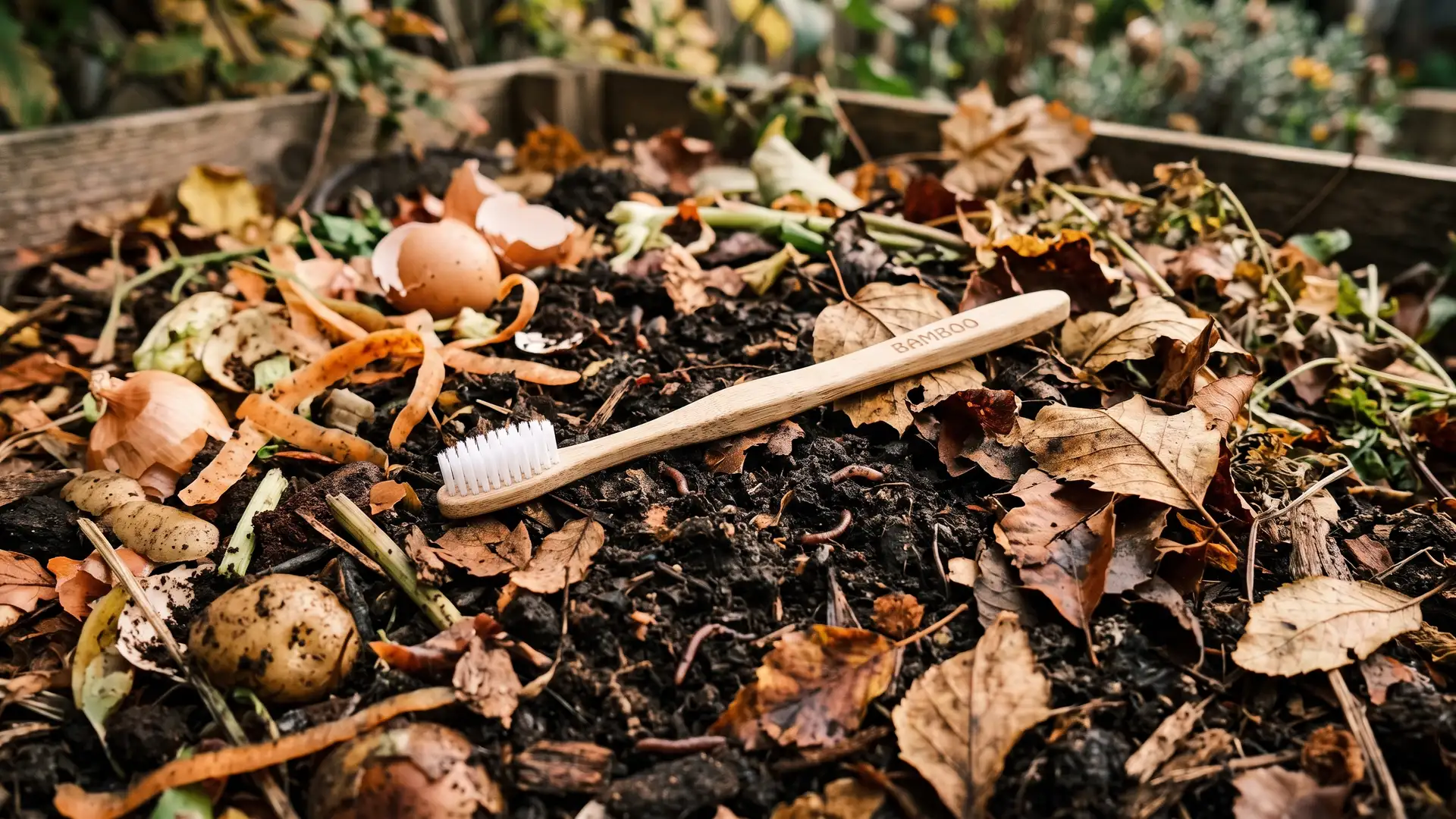
We couldn’t find a study of a corn starch, PLA or wheat straw toothbrush handle. What follows is what the research says about the materials, and what that means for a toothbrush made from them.
What “corn starch” means on a toothbrush
On a toothbrush, “corn starch” usually means a bioplastic made from plant starch, such as PLA (polylactic acid), a synthetic polyester that can be made by fermenting crops such as corn, or a thermoplastic starch. The NSW EPA counts both PLA and thermoplastic starch as plastics, whatever the “bioplastic” or “compostable” label says. (Bamboo, for comparison, is on its list of things that aren’t plastic.)
Does PLA compost?
In the right place, yes. PLA needs high temperatures to break down quickly, which is why it cannot readily be degraded in most home composters. A 2018 study put it plainly: plain PLA is not home compostable (blended with another polymer, it can be). In water, a year-long lab test found that PLA showed no degradation in seawater or freshwater, the same as PET.
Even industrial composting isn’t instant. In a NSW EPA and CSIRO trial in a commercial facility, certified compostable PLA forks stayed visible for 117 days and left a white powdery residue, and the resulting compost wouldn’t have passed the standard’s earthworm test. And home composting is hard even for plastics certified home compostable: in a UK study of real garden bins, 60% of items certified home compostable did not fully disintegrate.
“Wheat straw” handles
We found no research on wheat straw toothbrushes, but regulators have looked at plant-fibre tableware. A European enforcement action found that plant material such as wheat straw was added only as a filler to plastic, and that “compostable” claims on those items were false. Finland’s food regulator says the fibres were added to plastics such as melamine and polypropylene, and the products do not biodegrade in nature. So for a wheat straw toothbrush, the question to ask is what the plastic is.
Can it go in the green bin?
Rules differ by state and council; these are the rules as at October 2026. South Australia’s guidance accepts certified compostable corn-starch takeaway items in the green bin, but only certified ones. In New South Wales, FOGO bins take only food, garden organics and approved caddy liners. Compostability in Australia is certified to AS 4736 or AS 5810, and the certifier, the Australasian Bioplastics Association, only certifies products that come into contact with food and divert food waste into organics recycling; as we read that rule, a toothbrush doesn’t qualify. And most toothbrush bristles are nylon, which doesn’t belong in any green bin.
Recycling isn’t an answer either. Australia’s packaging covenant body said in 2020 guidance that PLA is not recycled in practice in Australia, and that recyclers treat compostable plastics as a contaminant.
What to check on the label
- “Corn starch”, “plant-based plastic”, “PLA”. A bioplastic handle. Ask whether it’s certified, and to which standard.
- “Biodegradable” with no detail. The ACCC’s own guide uses a bio-based plastic toothbrush labelled “biodegradable approved” without testing as an example of a likely misleading claim (a hypothetical case, about bio-based PE).
- “Wheat straw”. Ask what the plastic is.
- The bristles. Whatever the handle, nylon bristles are plastic. More in are bamboo toothbrush bristles plastic?
Where we fit
Our handle is bamboo, which isn’t a plastic, and our bristles are sterilised horse hair woven into the bamboo head, with no nylon and no glue. The handle and bristles break down in a home compost, slowly, and one small aluminium staple inside the head doesn’t: fish it out of the finished compost. Because of that staple, it isn’t certified compostable. Horse hair isn’t vegan, because it’s an animal product. We go through the whole question in are bamboo toothbrushes biodegradable?
The short version
- A corn starch handle is usually a bioplastic, still a plastic.
- Plain PLA needs industrial composting to break down quickly and isn’t home compostable.
- “Wheat straw” can mean plant fibre in an ordinary plastic.
- Green bin rules differ by state and council, and nylon bristles never go in.
Common questions
01Are corn starch toothbrushes compostable?
Not in a home compost, as a rule. A corn starch handle is usually a bioplastic, such as PLA (polylactic acid) or thermoplastic starch, and the NSW EPA counts both as plastic. Plain PLA needs the high heat of industrial composting to break down quickly and isn't home compostable. Even in a commercial facility, certified compostable PLA forks stayed visible for 117 days. Most toothbrush bristles are nylon, which doesn't compost.
02What is PLA?
PLA, or polylactic acid, is a synthetic polyester: a plastic that can be made by fermenting crops such as corn, sugar beet or sugar cane. It is bio-based, but bio-based is not the same as compostable. Plain PLA breaks down in industrial composting and not readily in a home compost or in water.
03Are wheat straw toothbrushes biodegradable?
Check what the plastic is. In tableware that European regulators examined, wheat straw and other plant material had been added as a filler to ordinary plastics such as polypropylene or melamine, and those products did not biodegrade in nature and were not compostable. We found no study of wheat straw toothbrushes specifically.
04Can I put a corn starch toothbrush in my green bin?
Usually not. Rules differ by state and council (as at October 2026): South Australia accepts certified compostable corn-starch takeaway items in the green bin, while New South Wales FOGO bins take only food, garden organics and approved caddy liners. Only certified items count in SA, and as we read the certifier's rules, a toothbrush can't be certified. Most toothbrush bristles are also nylon, which doesn't belong in any green bin. Check your own council's guide.
Sources
- Plastics definition for suppliers. NSW Environment Protection Authority. Checked .
- Accelerating the Biodegradation of Poly(lactic acid) through the Inclusion of Plant Fibers: A Review of Recent Advances. ACS Sustainable Chemistry & Engineering, 2023. DOI 10.1021/acssuschemeng.3c04240. Checked .
- Biodegradable Plastic Blends Create New Possibilities for End-of-Life Management of Plastics but They Are Not a Panacea for Plastic Pollution. Environmental Science & Technology, 2018. DOI 10.1021/acs.est.8b02963. Checked .
- Fate of So-Called Biodegradable Polymers in Seawater and Freshwater. Global Challenges, 2017. DOI 10.1002/gch2.201700048. Checked .
- Compostable plastics in green waste: a low down on their breakdown. NSW Environment Protection Authority. Checked .
- The Big Compost Experiment: Using citizen science to assess the impact and effectiveness of biodegradable and compostable plastics in UK home composting. Frontiers in Sustainability, 2022. DOI 10.3389/frsus.2022.942724. Checked .
- EU Enforcement Action on plastic Food Contact Materials (FCM) made of bamboo 'powder'. European Commission, Health and Food Safety. Checked .
- Plastic products containing bamboo or other unauthorised vegetable fibres. Finnish Food Authority. Checked .
- Could your takeaway container be composted?. Green Industries SA. Checked .
- What can and can't go in your FOGO bin. NSW Environment Protection Authority. Checked .
- FAQ. Australasian Bioplastics Association. Checked .
- Physicochemical Properties of Curen Filaments Versus Nylon Filaments in Toothbrush Bristles: An In Vitro Study. Cureus, 2024. DOI 10.7759/cureus.75767. Checked .
- Considerations for Compostable Plastic Packaging. Australian Packaging Covenant Organisation, 2020. Checked .
- Making environmental claims: a guide for business. Australian Competition and Consumer Commission, 2023. Checked .
Sources were checked between 3 and 5 October 2026: Australian and European regulators, Australia’s packaging covenant body and peer-reviewed research. Council rules change, so check your own council’s current guide.