Bamboo toothbrush pros and cons
The pros are real: a renewable, compostable handle, much less plastic in your bin, identical cleaning. So are the cons sellers tend to omit: the bristles are almost always still nylon, the handle needs a drying habit or it moulds, and one life-cycle assessment found a refillable plastic brush scores level with bamboo. Here’s the whole ledger — from a company that sells one, so weigh accordingly.
Written by Reuben S., who runs BARE and packs every order. Published 15 August 2026 · Last fact-checked 25 August 2026
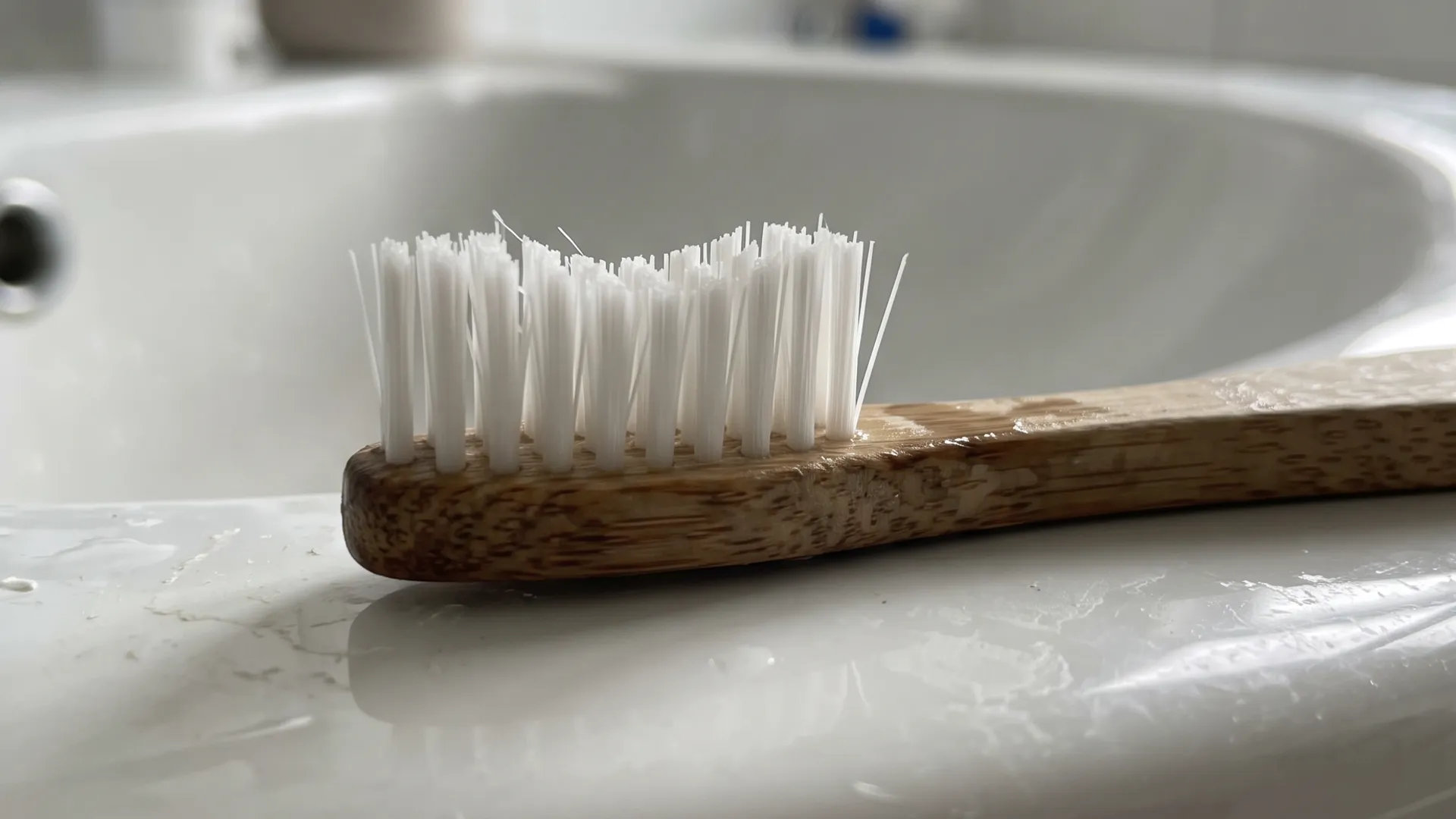
The ledger
| Pros | Cons |
|---|---|
| The handle is renewable — Moso bamboo regrows from the root in a few years, no replanting | The bristles are almost always still nylon — the brush isn’t plastic-free, just plastic-less |
| A composted handle is gone in months to years; a plastic one persists indefinitely | Composting requires pulling the bristles out first with pliers — a chore most owners never learn about |
| Four brushes a year of avoided plastic, per person, forever | Porous bamboo needs a drying habit; stored wet, the handle can grow mould |
| Cleaning is identical with equal bristles — dental guidance never mentions handle material | A 2020 BDJ life-cycle assessment found a refillable-head plastic brush level with bamboo on climate measures |
| The daily-ritual object matches the values of the person holding it | Costs more than a basic plastic brush, and softness labelling is less standardised |
The pros, without inflation
The strongest pro is the simplest: what you throw away stops being plastic — mostly. Dental guidance is a new brush every three months, which makes a toothbrush one of the few plastic objects you discard on a schedule, forever. Swapping the handle to bamboo converts most of that stream from material that persists indefinitely into material that composts.
And the equal-cleaning pro deserves its plain statement, because newcomers genuinely worry about it: the bristles do the cleaning. Same bristles, same technique, same result — covered fully here.
The cons, without flinching
The bristle catch is the big one. Nylon is the most widely used bristle material, and most bamboo brushes on the shelf use it. If “plastic-free” is what brought you here, check the bristles before any handle impresses you — and know that those bristles must come out with pliers before the handle is composted, or the compost gets the plastic anyway.
The mould con is real but cheap to fix. Bamboo is porous; left standing in a wet cup it will eventually grow mould at the base. The prevention costs about four seconds a day — the full habit is here — but you deserve to know it’s a habit before you buy, not after the first black speck.
And the LCA result we keep citing against our own interest: a 2020 life-cycle assessment in the British Dental Journal compared brush types across environmental measures and found a plastic brush with a replaceable head scoring level with bamboo — manufacturing, bristles and transport dominate the footprint, not the handle. Waste persistence still favours bamboo decisively; total climate impact doesn’t automatically. The full comparison, that finding included, is in bamboo vs plastic vs electric.
Reading a pros-and-cons page from a seller
We make a bamboo-handled brush — with horse-hair bristles rather than nylon, which resolves the biggest con on the ledger and adds a different one: it isn’t vegan, and we’d rather say so here than have you find out in the FAQ. The test of any seller’s pros-and-cons page is whether the cons column could cost them a sale. Ours can. That’s the point of it.
The short version
- Real pros: renewable compostable handle, far less plastic discarded, identical cleaning.
- Real cons: nylon bristles almost always, a mould-avoiding drying habit, pliers before composting, higher price, and a mixed LCA picture.
- Worth it if you accept the care and check the bristles. Not a miracle, and anyone selling it as one is skipping the second column.
Common questions
01What are the main pros of a bamboo toothbrush?
A fast-growing renewable handle that composts instead of persisting for centuries; a large reduction in the plastic you throw away four times a year; and cleaning performance equal to any brush with the same bristles — the handle never did the cleaning. For many people there's also a real, if unquantifiable, pro: the daily object matches their values.
02What are the cons of a bamboo toothbrush?
The bristles are almost always still nylon, so the brush isn't actually plastic-free; the handle needs a drying habit or it can grow mould; the bristles must be pulled out before the handle can be composted; it usually costs more than a basic plastic brush; and a life-cycle assessment found some plastic-brush configurations score level with bamboo on climate measures. Any seller who lists no cons is selling, not informing.
03Is a bamboo toothbrush actually better for the environment?
On waste persistence, clearly: a composted bamboo handle is gone in months to years, while a plastic handle persists indefinitely. On carbon footprint the picture is more mixed — a 2020 British Dental Journal life-cycle assessment found a refillable-head plastic brush scored level with bamboo, because the bristles, transport and manufacturing dominate. Better on the measure most people care about, not a free pass on all of them.
04Do bamboo toothbrushes clean as well as plastic ones?
Yes — with the same bristles, technique and replacement schedule, cleaning is identical, because the bristles do the cleaning and the handle only holds them. No dental guidance credits or penalises handle material.
05Are bamboo toothbrushes worth it?
If your goal is less plastic in your bin and you're willing to shake the brush dry and pull the bristles at end of life, yes — the pros are real. If you'd expected fully plastic-free, check the bristles before buying, because on nearly every bamboo brush they're nylon; genuinely plastic-free bristles exist but are rarer. It's a good object with honest limitations, not a miracle.
Nothing here is dental advice. The LCA finding is as published in the British Dental Journal (2020) and discussed fully in our comparison guide.