Are PBT toothbrush bristles plastic?
Yes. PBT, short for polybutylene terephthalate, is a thermoplastic polyester: a plastic, and one of the plastics used for toothbrush bristles, alongside nylon. It takes up less water than nylon and isn’t biodegradable. It also isn’t the same thing as BPA, whatever the similar letters suggest.
Written by Reuben S., who runs BARE and packs every order. Published 5 October 2026
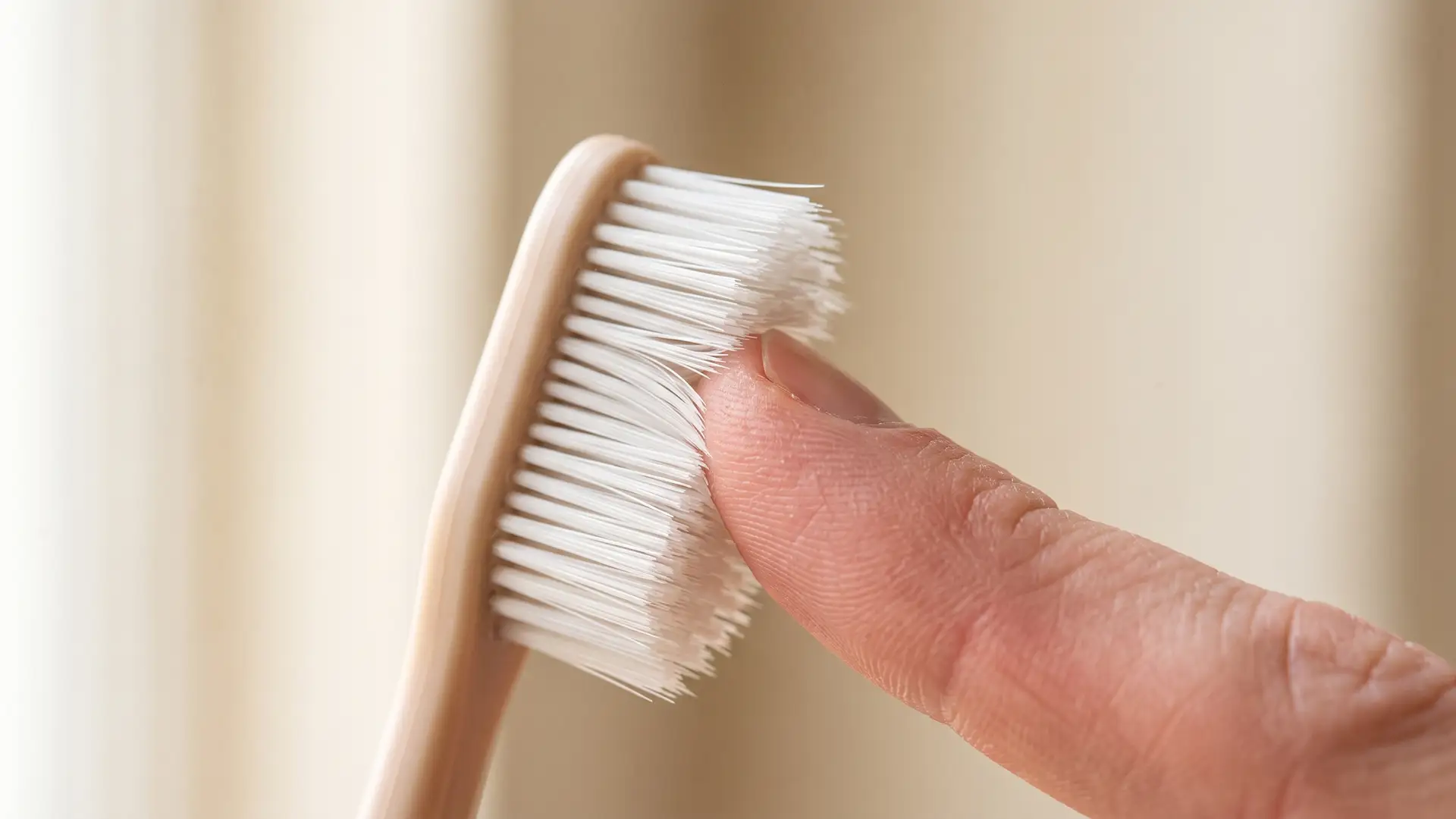
What PBT is
PBT is a polyester, in the same broad family as the PET in drink bottles. Researchers who studied PBT toothbrushes describe it as a thermoplastic polyester that takes up less water than nylon, which makes it useful for something that spends its life wet. A toothbrush manufacturer’s own patent lists PBT among the plastic materials used for bristle filaments, next to several nylons.
So if a pack says PBT, polyester or “PBT filament”, the bristles are plastic. That holds whatever the handle is made of.
PBT vs nylon
Both are plastics, so the difference is in how they behave. A 2020 dental review describes PBT and PET bristles as lower in cost, more durable and less water-absorbent than nylon, but stiffer and less flexible, and notes that some brush heads mix nylon and polyester to balance the two. That review leans on a patent for these points rather than a measurement, so treat them as a general description.
| PBT | Nylon | |
|---|---|---|
| What it is | A polyester | A polyamide |
| Plastic? | Yes | Yes |
| Water | Takes up less | Takes up more |
| Feel | Described as stiffer and less flexible | Described as more flexible |
| Biodegradable? | No | No |
PBT brushes have been commonly used in Japan in recent years. Overall, nylon is the most widely used bristle material, which we cover in are bamboo toothbrush bristles plastic?
Is PBT biodegradable?
No. Researchers describe aromatic polyesters such as PBT as mechanically strong but needing harsh conditions to break down chemically, which makes them non-biodegradable. Recycling research shows how stubborn it is: an engineered enzyme designed to break down PET managed less than 1% of crystalline PBT in 24 hours at 65 degrees C. That’s industrial recycling work, not anything that happens in a compost heap or a landfill.
One name to keep apart: PBAT is a different polyester, and PBAT is compostable. PBT is not. The letters are close; the materials aren’t.
PBT is not BPA
The two get mixed up because the letters overlap. They are different substances. US FDA food-contact rules identify PBT as the reaction product of dimethyl terephthalate with 1,4-butanediol. BPA, bisphenol A, is a chemical used to make polycarbonate plastic, and found in epoxy resins. PBT itself isn’t made from BPA (additives are a separate question). That tells you nothing about whether the bristles are plastic, though: they are. We cover what BPA does and doesn’t mean on a toothbrush in are plastic toothbrushes safe?
Does PBT shed microplastics?
A 2025 lab simulation of brushing identified polybutylene terephthalate and nylon among the microplastics released from commercial toothbrushes. The study didn’t report how much came from each, so the honest reading is that both are plastic bristles and both can shed. More on what that research measured is in do toothbrushes shed microplastics?
What to check on the label
- PBT, PET, polyester or polyamide. All plastic bristles.
- “Nylon-free”. A PBT brush can truthfully be nylon-free and still have plastic bristles. Look for what the bristles are, not what they aren’t.
- Bristles with no plastic at all. That means a named animal fibre: horse hair or boar bristle. Our nylon-free toothbrush guide goes through what to look for.
Where we fit
Our bristles are sterilised horse hair woven into the bamboo head: no nylon, no PBT and no glue. Horse hair isn’t vegan, because it’s an animal product, and there is one small aluminium staple inside the head that doesn’t compost. If a plastic bristle suits you better, PBT and nylon both do the job; we’d just like you to know they’re plastic.
The short version
- PBT is a polyester, so PBT bristles are plastic.
- It takes up less water than nylon and is described as stiffer.
- It isn’t biodegradable, and it isn’t PBAT.
- PBT isn’t BPA.
- For bristles with no plastic, look for horse hair or boar bristle.
Common questions
01Are PBT toothbrush bristles plastic?
Yes. PBT (polybutylene terephthalate) is a thermoplastic polyester, a plastic in the same broad family as the PET used in drink bottles. It is one of the plastics used for toothbrush bristles, alongside nylon. A brush with PBT bristles has plastic bristles.
02Is PBT better than nylon for toothbrush bristles?
Each has trade-offs. PBT takes up less water than nylon, and a 2020 dental review describes PBT bristles as cheaper and more durable but stiffer and less flexible, which is why some brush heads mix the two. Neither is plastic-free.
03Is PBT the same as BPA?
No. US FDA food-contact rules identify PBT as the reaction product of dimethyl terephthalate with 1,4-butanediol, so PBT itself isn't made from BPA. BPA (bisphenol A) is a different chemical, used to make polycarbonate plastic and found in epoxy resins. The letters are similar; the substances aren't.
04Are PBT bristles biodegradable?
No. Researchers describe aromatic polyesters such as PBT as non-biodegradable, because they need harsh conditions to break down chemically. In industrial recycling research (not compost or soil), even an engineered enzyme broke down less than 1% of crystalline PBT in 24 hours at 65 degrees C; heavy pre-processing was needed to do better. Don't confuse PBT with PBAT, a different polyester that is compostable.
05Do PBT bristles shed microplastics?
A 2025 lab simulation of brushing identified polybutylene terephthalate and nylon among the microplastics released from commercial toothbrushes. It didn't report how much of each, so it tells you nothing about one versus the other: both are plastic bristles, and both turned up.
Sources
- Changes in the Bristle Stiffness of Polybutylene Terephthalate Manual Toothbrushes over 3 Months: A Randomized Controlled Trial. Materials, 2020. DOI 10.3390/ma13122802. Checked .
- Cleaning element carrier and toothbrush head comprising it (US 11,844,419 B2). The Procter and Gamble Company, US patent, 2023. Checked .
- Safety and Design Aspects of Powered Toothbrush: A Narrative Review. Dentistry Journal, 2020. DOI 10.3390/dj8010015. Checked .
- Analysis of the Deflection, Bristle Splaying, and Abrasion of a Single Tuft of a Polybutylene Terephthalate Toothbrush after Use: A Randomized Controlled Trial. Materials, 2022. DOI 10.3390/ma15144890. Checked .
- Physicochemical Properties of Curen Filaments Versus Nylon Filaments in Toothbrush Bristles: An In Vitro Study. Cureus, 2024. DOI 10.7759/cureus.75767. Checked .
- Fast Hydrolyzable Constitutional Isomer of Poly(butylene terephthalate) and Its Copolyesters with 1,4-Butanediol. ACS Applied Polymer Materials, 2021. DOI 10.1021/acsapm.1c01169. Checked .
- Biodegradation behavior of wool and other textile fibers in aerobic composting conditions. International Journal of Environmental Science and Technology, 2024. DOI 10.1007/s13762-024-05802-6. Checked .
- Reactive mixing enables enzymatic depolymerization of recalcitrant or unsortable polyester wastes. PNAS, 2025. DOI 10.1073/pnas.2505611122. Checked .
- Data on synthesis of oligomeric and polymeric poly(butylene adipate-co-butylene terephthalate) model substrates for the investigation of enzymatic hydrolysis. Data in Brief, 2016. DOI 10.1016/j.dib.2016.02.029. Checked .
- 21 CFR 177.1660 Poly(tetramethylene terephthalate). US Electronic Code of Federal Regulations. Checked .
- Bisphenol A (BPA): Use in Food Contact Application. US Food and Drug Administration. Checked .
- Preliminary results on microplastic release from commercial toothbrushes during simulated brushing. Microchemical Journal, 2025. DOI 10.1016/j.microc.2025.114680. Checked .
Sources were checked between 3 and 5 October 2026: peer-reviewed research, US regulators and a manufacturer’s patent. Individual brushes vary, so check the specific product.